Bouncers Check Your Phone, Not Your Pupils
The nightlife claim is safety, but the real border control is social: who looks connected enough to pass, who looks too eager to be desperate, and who gets waved through because their messages prove they belong.
Decadence & Art Abuse Correspondent
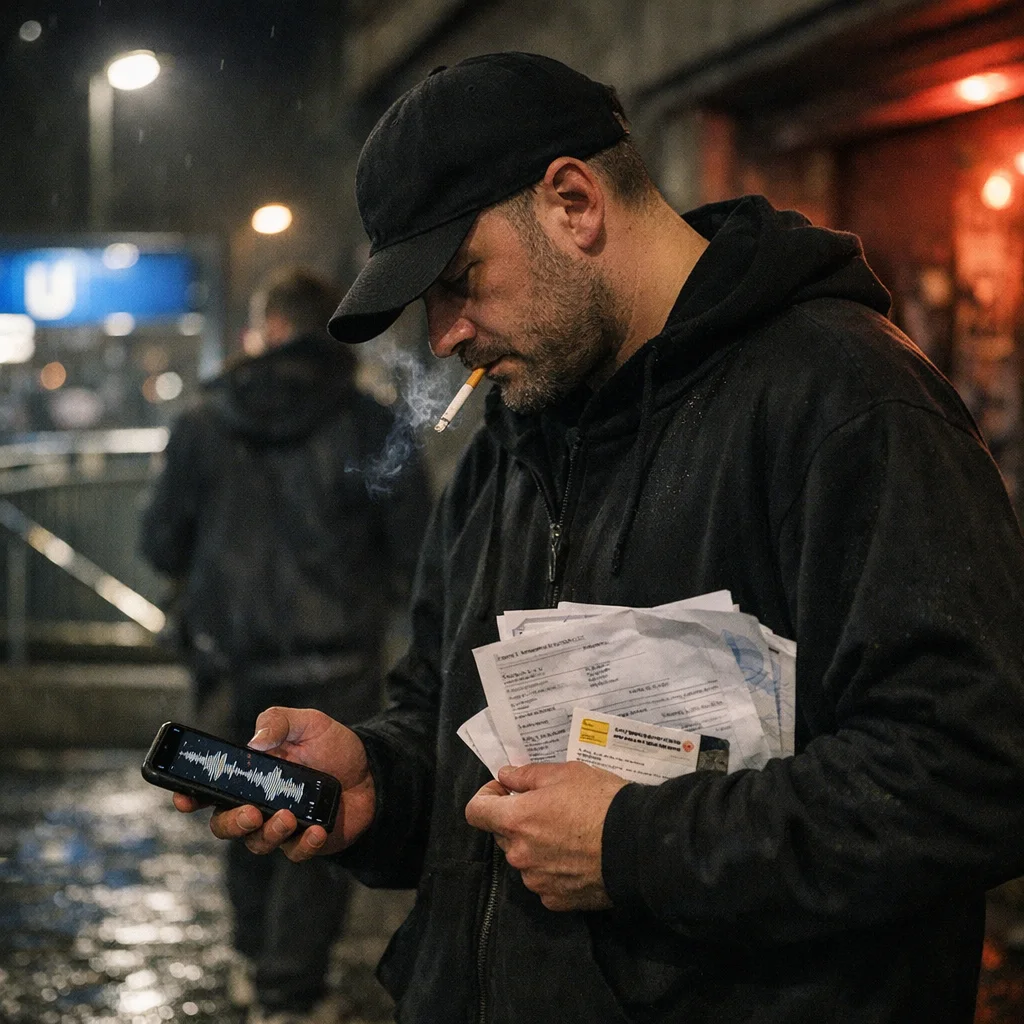
Nobody Is Being Scanned for Talent
The Berlin DJ economy runs on a simple arrangement: if you can upload a mix, you can build a mythology, and if you can build a mythology, nobody asks why your left molar has been aching since Easter. In practice, the city’s club kids have turned SoundCloud into a résumé, a confessional, and a very expensive flirtation with relevance. They post one ambiguous black-and-white photo, one caption about “low frequencies and higher truths,” and suddenly they are acting like a minor aristocracy of the night, as if a laptop and a nicotine habit were a political program. Healthcare, meanwhile, remains that humiliating little side quest where the state expects you to be legible before it will consider keeping you intact.
At a basement bar in Wedding, producer Malik Yilmaz, 29, said his profile has 14 releases, 8,000 followers, and a doctor’s appointment booked for sometime after the moon collapses. “My SoundCloud is healthier than I am,” he said, holding a phone full of stems, flyers, and an unpaid specialist reminder. He requested anonymity because his ex still follows his account and because, in his words, “the health system is the only thing more intimate than my search history.” In Wedding, that passes for a joke. It is also a diagnosis.
This neighborhood has the perfect stage for Berlin’s favorite self-deception: enough grit to sell as authenticity, enough rent pressure to make everyone talk like survivors, and enough nightlife to let the ambitious pretend they are being underground instead of merely underpaid. The club kids drift through Leopoldplatz, camera-ready and chemically overconfident, wearing thrifted leather, vintage sportswear, and the expression of people who have mistaken being desired for having depth. They speak in the dialect of access—guest list, afters, open decks, “I know the promoter”—as if the city were an intimate partner they can manipulate with enough eye contact and a low-cut top.
That is the real Berlin contradiction: the nightlife scene is obsessed with access, but only to the wrong doors. You can get past a bouncer with the right stare, the right stamp, and the right silent promise that you are emotionally unavailable enough to be trusted. At the club entrance it is all soft humiliation and hard sorting: the pretty and the useful get waved through, the overeager get made to wait in the rain, and the people with the most desperate little faces are treated like contaminated meat wrapped in designer nylon. But when it comes to a dermatologist, the city suddenly develops the manners of a locked church with a broken bell. The DJ who can curate a 6 a.m. crowd at Berghain, Wilde Renate, or Tresor cannot reliably curate an appointment before the rash becomes a public event.
Clara Neumann, a family doctor in Neukölln, said the mismatch is not mysterious. “People arrive with expensive headphones, rent anxiety, and a phone full of unfinished tracks,” she said. “They also arrive with no insurance card, no follow-up, and the confidence of a minor emperor.” She added that many musicians disappear the moment treatment requires anything steadier than self-branding. “They will argue for 40 minutes about mastering, then vanish when I mention bloodwork.” In other words: endless intimacy with their own sound, complete panic at the sight of their own veins.
It is tempting to call this bohemian tragedy, but that would flatter the scene. Most of these people are not rebels. They are freelancers with better lighting, performing radical openness while quietly praying their teeth hold until festival season. They speak in the language of decolonizing the dance floor, then spend Sunday morning negotiating with a pharmacy like it is a hostile takeover. Their politics are often a costume stitched from correct keywords, borrowed outrage, and the erotic thrill of seeming difficult while remaining fully available to the market.
The erotic branding is the saddest part. Everyone is “fluid,” “curated,” and “nonlinear” until they need antibiotics. Then the whole aesthetic collapses into what it always was: a nervous body in a black tank top, pretending not to need anything while refreshing the inbox like a hooked-up orphan. The scene sells appetite as liberation, but half the room looks one missed dose away from crying into a sink.
The state, for its part, keeps offering digital portals, which is comic in the way a blank wall is comic. A Health Senate spokesperson said efforts were under way to improve access and reduce delays, a sentence that in Berlin usually means please stop asking and please die with patience. The portal asks for passwords, numbers, scans, confirmations, and a level of emotional composure the system itself would never be asked to demonstrate.
So the city continues producing DJs who can command a room, grow a following, and anatomize a crowd’s desire with Marxist confidence, only to collapse at the first hint of a fever. SoundCloud gives them an audience. Wedding gives them a stage full of mirrors. Healthcare would require the embarrassing miracle of treating them like bodies instead of content.