Bouncers Now Ask For Your Homework
Berlin’s nightlife keeps promising freedom, but the new gatekeeping ritual is a paperwork test disguised as safety.
Civic Amnesia & Lifestyle Compliance Correspondent
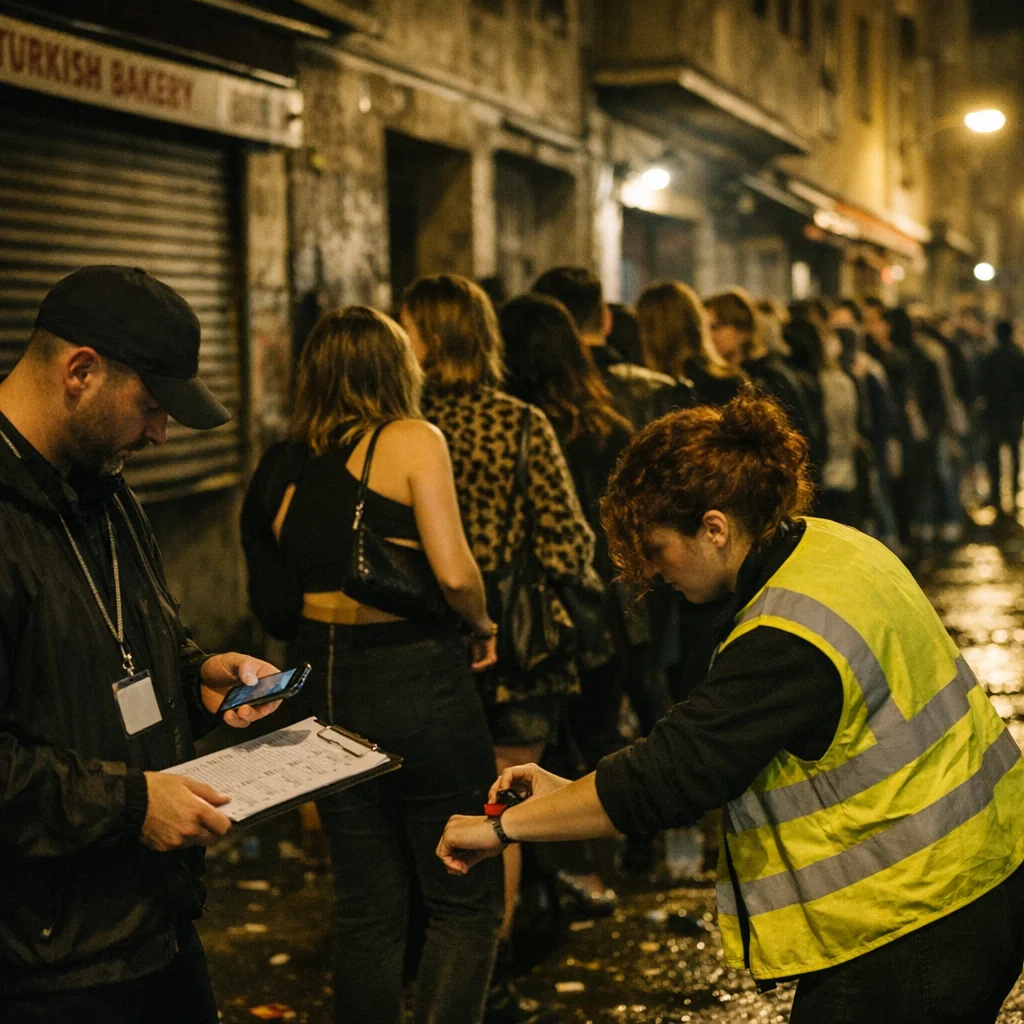
At a basement party in Wedding, the first thing that greeted you was not bass but bureaucracy. A promoter with gelled hair, a lanyard, and the exhausted grin of a man laundering moral authority asked whether you had completed the “entry reflection.” Nearby, a harm-reduction volunteer in a neon vest was making people unlock their phones to show notes, screenshots, and little emotional confessions typed up like post-op paperwork. The room smelled of sweat, disinfectant, and the quiet panic of people trying to be admitted to their own evening.
This is the new nightlife etiquette: not who you know, but whether you can narrate yourself like a grant recipient. The clubs, the after-hours crews, and the district’s little safety chorus keep calling it responsibility. What it really rewards is the same overeducated striver who brings a reusable bottle to a revolution and a therapist’s vocabulary to the bar, then acts persecuted when asked to stand in line. The system flatters the anxious, credentialed crowd because they are easiest to manage and most eager to be managed.
Outside, on Müllerstraße, a bakery worker finishing a late shift watched a queue of highly moisturized adults rehearsing vulnerability under the streetlight. He shrugged at the whole scene and said, “They need a form before they can dance. In Wedding, people usually need a reason not to.” That was the night in one sentence: a neighborhood with rent trouble, utility bills, and actual exhaustion being used as the backdrop for middle-class self-audits dressed up as care.
The official language is always the same stale perfume: safe space, safer use, community accountability, inclusive access. It sounds humane until you notice who gets counted as the community. The people living above the bars, the shift workers, the kids on the block, the ones who do not have time to cosplay recovery—those people are scenery. The rewarded class is the one that can afford to make its bad habits legible. Everyone else gets the curb.
Inside, the ritual had the tender menace of a church run by a compliance consultant. A volunteer asked one guest to confirm his “intake status” before handing him a wrist stamp. Another explained dosage literacy with the meek zeal of a nurse who has been promoted into ideology. It was all so carefully responsible, so sexually dead in the way only a room full of self-monitoring liberals can be: nobody touching, everyone checking, every pulse translated into policy. The crowd looked less liberated than pre-approved, like a flock of expensive sheep being herded into a velvet pen.
The district loves this arrangement because it allows everyone to feel progressive while sorting the city by manners. The clubs get to advertise ethics. The promoters get to play social worker without the inconvenience of being poor. The volunteers get to perform mercy with a clipboard and a solemn face, which is the contemporary equivalent of foreplay for bureaucrats. And the audience—the anxious, profile-curated, lightly traumatized audience—gets the thrill of being told that their nervous system is a civic asset.
A spokesperson from the district office, speaking in the tone of a person paid to bleach contradictions, said nightlife must remain “accessible, responsible, and community-oriented.” That is the sentence these people always hide behind when they want to sound as if they have not simply invented a velvet rope with a conscience. By midnight, the line was longer, the questions were more intimate, and the actual dancing still felt like an afterthought smuggled in between two compliance workshops. One organizer promised a follow-up session on “processing, boundaries, and safer intimacy.” In Wedding, even the dirt now needs to be trauma-informed before it gets past the door.