Bouncers Start Checking Your Shame
Wedding’s club economy is discovering that the fastest way to sell danger is to put it in a clipboard.
Door Policy & Daylight Shame Correspondent
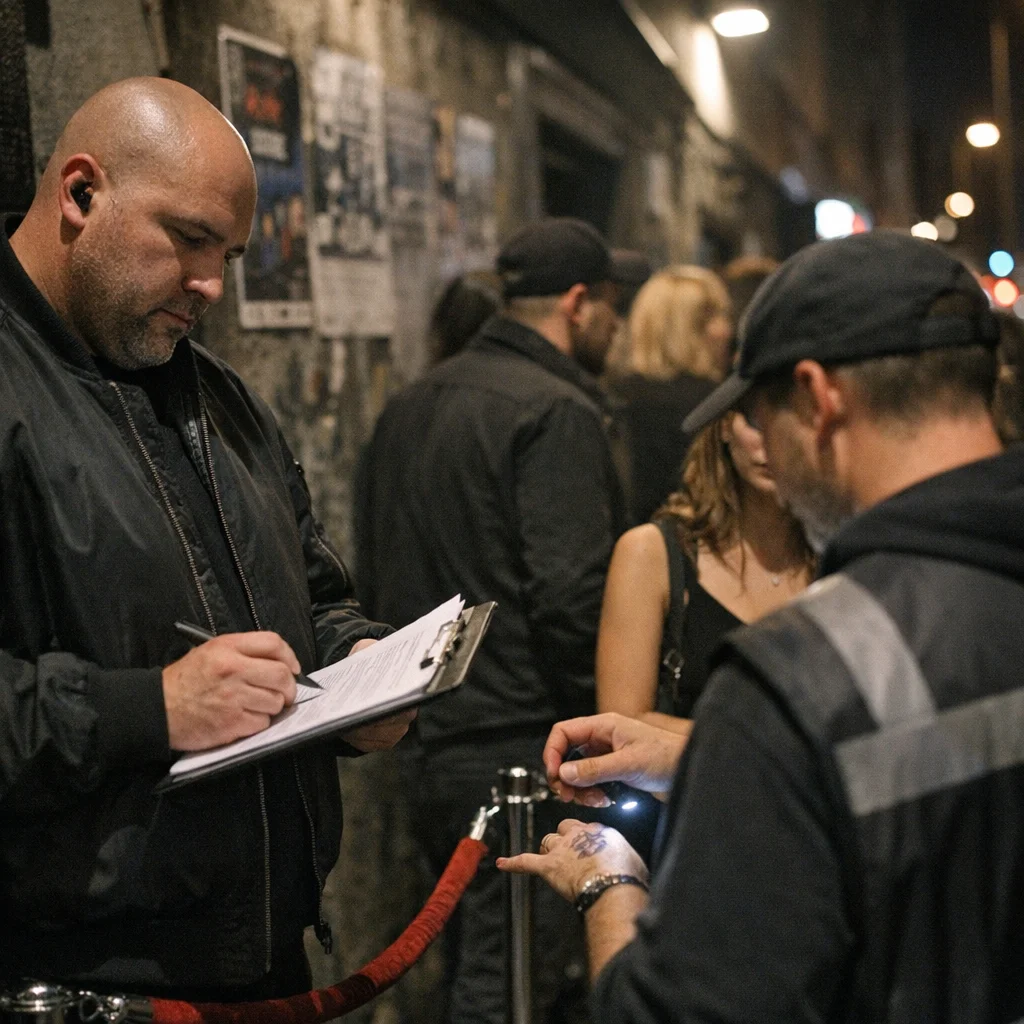
At a packed club in Wedding on Friday night, the door was less a threshold than a bureaucrat’s wet dream. Guests were asked for ID, yes, but also for their boundaries, their triggers, and the exact flavor of humiliation they were prepared to swallow before midnight. The bassline did not arrive with a therapist; it arrived with a clipboard and a cold grin.
Outside, under the industrial block glare and the stale glow from the späti down the street, a volunteer marshal in black cargo pants and a lanyard the color of submission held the line like a customs officer for people who cosplay danger on purpose. First the outfit check. Then the questions. Have you been drinking? Are you safe with loud crowds? Do you consent to being here? The language was tender in the way a hand on the back of your neck can be tender.
That tenderness is the trick. Wedding’s club economy has learned that the easiest way to sell danger to the well-heeled and the emotionally overlit is to wrap it in clipboards, ink stamps, and the vocabulary of care. The NGO-adjacent promoter with the tote bag and the rented radical accent calls it inclusion. The trust-fund DJ calls it ethics. The wellness consultant with the jawline of a candle ad calls it a safer space while charging extra for the privilege of being looked after by other people’s labor.
Inside, the room split neatly between the sanctimonious and the horny for control. One crowd spoke in soft, managerial phrases, as if they were hosting a workshop on collective breathing in a converted dental clinic. The other crowd nodded gravely and tried to smuggle in the exact same appetite for chaos, only with better trousers and more expensive deodorant. Everyone wanted the frisson of risk, but only after passing a moral inspection that left them polished, selected, and faintly aroused by the paperwork.
“The door used to ask whether you were annoying,” said club worker Merve Aksoy, standing beside a stack of ink stamps and a bowl of confiscated vapes. “Now it asks whether you can perform humility on command. That’s not safety. That’s status theater with a pulse.”
Her point was simple enough to survive the playlist: the people selling “care” are usually the same people outsourcing the ugly parts of nightlife to volunteers, clipboards, and a few exhausted workers who have to pretend they enjoy being the moral upholstery on a business model. The promoter gets to sound progressive. The owner gets to advertise responsibility. The line gets sorted like laundry. And the guests, especially the ones fresh off the U8 with money to burn and nothing sturdier than irony, get to believe they’ve entered a liberation project instead of a boutique gatekeeping ritual with better lighting.
The city loves this performance because it lets everyone keep their favorite lie. The hip white-collar ravers get to feel dangerous without being inconvenienced. The managerial club owners get to cosplay ethics while squeezing a neighborhood already being priced into an ornamental afterlife. And Wedding — with its rent pressure, its late-night kebab spillover, its industrial lots being repackaged as edgy sincerity — gets the privilege of hosting the whole lubricated farce while pretending it’s some kind of cultural advance.
The club management defended the process, saying it reduced conflict and “set a standard for responsible nightlife.” Sure. And a velvet rope is just a boundary with better branding. The standard on offer seems to be: look transgressive, behave printable, and please consent in a tone that flatters the venue. It is a room full of people desperate to be seen as dangerous, but only after they’ve been stroked into compliance by a system that sells them their own obedience as a premium experience.
By early morning, the line outside had doubled. A couple in matching black jackets argued softly near the curb while a taxi idled and a guy with perfect cheekbones tried to negotiate his way back in with the wounded dignity of someone denied access to his favorite mirror. Nobody looked free. They looked sorted, audited, and mildly ashamed — which, in this part of Wedding, is what passes for nightlife with principles.
The club says the policy will continue this weekend, and organizers hinted the questions may expand to include substance use, relationship status, and whether guests are lonely or merely still pretending not to be. In other words: the full questionnaire for a city that prefers its desire documented, its guilt curated, and its pleasures frisked before entry.