BPM Overdose at the Consent Workshop
Wedding’s promoters, harm-reduction flaks, and branded sobriety startups are selling techno as a workplace with better lighting.
Industrial Nightlife & Chemical Sociology Correspondent
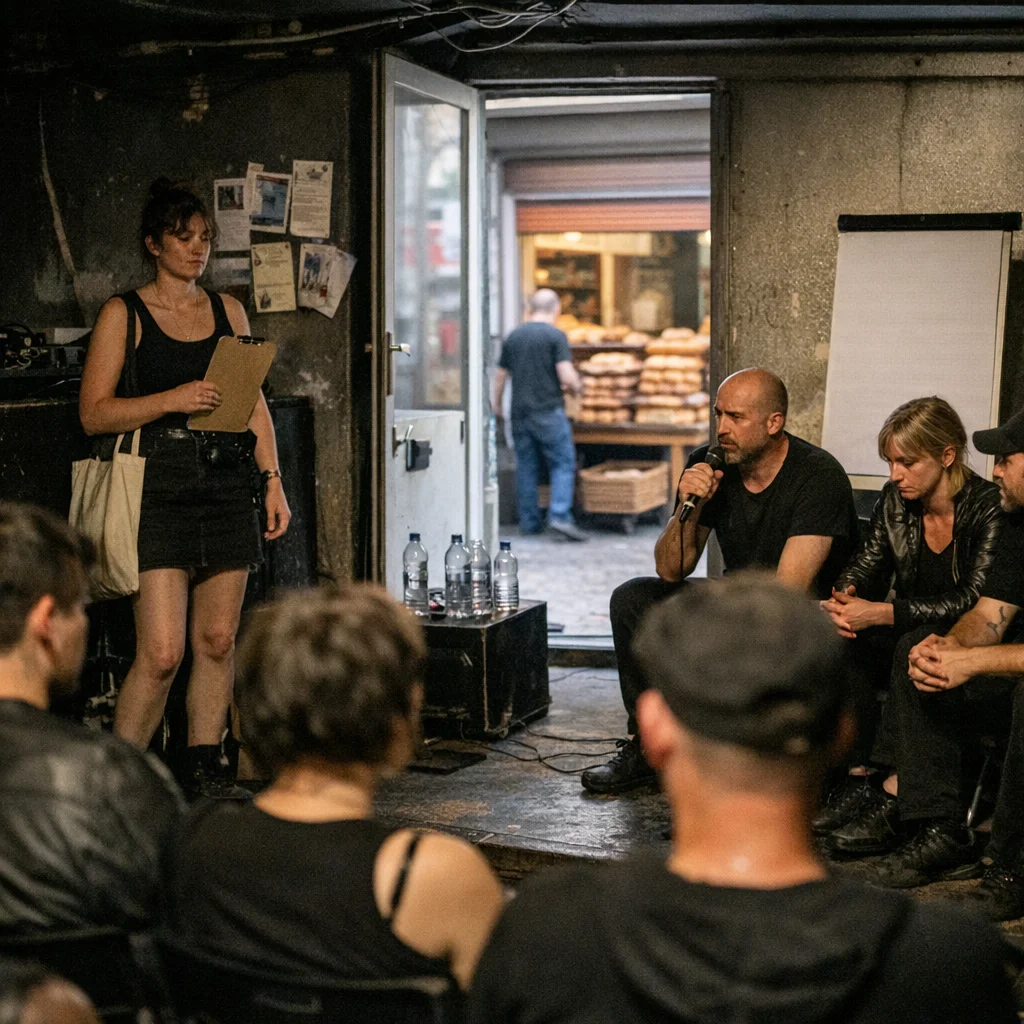
Clipboard Porn in Leopoldplatz
Wedding’s club economy spent the weekend dressing itself up as a moral workplace with better speakers. In a basement venue near Leopoldplatz, grant-funded facilitators, harm-reduction consultants, boutique sobriety founders, district cultural bureaucrats, and DJs with activist branding gathered for a workshop on safer partying that felt like a seminar for people too vain to admit they still want to get ruined. The room was full of black linen, soft boots, and that particular NGO stare: hungry for legitimacy, terrified of anything alive.
The event opened with a panel on boundaries, slid into a breakout on emotional accountability, and ended with a DJ set so carefully managed it might as well have come with a staff handbook and a sign-in sheet for desire. The facilitator—late, of course, because lateness is how the professional class performs importance—spoke about “holding space” while three people in the front row nodded like they were being graded on humility. One organizer, who arrived in a blazer expensive enough to shame a tenant union, said the aim was to “preserve the energy of the scene while making it safer for everyone.” That is the Berlin version of having sex with the lights on and a clipboard in hand.
Outside, a Turkish bakery that has outlived three rent hikes, two moral panics, and one flood of glossy “neighborhood activation” flyers was already selling börek to workers who do not need a workshop to know what exhaustion looks like. Inside, a consultant in black linen explained that “consent culture” needs to be embedded into the nightlife ecosystem, as if the problem with nightlife had been a lack of branding rather than a surplus of men with egos the size of loading docks. The room nodded with the obedient ferocity of people who have learned that if they repeat the correct terms—safer, inclusive, accountable, transformative—the district office might continue mistaking them for public value.
The hypocrisy was beautifully organized. The facilitator who lectured everyone on boundaries left before the last set, because moral labor is for other people once the tote bags are packed. The DJ who posted the loudest anti-predation stories on Instagram stayed just long enough to be seen, then vanished with two promoters and a guestlist aura that suggested the usual private aftercare: not healing, not community, just soft-focus status with substances. Meanwhile the actual club workers—door staff, bar staff, cleaners, the people who mop up the moral residue—were left to absorb the sermon and the mess. That is the trick: the people who turn trauma into language never have to scrub the floor.
A district office spokesperson praised initiatives that “increase awareness and respect in nightlife settings,” which is bureaucratic German for: please continue converting unrest into grant applications and call it participation. The district loves this arrangement. It gets to fund the appearance of care, photograph the workshops, and then act shocked when the same nightlife keeps producing the same predatory little aristocracies in tighter trousers. NGO language is perfect for this. It can make a room full of self-importance sound like public service while everyone involved is quietly invoicing the apocalypse.
The boutique sobriety crowd was there too, selling abstinence as luxury: sparkling water in glass bottles, wellness diction, and the faint odor of ex-coke shame laundered into a lifestyle. They spoke about “intentional pleasure” with the exhausted sincerity of people who have discovered that if you put enough candles around a concept, nobody notices it is still just privilege with a pulse. The old Berlin lie was that excess meant freedom. The new one is that moderation is radical if you charge enough for the workshop.
Even the club’s most enthusiastic activists seemed trapped in the same little performance loop: announce liberation, invoice the feeling, issue a code of conduct, and call the whole thing grassroots. Career DJs with activist fonts on their flyers drifted from table to table like well-dressed rumors, collecting applause for promising a scene that would be kinder, safer, and somehow still hot. But the entire ecosystem runs on the same hidden engine: appetite converted into compliance, rebellion converted into a funding stream, and every ugly human urge dressed up as “process” so nobody has to say they are just selling permission to keep touching the flame.
By dawn the speakers had folded their tote bags, the district people had disappeared into their tax-funded relevance, and the remaining crowd looked like they had survived a minor sect with a strong code of ethics and weak instincts. The bakery across the street was still open. The club will hold another workshop soon, because in Berlin the scene never dies; it merely learns how to market its own restraint.