Brandenburg Stocks Salt But Leaves Drivers Blue Balled
Officials who ran out of de-icing supplies last winter now brag about 43,000 fresh tons while suburban commuters face the same slow response times that favor well-connected villages over daily commuters.
Civic Hypocrisy & Neighborhood Compliance Reporter
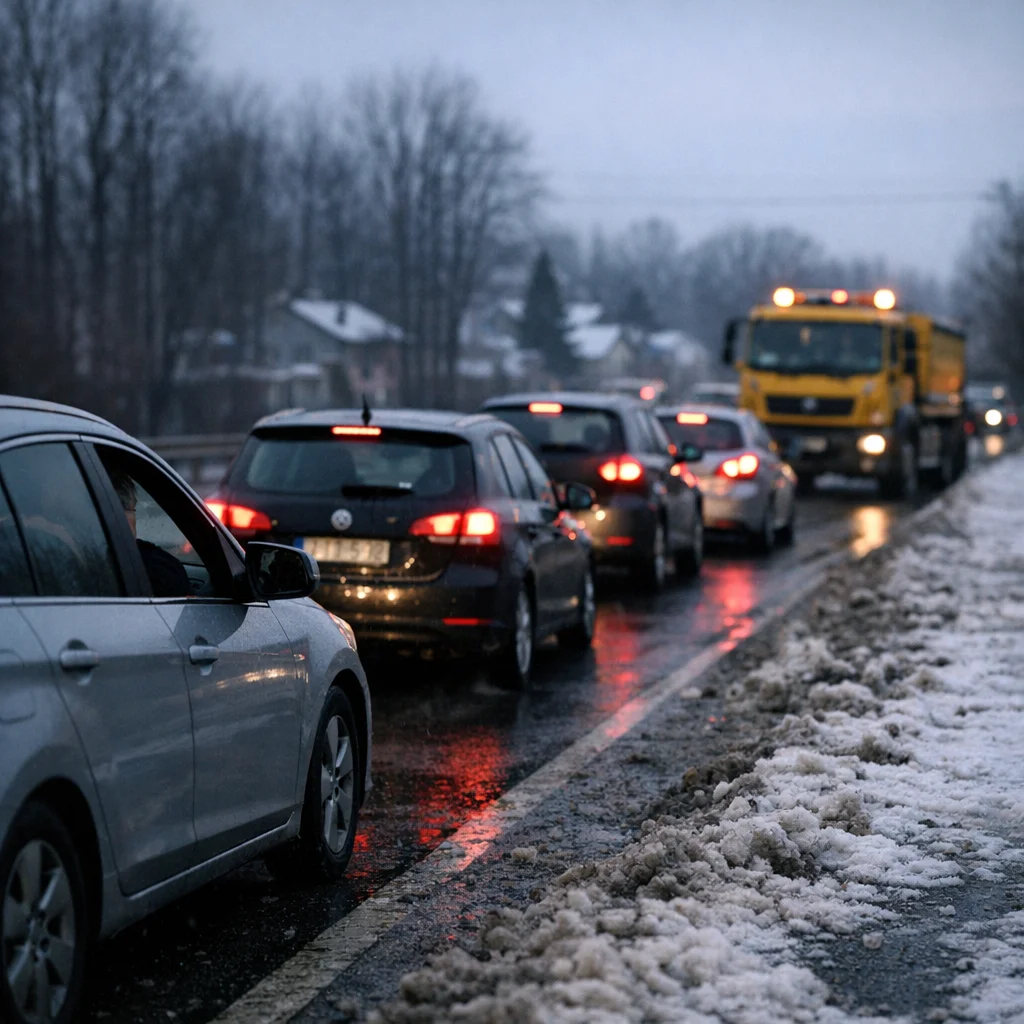
Brandenburg’s winter crews say they are ready for the first real cold snap with 43,000 tons of road salt, about 250 vehicles, and roughly 1,000 workers on standby, but in the Berlin commuter belt that sounds less like preparation than a promise to service the right people first and leave everyone else waiting with their lights on. The region burned through a record amount last winter, and now the same roads that were supposedly protected will again decide who gets to arrive at work and who gets to spend an hour inching forward on a glazed lane while some village chair gets the first generous hand on the controls.
In Wedding, where drivers already spend half their lives negotiating construction cones, delivery vans, and the moral theater of “shared streets,” the announcement landed with familiar bitterness. The people with the biggest SUVs always seem to discover winter from inside underground garages. The rest of the city gets to perform the old peasant ritual of watching black ice turn the morning commute into a legal dispute, while the well-situated municipal faithful get their roads stroked smooth first and everyone else is told to be patient.
"They always announce the salt like it is a military offensive," said Mehmet Yilmaz, who runs a repair shop near Pankstraße and asked to use his name because he is tired of being told to wait patiently by people who never wait for anything. "Then the first freezing rain comes, and suddenly the only thing that gets spread evenly is blame." He said last winter left his clients late, his tow-truck bills higher, and his patience flatter than a dead kebab tray. The ones with soft office parking and heated windshields got to look smug about resilience. The rest got the bruise.
The district language around winter service is full of soothing nonsense: priority routes, controlled deployment, efficient coordination, public safety. It is the administrative equivalent of promising to text back after ghosting someone for three weeks, then showing up late with a bouquet and a clipboard. In practice, the first roads treated are often the ones that already matter most to people who know the right office, the right village association, or the right mayor to flatter at a ribbon-cutting. Berlin commuters, who fund the whole arrangement with taxes and despair, are expected to enjoy the scenery while the countryside gets first-class treatment, a warm handshake, and a cleaner lane out of the mess.
The favoritism is not even elegant. It is the old Brandenburg choreography: the main commuter arteries get a thin, half-committed pass once the damage is already visible, while the prestige stretches leading to well-connected villages, council favorites, and the kind of local notables who still think a phone call is a public service get the early love. Snowplows are rerouted, crews are “flexibly deployed,” and the people actually trying to get to work discover that flexibility means the powerful are serviced before dawn and everyone else can learn humility on the windshield.
A transport official defended the plan as "a substantial increase in resilience," which is a lovely phrase if your life is measured in memos instead of bus stops. The real test comes when the temperature drops and the roads glaze over. Then the region discovers, once again, that its emergency system works best for places that can demand attention without raising their voices and worst for the people who actually have to drive through it.
If the salt stock holds, Brandenburg may get through winter with fewer humiliations than last year. If not, the same motorists who were told to drive carefully will spend another season sliding through untreated darkness while officials admire their preparedness from the comfort of dry conference rooms, already congratulating themselves for leaving everybody else blue-balled and off the road.