Brandon Buys a “Europe Can Defend Itself” Hoodie and Immediately Starts Patrolling Wedding With a Whistle
After Washington downgrades China and tells Europe to handle its own problems, locals announce a bold new security doctrine: self-defense, but make it artisanal.
Geopolitics & Hangover Correspondent
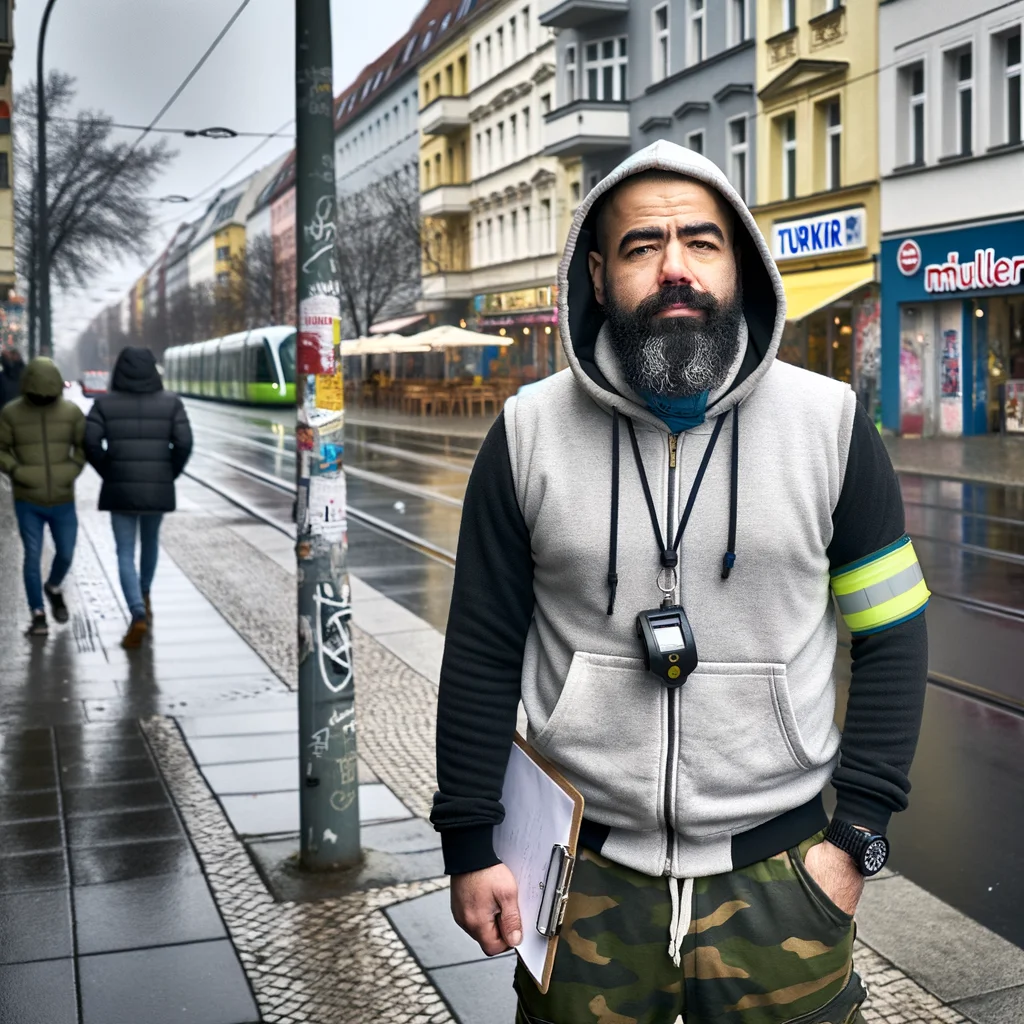
WEDDING — NATO’s New Frontier: Between the Organic Olive Bar and the Playground
When news broke that the Pentagon’s new strategy puts China lower on the worry list and expects Europe to defend itself, Wedding didn’t respond with tanks, troop movements, or even a competent WhatsApp thread.
It responded the way Europe always responds: by outsourcing responsibility to someone with time, a Bluetooth speaker, and enough confidence to confuse cardio with security.
Within hours, a small crowd assembled near U-Bahn Osloer Straße to workshop “strategic autonomy,” which mostly meant arguing about whether whistles are “carceral.” Someone suggested a more humane alternative: a soft chime.
The “Strategic Autonomy Starter Pack” (Only €79, Refills Sold Separately)
A new pop-up on Müllerstraße, opened in a space previously occupied by a Turkish bakery that tragically insisted on selling bread instead of a lifestyle, is now offering defensive supplies for Europe’s bold new era. The shelves include:
- A first-aid kit labeled “Trauma-Informed Stabilization, Level I” (comes with three bandages and an affirmation)
- A battery-powered lantern called “Resilience,” because “flashlight” feels like violence
- A laminated card with EU flags and emergency numbers (customer reviews call it “hard to swallow, but grounding”)
- A $14 espresso shot marketed as “rapid readiness”
In a move political scientists are calling “dumb but extremely on-brand,” the store also offers a monthly seminar: “Deterrence for Creatives: Holding Boundaries Without Harshing the Public Space.”
Local Families Watch Newcomers Rehearse Defense Like It’s Improvised Theater
Longtime Wedding residents—many of them Turkish families who’ve lived here since “authenticity” meant low rent and a bakery that didn’t require a mission statement—have been observing the self-defense craze with the calm horror of people who have seen real problems.
“They practice formations in the courtyard,” said Emine K., who asked not to be fully named because she still believes in privacy, unlike everyone filming their own ‘civic courage’ content. “Two people stand in a line and call it a flank. They hold an oat latte like it’s a weapon. Meanwhile the elevator still breaks every week.”
Murat, who runs a small shop that has survived everything except the arrival of minimalist branding, shrugged. “America tells Europe to defend itself. Here, defense means someone loudly explaining EU values to a trash bin. Okay. Fine.”
A Council of Self-Defense Immediately Discovers the Real Enemy: Decision-Making
The “European Self-Defense Working Session” held in a rented co-working room above a nail salon devolved, as expected, into procedural gridlock. Anyone expecting Machiavellian pragmatism got Hannah Arendt by way of burnout.
The meeting hit stiff resistance when the facilitator proposed naming threats. One attendee objected that naming threats “reifies harm narratives.” Another asked if threats could be approached through “nonlinear listening.”
A third demanded a “deep dive” into whether defense is inherently colonial. A fourth, staring into their glass water like it owed them rent, argued that the concept of security is a myth sustained by “Eurocentric realism.”
Somewhere in the back, a guy who introduces himself as “Brandon, but like… Brándon,” stated that the new Pentagon posture proves Europe must stop “depending on Daddy.” Nobody laughed, but several people took notes.
Deterrence, But Make It Housing
Experts at the Institute for Overconfident International Relations (a bench near Panke Canal) say the policy shift is already visible in Wedding, where defense and gentrification now share the same playbook:
- Announce a threat (geopolitical instability, “unsafe streets,” or the existence of a low-priced barber)
- Launch a pilot project with a tasteful logo
- Invite newcomers to participate so they can feel brave in daylight
- Raise costs until longtime residents can’t afford the “community safety ecosystem”
“This is basically Clausewitz, if Clausewitz had a newsletter and an annual membership tier,” said one local academic, speaking under the condition that no one check whether they actually work at a university.
Washington Shrugs; Wedding Does Too, But Louder
The official European position is that it will step up and take on more responsibility.
Wedding’s position is similar, except it comes with a tote bag and a vague moral superiority complex. The neighborhood has begun constructing its own miniature security architecture: neighborhood watches led by men afraid of silence, alert systems consisting of shared spreadsheets, and an arms race of door locks so complex you need consent to use them.
And somewhere beneath all the theatrics—between the closed family businesses and the new “defense-themed brunch”—there’s the quiet part nobody wants to say in public: self-defense sounds noble until you realize it’s expensive, unevenly distributed, and mostly performed by people who can afford the performance.
As Walter Benjamin warned, history doesn’t progress; it accumulates debris. In Wedding, we just call it “street improvement.”