Breath, Beat, and Budget: The Hidden Economics of Berlin’s Afterhours Harm-Reduction Vans
Officially about safety; secretly about data and discounts that lock you into the next lineup.
By Lina Paypass
Night Economy & Digital Vice Reporter
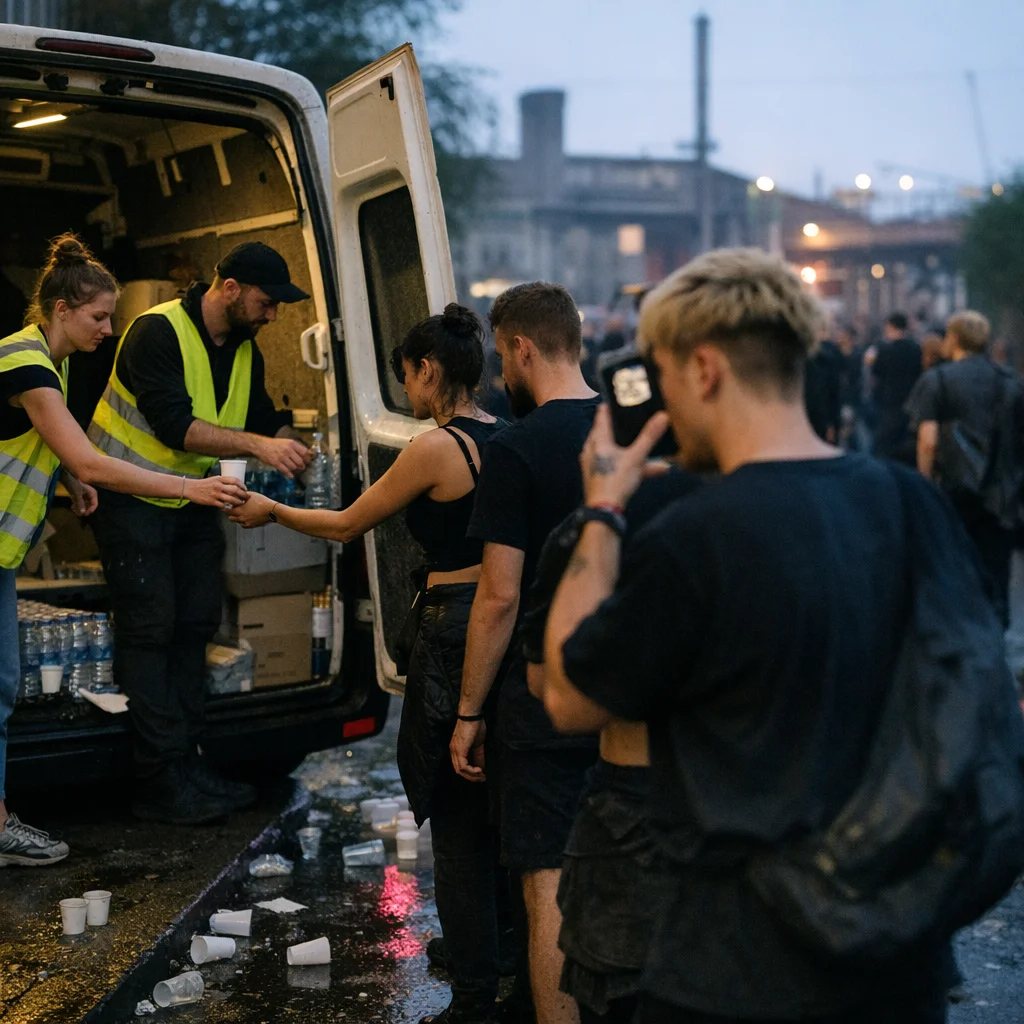
Berlin’s afterhours harm-reduction vans have been sold as rolling compassion: a fluorescent island of water cups, calm voices, and someone gently asking if you know your own name. Outside venues from Tresor’s metal-staircase purgatory to Sisyphos’ dog-biscuit-factory dawn, the story is the same—safety first.
But by early morning, the vans’ overlooked detail is doing the city’s actual work: the breath-reading device doesn’t just tell you whether you’re “okay.” It assigns you a number you can be sorted by. And in Berlin, being sorted is the closest thing we have to being loved.
Around sunrise, clubbers line up with the solemn patience of people who pretend they hate capitalism but absolutely require a points system. A volunteer in a high-vis vest presses a mouthpiece into a hand like communion. A dancer exhales, eyes blank with that familiar ketamine calm—the chemically outsourced personality that says, “I’m deep,” when what it really means is, “I’m unavailable.”
“I don’t do small talk anymore,” said Felix Neumann, a freelance “concept consultant” whose entire conversational range now lives between ‘mmm’ and ‘interesting.’ “K helps me stay in my body.” He paused, as if waiting for the body to arrive. “Also the van gave me a gold status. That felt… seen.”
On paper, the van is a public service. In practice, it’s a funnel: scan, score, and softly suggest. The staff don’t call it marketing; they call it “community follow-up,” which is what Berlin calls anything that wants to get inside you without buying you dinner. The more “responsible” you are—more readings, more check-ins, more consent forms you don’t read—the more “benefits” appear: discounted electrolytes at partner kiosks, faster entry lanes at select parties, “priority updates” for lineups you were already going to pretend you discovered first.
A club spokesperson, Jana Krüger, insisted the vans are “strictly harm reduction” and that “no individual is targeted.” She added that the program “helps tailor resources,” which is a soothing way to say the city has found a backdoor arrangement to monetize your collapse.
Even the police, normally allergic to nuance, sounded oddly grateful. A spokesperson said the vans “reduce incidents requiring response.” Translation: fewer messy bodies on the pavement, more neatly cataloged ones in a spreadsheet.
Meanwhile, the neighborhood’s older residents watch the parade of chemically neutral faces glide past Turkish bakeries and late-opening pharmacies, clutching stamped hands like holy relics. In a city that once claimed to be anti-system, the newest ritual is submitting to a device so you can feel special for surviving the thing you paid to do.
Organizers confirmed the vans will expand next month with “enhanced analytics.” Berliners can look forward to a future where your personality is still missing—just better documented.