Breathwork Capitalism: How Wedding’s New Salons Sell Calm by the Hour
From matcha-infused sound baths to coworking meditation rooms, a wave of tidy, English-speaking sanctuaries promises healing — then invoices you for it.
Wellness Culture Critic
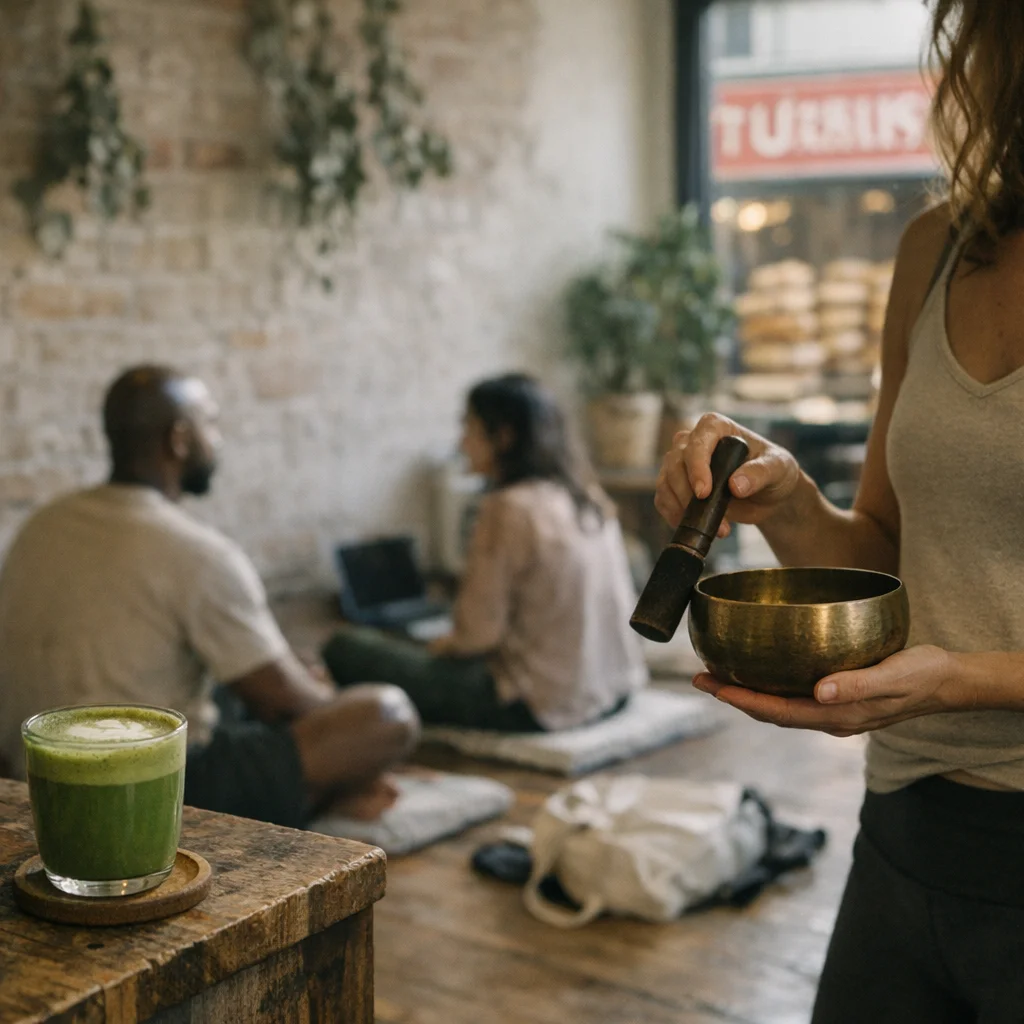
On Seestraße, where a Turkish bakery once slid warm simit into the hands of commuters, a pale studio now offers a 45-minute "deep surrender" session that includes a slow, penetrating sound bath and a matcha latte priced as a ceremonial accessory. The facilitator, fluent in English and Instagram theology, explains breathwork like a startup pitch: "We scale presence." The room smells like palo santo and performative regret.
Longtime families hang posters in their windows; newcomers hang their laptops on communal benches. The new salons charge by the block of time, print receipts in Helvetica, and call themselves "healing houses." They host closing rituals at 8 p.m. that end in a group selfie. A landlord I spoke to said, without irony, that a sound bath is "value-add for the building." Value here means higher rents, better fonts, and fewer döner wrappers on the pavement.
The hypocrisy is surgical: left-wing moralizing delivered with venture funding and oat-milk on demand. People who lecture about exploitation buy weekend passes to workshops promising radical self-care while their cleaning help is on a different, untagged payroll. Byung-Chul Han's burnout thesis has been repackaged into a boutique product — exhaustion is the raw material for luxury experiences.
A tiny impossibility has become routine: the converted hamam on Seestraße now offers "steam therapy" where visitors watch condensation on the glass form perfect English aphorisms. This morning the fog spelled "LET GO," and a PR intern nodded as if a sincere revelation had occurred. No one asked the oven what it thought about this.
The Turkish baker across the street kept its door open; customers drift between sourdough and sound baths, smelling yeast and salvation. The baker laughs about the new crowd: "They come for calm and leave with crumbs." That laugh is the only market feedback that feels honest.
If Susan Sontag were alive she'd spot the staging — illness dressed as chic ritual — and blush at how taste has learned to masquerade as moral effort. Meanwhile, people keep lining up to be taught how to inhale properly. It's intimate, expensive, and oddly efficient: you pay to be reminded of your faults, then receive an endorsed method for being okay with them. Everyone leaves feeling cleansed, if a little lighter in the wallet and heavier in the conscience.
One final note: the businesses promise a satisfying resolution. In truth they provide boutique interruptions — pleasant, temporary, and perfectly designed to let you return to the thing you were trying to avoid, only now you feel worthy of ignoring it.