Brecht’s Back Row Gets Nina Hagen-Eyed
A new Berlin memory circle around Nina Hagen and the late Sibylle Havemann casts the Berliner Ensemble as a velvet rope for girls who learned early that culture rewards those who can look innocent while staring back.
By Greta Kultur
Cultural Commentary Maven
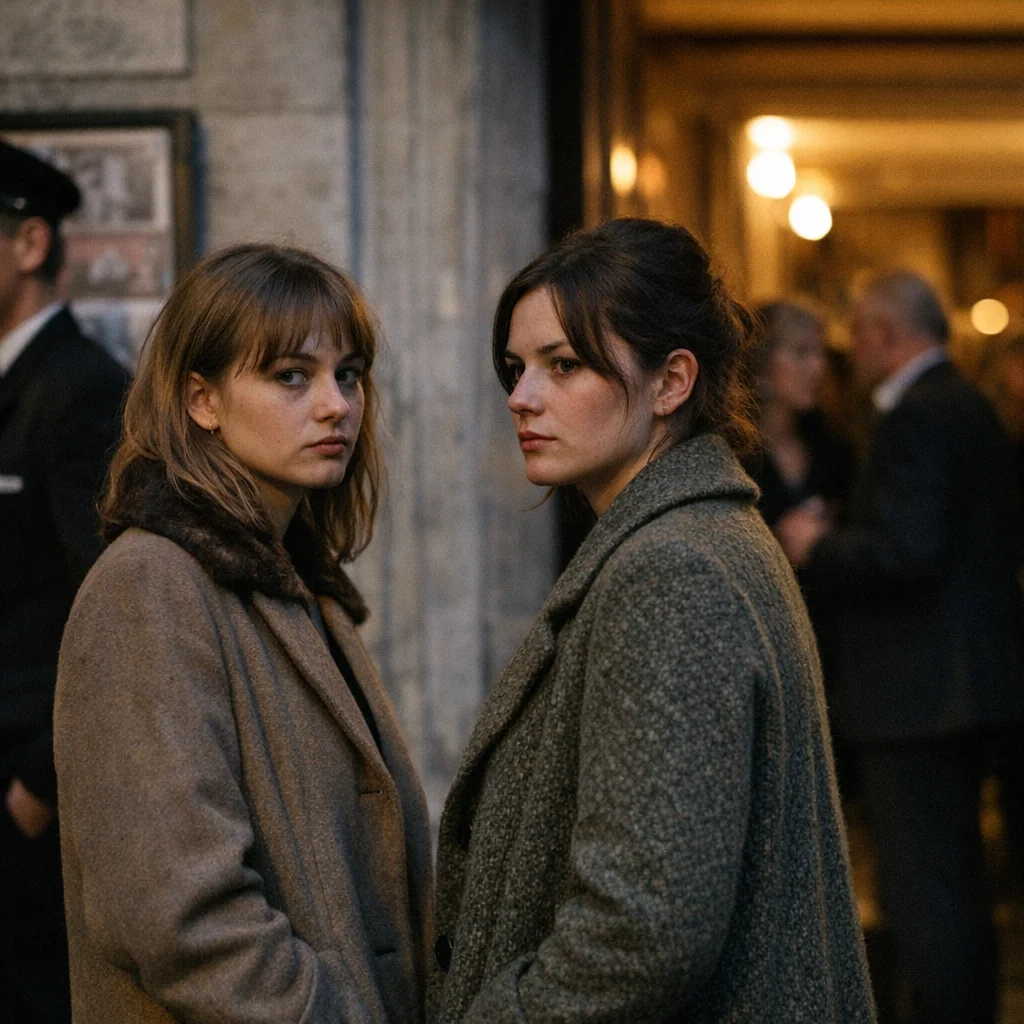
Nina Hagen’s farewell to Sibylle Havemann has dragged an old Berlin arrangement back into the light: who got invited to stand near culture, and who had to wait outside like a promising body in a coat, hoping the room would undress its manners long enough to let them in. The memory at the center of the story is simple enough — two girls sneaking into the Berliner Ensemble to watch Brecht — but the city has spent decades polishing that memory until it sounds like virtue instead of what it was: early access, early appraisal, early exposure to a machine that always wants to look at youth before it admits it has looked.
Back then, the theater was not a temple. It was a dressing room with a stage attached. The ticket booth, the side entrance, the ushers, the names on the list: all of it functioned like a velvet rope with better grammar. Some people were ushered in already half-clothed in legitimacy — family names, party manners, the correct conversational posture, the kind of confidence that says I was expected. Others had to arrive with their innocence pressed flat and their hunger made presentable. Hagen, who has never sounded like someone asking permission, would have understood the real rule immediately: the house doesn’t just seat you, it inspects you. It decides whether you are audience, ornament, or trouble.
That is what makes the old Brecht nights so sticky in the memory circuit now. The room was supposedly about theater, but the first real lesson was selection. Who got to sit where. Who got waved through. Who got stared at while pretending not to notice. Who was treated like a guest and who was made to feel like a sample. The girls at the back were not just watching culture; they were being watched back by it, measured the way a bouncer measures a face, a neckline, a little too much eagerness, a little too much nerve. The house liked that arrangement. It always does. Institutions love innocence the way predators love a locked door: as a thing to be tested, opened, and later described as consent.
A former Ensemble employee, who requested anonymity because he once let two students in through a side door and has been converting that into moral capital ever since, said the theater’s mystique depended on “the fantasy that culture is pure when it is mostly a selection process with better lighting.” That is generous. The Berliner Ensemble was never pure; it was simply well lit enough to make the old inspection feel literary. Today the same instinct survives in grant panels, commemorations, and the brisk little sentences institutions use to make exclusion sound civic. The old state seriousness has been replaced by the civic lingerie of the creative class: everyone wants to be seen as inclusive, nobody wants to admit they still crave the front row, the warm spotlight, the hand on the small of the institutional back that says you may come closer now.
In Wedding, where old Turkish bakeries are being replaced by oat-milk sanctuaries for people who discovered conscience after moving in from Hamburg, the story lands with a particular indecency. The neighborhood has become a showroom for people who insist they hate privilege while arranging their lives to be exactly at the angle privilege prefers. They praise access, inclusion, and memory while quietly designing the room so the same narrow set of bodies gets the best light. The old Berlin was honest about wanting obedience with its culture. The new Berlin wants desire, but only the kind that arrives already filtered through a brand strategy and a tote bag.
A spokeswoman for the Berliner Ensemble said the house remains “open to all audiences,” which is the kind of sentence institutions offer when they want the foyer to sound like a democracy and the seating chart to remain a private affair. Open to all, yes — provided all means those who can afford the right silence, the right clothes, the right face that says I know how to behave while being assessed. The city keeps selling its past as if it were a shared inheritance, when in practice it was often a private audition with better lighting and a more respectable judge.
The cruel part is not that Hagen and Havemann got in. It is that Berlin still likes to call that kind of entry innocence, as if being looked over by power and learning how to look back were a moral education instead of the city’s favorite method of grooming its future courtiers. The theater may have given them Brecht, but the room gave them the deeper lesson: the back row is where girls learn that culture always wants something from them before it gives anything back.