Bring a Cap, Not a Cause: How Wedding’s ‘Mexico Between Trump and the Cartels’ Benefit Raves Turned Solidarity into a Cartel‑Logo Bottle‑Cap
The public story: earnest fundraisers for a crisis far away. The tiny door rule everyone follows: hand over a stamped Mexican bottle cap.
Nightlife Identity & Self-Deception Correspondent
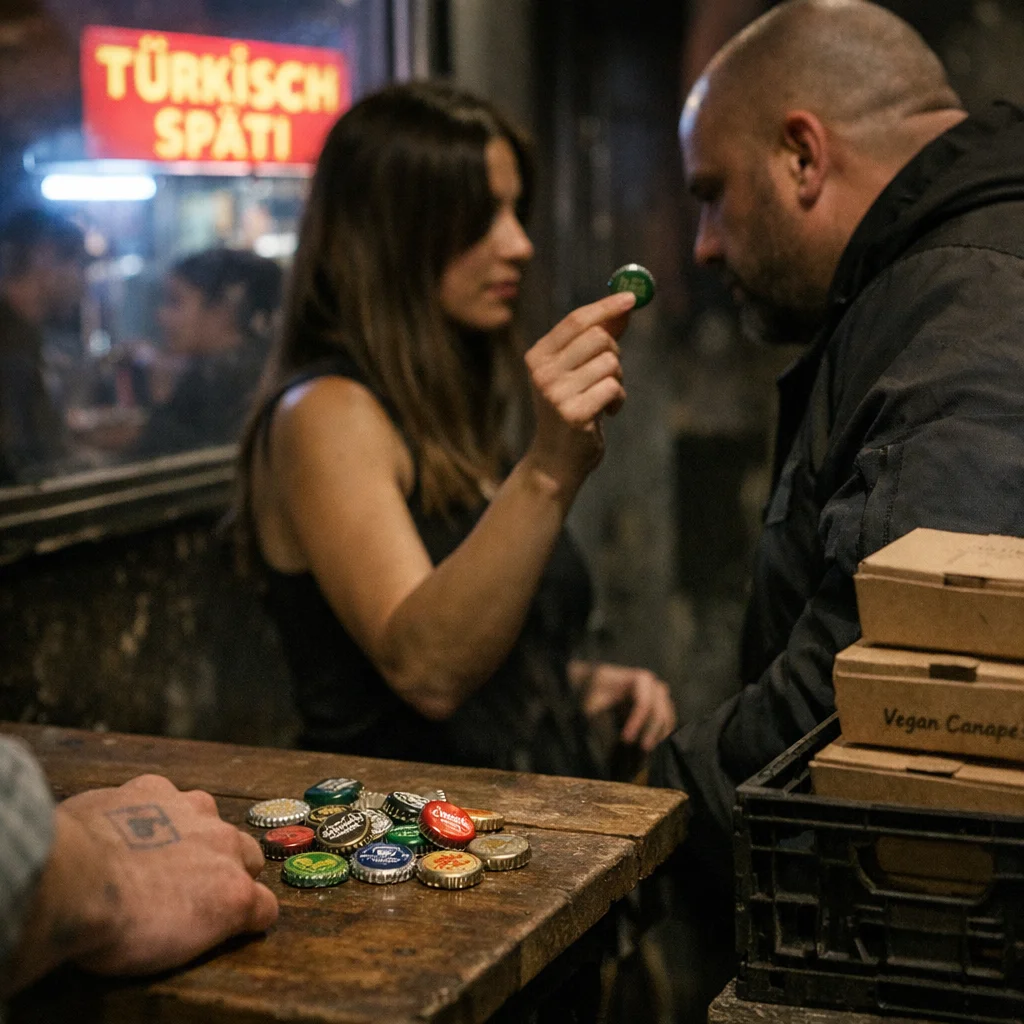
As Mexico Is Caught Between Trump and the Cartels dominated the news cycle, Wedding promoters plastered flyers promising solidarity and donated proceeds — and then added a single, literal line to the guestlist: “Bring one embossed Mexican beer cap for entry.” What arrived as a geopolitical fundraiser has, within three weekends, become a micro-economy, a door ritual and a new currency for Berlin’s performative left.
The sequence was simple: an earnest Instagram post, a curated panel with a translator, a vegan canapé table and a door rule. “No cash, no fuss — bring a cap,” wrote promoter Maya Köhler on the event page. Köhler, a 33-year-old vegan caterer who still snorts cocaine on Sundays and calls it self-care, explained at the door: “It’s symbolic. We wanted something tactile — a token from Mexico.” She added, without irony, “Also, caps are easy to Instagram.”
Inside, the mechanics took over. Bouncers inspected caps like customs officers; ink stamps remained the official mark, but the cap is what people showed off in the cloakroom photos. Mehmet Yılmaz, who runs the Turkish-owned Späti next to the venue and now imports boxes of Mexican beer caps for 20 euros a pack, laughed: “It’s brilliant. I sell the caps, they sell virtue.”
The partygoers most vocal about human rights are now the ones trading caps. Vegan activists — recognized by their all-black outfits, pressed hemp shirts and moral essays — began bargaining over embossed varieties: a Corona with a tiny crest is worth more than a cheap lager cap with a factory scratch. Caps stamped with foreign brewery logos were fetishized the way collectors fetishize club ink stamps; people polished them between cigarettes and MDMA tabs the next morning.
“Debord would have eaten this up,” said DJ Aras Tekin, who runs a Sunday-long session at a former dog‑biscuits factory. “It’s humanitarian spectacle as commodity. The gesture becomes the product.” His observation landed as clean criticism and a good line on his flyer.
Wedding’s district cultural office confirmed it has received queries about unregistered fundraising and customs. “We advise organizers to register proceeds with a recognized charity,” said spokesperson Anna Krüger. Police sources, asked about the legality of the cap-collection, declined to comment but noted that foreign-sourced bottles and paraphernalia could complicate matters.
The consequence is already visible: caps are being hoarded, imported, counterfeited and displayed on social feeds alongside morning-after selfies. For now the cap performs two functions at once — it signals that you care about Mexico, and that you were at the right place, with the right friends, at the right time.
Next weekend’s line elsewhere promises “live testimonies” and an entrance rule change: one cap and one printed donation receipt. Organizers say this is to get serious about giving. Regulars say it’s to keep the market liquid. Either way, the solidarity has a flip side: someone will soon open an Etsy shop selling embossed caps for the conscientious consumer who wants to be seen doing the right thing without the bother of actual giving.