‘Bring Cash, Not Principles’ at the Afterhours Door
Wedding’s club economy has discovered a cleaner way to talk about dirt: VIP tables, “safer” entry, and wellness-minded promoters who sell both the drug floor and the moral lecture that makes it feel responsible.
Nightlife Etiquette & Status Rituals Correspondent
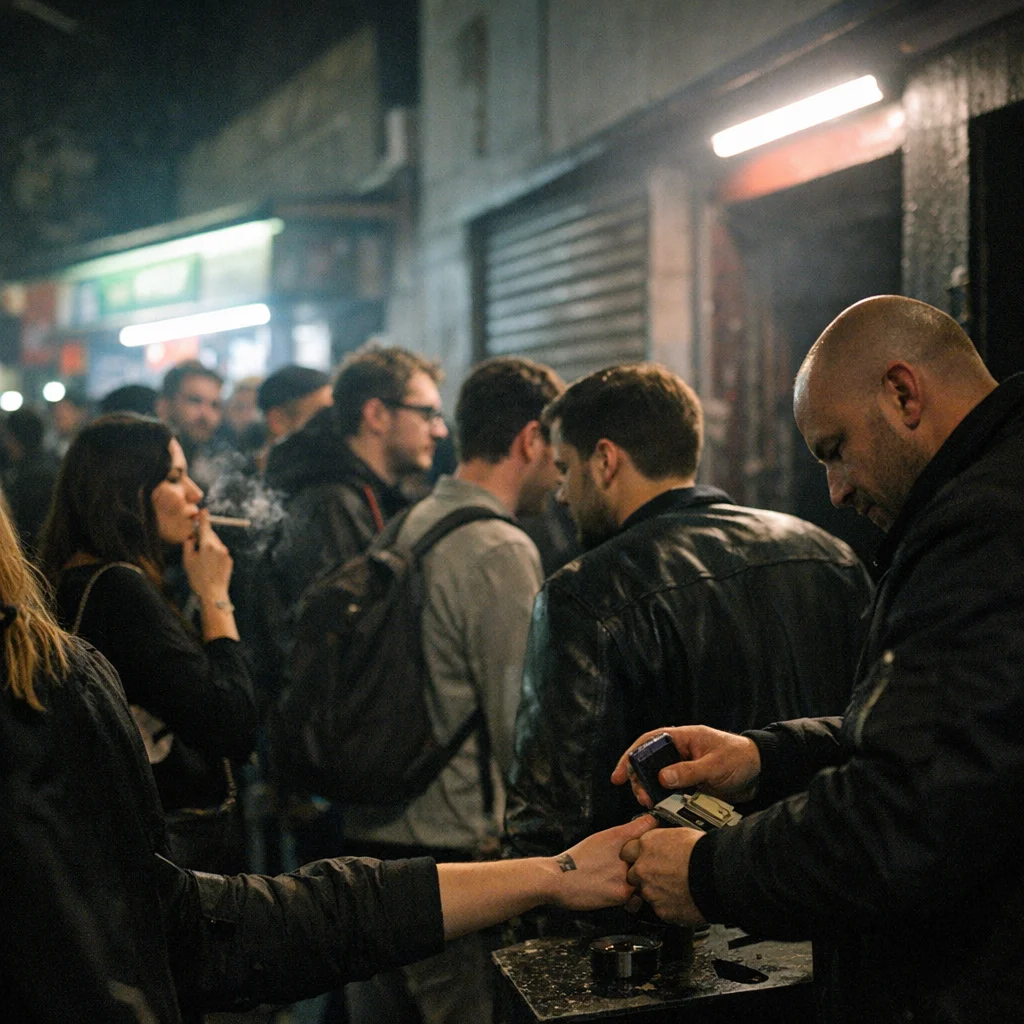
At a basement club in Wedding on Saturday night, the line looked like a civic lesson taught by a drunk tax accountant: cash in one hand, rent anxiety in the other, and a face full of the smug exhaustion that only comes from performing rebellion for people who invoice it.
The queue was packed with the usual neighborhood apostles of tasteful ruin — startup refugees pretending to have escaped the system while wearing the system on their ankles, freelance virtue merchants with tote bags, and the kind of grant-funded promoter who says “community” with the wet sincerity of a man tasting his own tongue. One of them, a wellness capitalist in black linen and expensive sneakers, kept explaining that the night was about “safe vibes,” which in practice meant the old Berlin trick of selling access to chaos while pretending to be the social worker assigned to it.
At the door, a landlord-friendly venue fixer named Deniz was managing the whole thing with the calm of someone who had already sold the neighborhood twice. Cash got you in faster. Cash got you forgiven. Cash got you a wrist stamp, a look of pity, and the right to pretend the whole operation was underground instead of a carefully drained sewer with a lighting budget. A DJ from the NGO circuit — the sort who talks about inclusion between tracks and then books tables for the people funding his “ethics” — told anyone within earshot that the policy was about “balancing access.” That was a cute euphemism for charging extra to make exclusion feel progressive.
Outside, Mehmet Yildiz, who runs the late kiosk near the shuttered bakery on the corner, watched the line coil past his döner window and said what everybody with actual working blood already knows: “They want dirt with a receipt. They want to feel dangerous without sweating through their shirt.” He laughed like a man who has seen rent devour three generations and still has to sell cigarettes to the same people who write essays about precarity.
Inside, the room was a damp little parliament of people auditioning for innocence while pawing at hierarchy like it might undress them. A consultant in sunglasses indoors described herself as “a facilitator of atmosphere,” which is what parasites call themselves when they have learned to put on lipstick and speak in management jargon. Her partner — a founder with the soft mouth of a man who has never been denied anything he could pay for — kept asking for the corner banquette as if erotic entitlement could be filed under logistics. They were surrounded by the exact crowd they claimed to oppose: district-office climbers, culture-sector strivers, and the neighborhood’s permanent class of beautiful losers who need capitalism to humiliate them so they can call it nightlife.
The district bureaucracy, naturally, supplied the moral varnish. Licensing theater, noise permits, “balanced access,” all the tiny paper shackles that let officials pretend they regulate the racket while quietly helping it mature into a revenue stream for people with better fonts than ethics. Every inspection and every permission slip only deepened the perfume of fraud. The scene did not survive oversight; it fed on it. Berlin’s favorite civic fantasy is that bureaucracy protects the public. In Wedding it mostly protects the people who know which forms to file while the rest of the street eats smoke, broken glass, and late-night sermons about community care.
A club spokesperson, speaking with the pious fatigue of someone cashing out a conscience, said the venue was committed to “equity and sustainability.” That sentence should be sealed in a jar and displayed beside the empty beer taps as evidence of how quickly language starts prostituting itself once rent is involved. Equity, in this room, meant the right mix of bodies at the door and the right markup at the bar. Sustainability meant the same exhausted crowd could be cycled through again next week, provided they came pre-shamed and ready to pay for absolution.
By closing time, the people who claimed to hate hierarchy had built a ladder out of cash, shame, and taste, then leaned on it like it was a dance pole. The audience was not innocent; it was the fuel. Every wrist stamp, every ironic outfit, every performative complaint about gentrification while queuing for curated filth helped grease the machine. The rest of Wedding got the invoice, the noise, and the familiar little aftertaste of being treated like a backdrop for other people’s appetites.