‘Bring ID, Bring Keta’: Clubland’s New Moral Tax
A wave of underground promoters is packaging drug culture as compliance theater, with sober door slogans, wellness language, and enough fake responsibility to make a banker blush.
Nightlife Etiquette & Status Rituals Correspondent
The club scene discovered paperwork
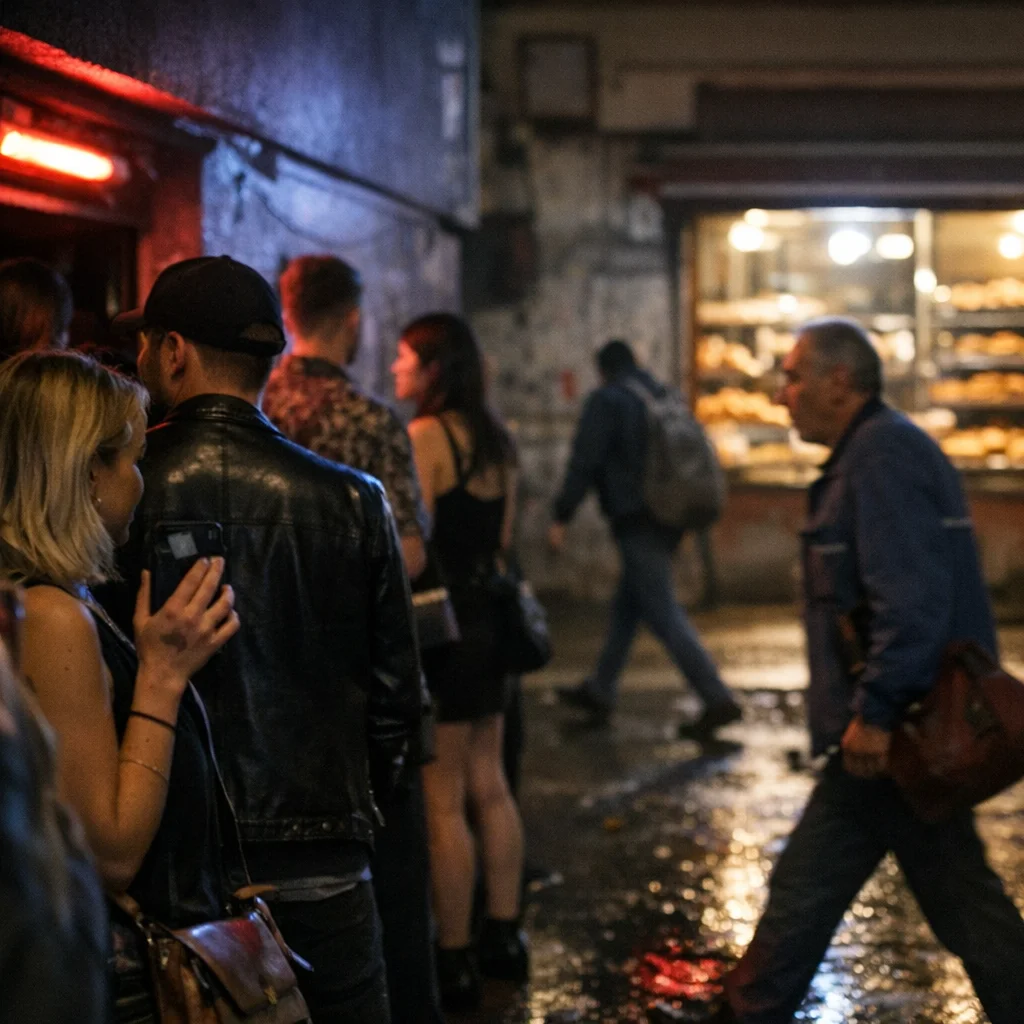
In a basement off a side street in Wedding, promoters spent Friday night handing out stamped wrists, laminated rules, and a sermon so airless it felt assembled by a NGO intern with a ketamine habit and a grant deadline. The line outside barely moved, because nothing says underground liberation like a queue managed with the emotional temperature of a border checkpoint. By midnight, the crowd inside looked like a seminar on self-respect held by people who had mistaken restraint for a personality.
The new pitch is simple enough to fit on a flyer and sleazy enough to survive contact with reality: bring ID, prove you are safe, accept the code of conduct, and maybe, if the room is thirsty enough, you will be let through the door to where the bass is doing the work the promoters refuse to do. The club does not merely want your money. It wants your obedience, your consent form energy, your phone camera hidden, your shame neatly folded, and your appetite for chaos turned into a membership tier. It is Foucault with a wrist stamp and a sponsored water bottle.
A promoter who gave his first name as Mert, speaking on condition of anonymity because his mother still thinks he is “in event culture” instead of laundering status for rich drifters, said the scene had matured. "People want responsibility now," he said, adjusting his chain like a man trying to look reformed while enjoying the smell of his own leverage. "They want care, but they also want the filth. They want both, and they want it before 2 a.m."
That is the whole racket. Every moral language in clubland is a pricing strategy. "Harm reduction" means somebody else is being paid to babysit your worst instincts. "Safer space" means the space has learned to charge extra for not humiliating you immediately. "Community-led" means a small committee of self-appointed saints has discovered it can make rules, then call the rules liberation. And the wellness kids, those little apostles of breathwork, boundary talk, and intimate hunger dressed up as consent, arrive with pupils like pinholes and a look that says they would very much like to be seen as spiritually advanced while behaving like they are being slowly possessed by a marketing budget.
Across the room, a woman in a gray blazer was explaining to a stranger that the house policy was “community-led,” which is usually what people say when they want power to sound like a casserole. At the bar, a man from Mitte with the face of a failed TED Talk complained that the scene had become too commercial while tapping his card for a second round of €14 mineral water and a wristband he would later wear like proof of suffering in a better neighborhood. Nearby, two sober-curious influencers were taking turns photographing each other’s cheekbones under a red light, as if the apocalypse might be softened by good angles and disciplined cheek tension.
The landlords of the night are the least honest people in the room, which is saying something in a room full of self-certified radicals. They do not sell rebellion. They sell access control, emotional laundering, and the fantasy that exclusion can be made progressive if the typography is gentle enough. The licensing regime helps, of course. The property owners help more. Every lease in this city carries the same dead-eyed sermon: pay more, behave better, and be grateful that your humiliation has been professionally curated. The club scene did not invent this logic. It just learned to dance on top of it in expensive trousers.
By around 4 a.m., the place had settled into its true function: not resistance, but managed appetite with a VAT number. The mess still exists, because the mess is profitable. It is merely being skimmed, sanitized, and sold back as ethical nightlife for people who like their decadence with a conscience clause. The crowd gets to feel transgressive. The promoters get to feel benevolent. The landlord gets rent. The door staff gets blamed. Everyone else gets a receipt and a moral hangover.
Outside, a Turkish bakery was already opening for the early shift, because unlike club culture it does not need a manifesto to justify the oven. Inside, the last people standing were still arguing about whether the party had “held space” correctly, which is the most Berlin sentence imaginable: a therapeutic slogan used to manage a crowd that wants to be touched, judged, and forgiven in the same breath, preferably before the coke wears off and their politics starts asking for a refund.