Bring Your Basil to the Swap, Transfer the Rights: Wedding’s ‘Heirloom’ Seed Table Quietly Enrolls You in a Startup
Community folklore says the seed swap preserves shared biodiversity; read the bottom-left of the laminated sign and it quietly asks you to license any donated plants to a local ag‑tech firm.
Gentrification & Moral Performance Correspondent
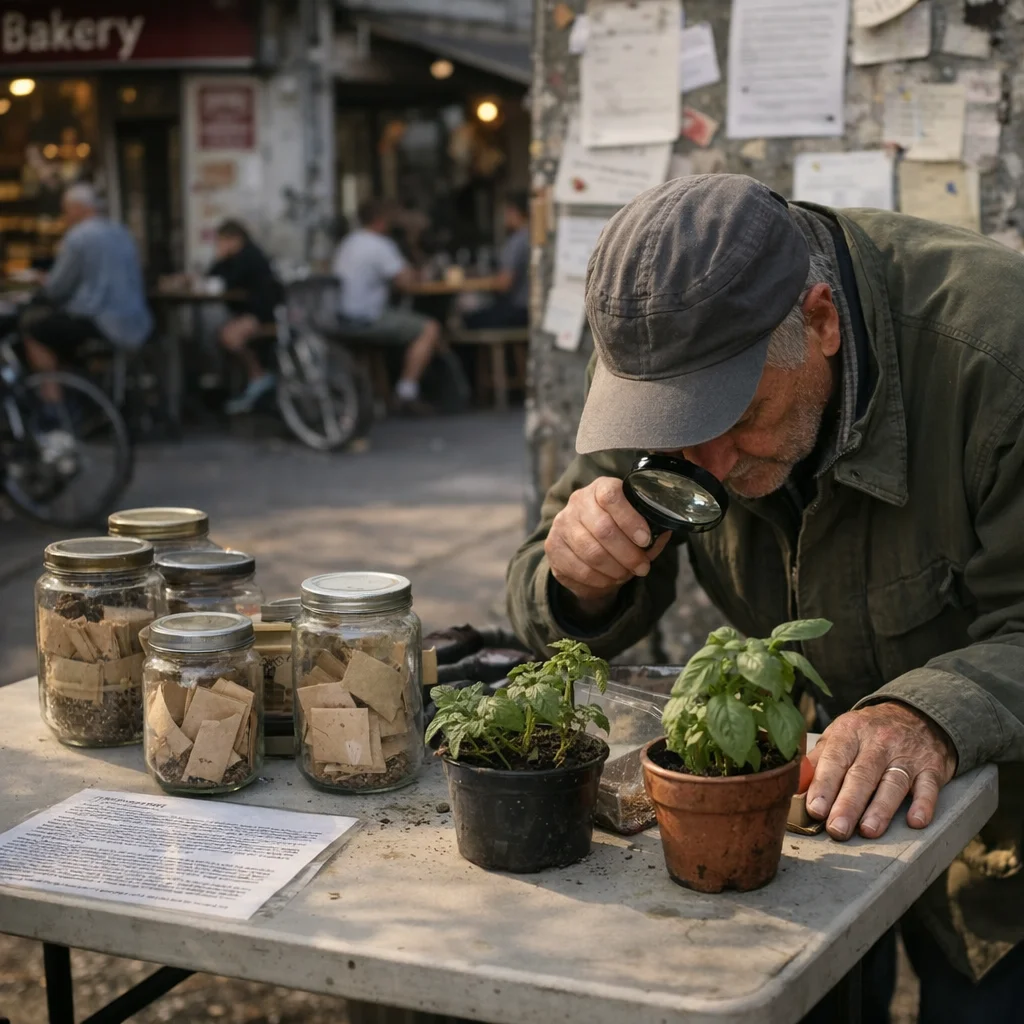
Community lore sells the seed table on Müller‑adjacent street corners as pure: an old woman with flour on her apron, a student with too many succulents, neighbours swapping tomato varieties the way families swap recipes. In Wedding, the Heirloom Seed Table opened last month under that story—labeled “Bring one, take one”—and for a few weekends it looked like civic love in miniature.
Then someone read the bottom-left of the laminated rules. A single row of microtext, the size of a flea, asks donors to grant a “non‑exclusive, worldwide license” to a local ag‑tech incubator if their donation is accepted. Volunteers still fold envelopes and scribble “balcony, south-facing, three hours sun,” but those pencil marks are now field‑trial metadata, not family anecdotes.
“That clause was hidden like the small print on an appliance that will fail in two years,” said Melike Kaya, who runs the Turkish bakery opposite the table and whose mother brought a pepper plant to the first swap. “We swapped seeds because my neighbor’s grandmother raised them through the war and the roofs and the winters. We didn’t sign them away to someone in a hoodie with a pitch deck.”
Organizers insist the table preserves biodiversity. SeedLoop GmbH, the startup named in the microtext, says the license is “traceability for conservation” and provides a spokesperson quote about “responsible scaling.” The district office (Bezirksamt) said it is “reviewing the agreement language” and urged calm; their email signature read like a small state tribunal.
The tiny clause does the work the open‑air rhetoric denies: it converts altruistic sharing into a pipeline. Donor envelopes collect balconies’ altitude, sun hours, even the potting mix brand. That data feeds trials; trials feed selective breeding; selective breeding feeds intellectual property. A basil plant that was once a grandmother’s stubborn, black‑soiled survivor becomes a line item in a term sheet.
Herr Köhler, a man who frequently scolds teenagers for buying canned avocado toast on moral grounds, was photographed last weekend placing a jarbed basil cutting on the table. His father’s sepia photograph—stitched in a family album and now passed around the kiez—shows him handing a sack of seeds to men in suits labeled simply “Variety Exchange.” Nobody mentions that when they lecture about ethics.
Walter Benjamin wrote about the loss of aura when art is mechanically reproduced; here the aura is being barcoded. Neighbors have demanded a full reading of the microtext, and a community meeting is scheduled for next Tuesday—where the polite will lecture the loud, and the loud will ask whether moralizing about consumption is easier when your granddad already sold the family’s seeds to the first penknife industrialist.
For now, some donors are withdrawing plants, others are bringing magnifying glasses. SeedLoop says it will “clarify language.” The table remains, but the ritual has changed: people still trade basil, but they now do it while checking their pockets for clauses.