‘Bring Your Own Proof,’ Says the Office Window
A Wedding neighborhood counter has discovered the perfect way to look efficient while doing nothing: making residents arrive with every document except the one thing they actually need, namely a human being who can.
Civic Hypocrisy & Neighborhood Compliance Reporter
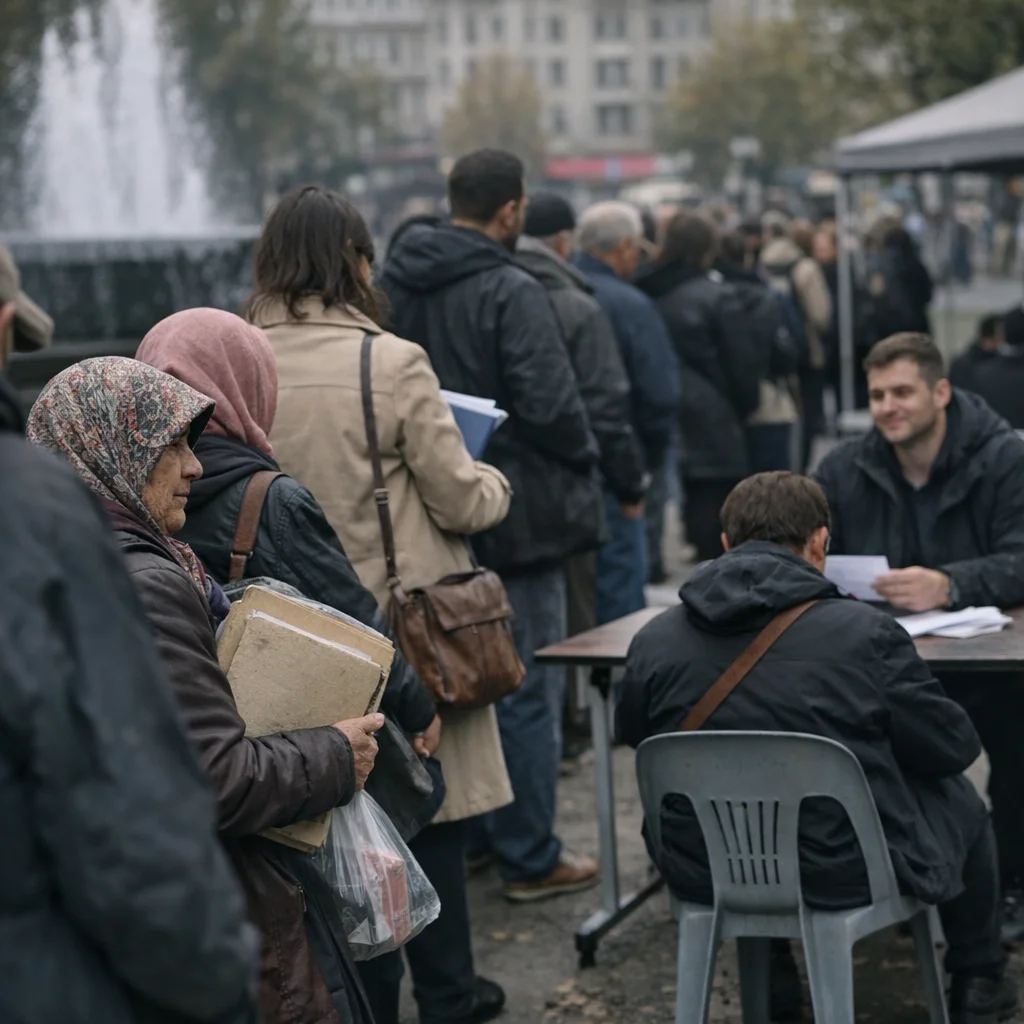
Leopoldplatz, where paperwork goes to feed
Leopoldplatz spent the morning doing what it does best: turning civic life into a mild public injury. Plastic chairs, a fountain, a temporary counter, and a line of people being professionally fermented in the cold. The neighborhood office had brought out its mobile document machine after residents complained that every permit, appointment, and form had started to feel designed by a sadist with a laptop.
By late morning, the queue had wrapped around the square like a sentence with no verb. Turkish grandmothers with folders thick enough to stop a knife stood beside younger men in clean sneakers and borrowed confidence, each pretending not to smell the rot under the word “service.” A consulting type in a black coat — one of those men who move through Wedding with the panicked grace of a man entering a bad dream in a nice jacket — said he had come for “a quick clarification.” He was told, politely, to return with the exact paper proving he deserved clarity.
That is the trick, of course. The counter does not merely annoy. It strips time from the people who can least afford to bleed it. The retired woman who arrived before nine loses half a day and maybe her spine. The delivery worker loses a shift. The tenant with a rent increase loses patience first, then dignity, then the number of the person who told them to come back next Tuesday. The polished ones, the fluent ones, the people with flexible jobs and family lawyers tucked into their phones, get processed fastest. Everyone else gets sorted into the ornamental category called “later.”
“They ask for documents like they’re collecting trophies,” said Ayse Demir, 62, holding a pension form, a rental notice, and a face that had already outlived three German administrative reforms. “Then they send you away for the one paper that would let them finish the job. It’s like being groped by a machine that insists it’s helping.”
The posted instructions — laminated, smug, and printed in a font that suggested a schoolteacher with a cruelty fetish — demanded that visitors arrive with every supporting document imaginable. What they did not demand, because that would be too honest, was a functioning official with authority, memory, and the ability to look someone in the eye without hiding behind “digitalization.” The manager, a local legend in a navy blazer, reportedly spent the morning in a side room explaining to someone on the phone that the system was “working as intended.” That phrase, in public administration, usually means the machine is not broken at all. It is simply doing what it was built to do: exhaust the people without power until they leave voluntarily and save the office the trouble of saying no.
A notice taped beside the counter promised “streamlined processing.” Wedding has heard that kind of language before. It usually arrives with a clipboard, a grin, and the faint odor of someone else’s grant money. The office clerk at the window — overconfident, under-read, and armed with the nerve of a man who has never had to choose between an appointment and a shift — kept asking for signatures as if the city were a nightclub and everyone in line was trying to get past the velvet rope by being legally legible.
Near the fountain, the regulars watched the whole thing with the calm disgust of people who know that the state loves them most when it can make them wait. A woman selling cigarettes called it “modern,” which in Berlin usually means the cruelty has been polished enough to photograph. A man on a bench said the counter looked less like an office than a mouth: always open, always swallowing, never chewing.
By early afternoon, the appointment slips were gone and replaced with new slips for next week, the administrative equivalent of promising a second date after already emptying someone’s wallet. Several residents left with the same problem they had brought in, plus the fresh bruising knowledge that the system is not incompetent by accident. It is a small machine of social discipline, built to reward the people already padded with ease and punish everyone else until they apologize for needing to live at all.
At Leopoldplatz, this is called public service. Somewhere in the district office, a manager in a clean shirt was probably typing “efficiency” into a memo and feeling very grown-up about it.