Bring Your Own Tablecloth: How Wedding’s ‘Open Market’ Turned Into a Five‑Color Dress Code
City hall sold pop‑up stalls as low‑barrier commerce; the tiny line in the permit about 'approved market textile' has made pastel linens the real currency of the square.
By Lena Veneer
Gentrification & Cultural Displacement Correspondent
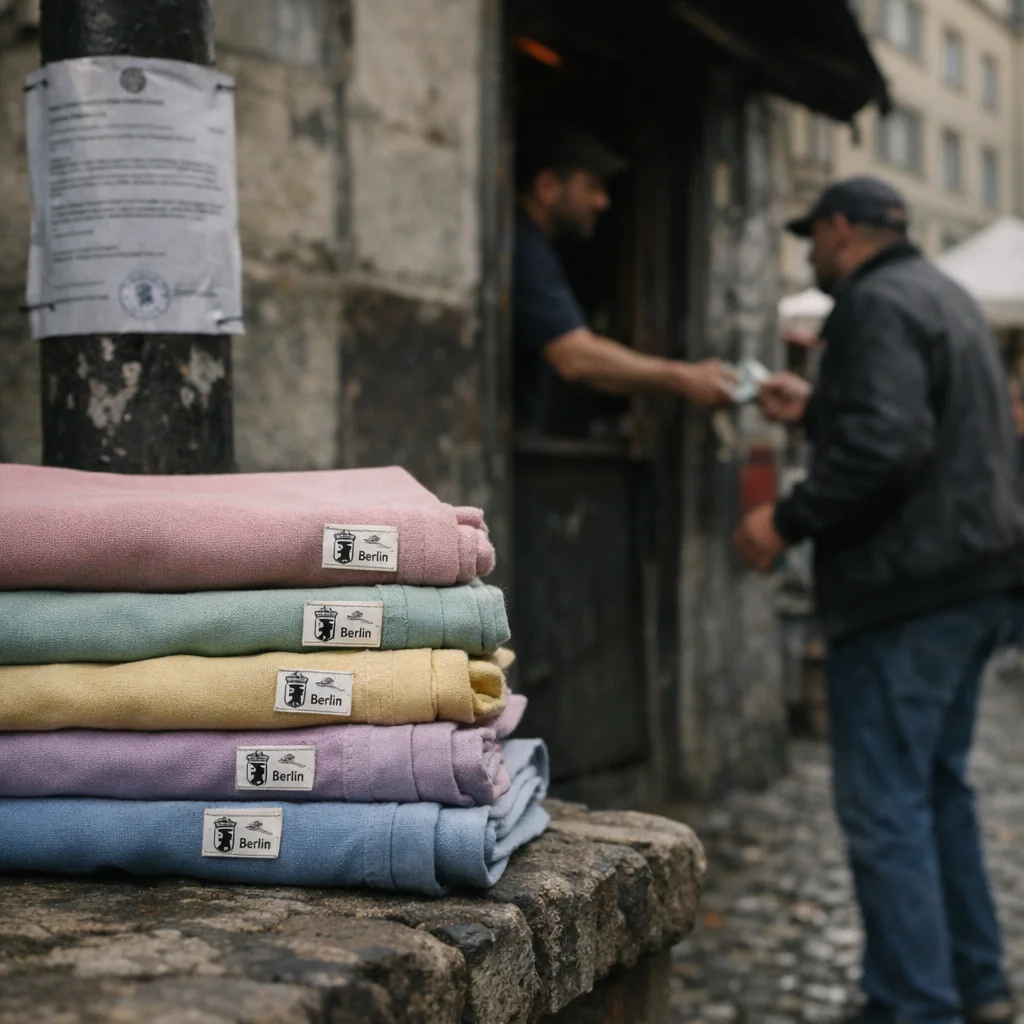
City hall sold pop‑up stalls in Wedding as a cheap win for small traders — a permit meant to unclog storefront dreams and let hobby bakers hawk simit beside Turkish spice stalls. What officials called "low‑barrier commerce" became a pastel dress code overnight, after a single sentence buried in the permit: all vendors must use the municipal‑approved market textile, available in five sanctioned colors.
The tiny sewn tag on those linens is where the leveling promise dies. Applicants are directed to buy the cloth from a single supplier named on the form; that supplier, market vendors say, runs a wholesale desk out of a shisha bar on the corner and keeps a ledger of which hue goes to which stall. "You think it's about hygiene and cohesion," said Fatma Demir, who has run a döner stall for 18 years. "But the colour decides if you get electricity, the grill spot, or if the market steward gives you a fine. It sounds ridiculous until you see a neon‑green linen shoved behind someone with a fat envelope."
What began as a safety justification — non‑flammable certification, uniform table edges for pedestrian flow — introduced a sequential microtag system that market stewards scan before assigning prime pitches. The municipal document reads like a Kafka form: sensible on paper, procedural and penetrating in practice. Vendors who could not pay the middleman's markup found themselves relegated to the periphery, forced to sell under a faded blanket while pastel‑draped stalls soaked up foot traffic.
Cem Öztürk, manager of Luna Shisha, shrugged when asked whether his address appeared on supplier records. "We facilitate logistics for the neighbourhood; it's not complicated," he said. "If someone needs a tablecloth, we oblige." The phrasing left a firm grip on reality: facilitation that also routes cash through familiar hands.
District spokesperson Anna‑Katharina Vogt defended the rule. "The textile requirement exists for safety and aesthetic reasons; any suggestion of preferential distribution is being reviewed," she said, adding that the procurement clause was intended to simplify enforcement, not create an inside market.
The effect is social choreography: pastel hues now signal who is plugged into which network, who can muscle into the best spots and who comes from behind in the queue. It has turned a municipal egalitarian gesture into a coded economy where linens are both ornament and currency.
Vendors plan a demonstration this Saturday, promising to flood the square with unauthorized neon beach towels if the office doesn't revoke the sole‑supplier line. City hall has opened an audit; until then, Wedding's market looks like a Benjaminian arcade — only the angels trade in thread counts instead of ephemera.