Broken Elevator, Perfect Principles
A Wedding housing block has discovered that nothing unites progressive tenants like a disabled lift and a long e-mail chain about inclusion.
By Omar Felton
Kiez Features Reporter
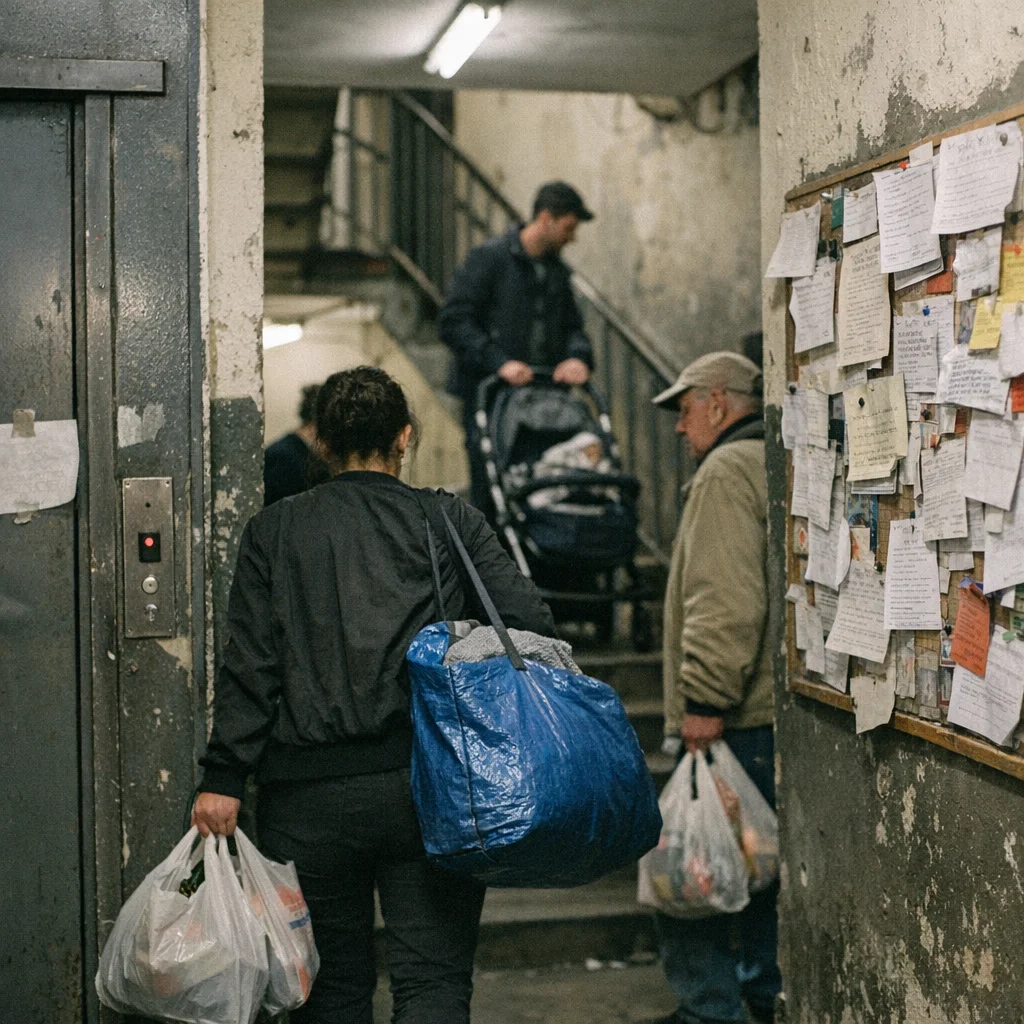
The building board at Brunnenstraße 214 has managed to do what most institutions only fantasize about: turn a dead elevator into a lifestyle, a sermon, and a small regime of humiliation.
In a five-story block near the old Turkish bakeries and the new places selling oat milk at extortion rates because they discovered guilt can be monetized, the lift has been dead for weeks. Residents say the landlord blamed parts, the management blamed procurement, and the board blamed the concept of urgency itself, as if a broken cable were a bourgeois rumor. What followed was a cascade of polished little emails, each one more self-loving than the last, written in the bloodless dialect of people who think “community” means other people doing the climbing.
The board members are easy to spot: linen shirts, bicycle helmets hanging beside the coat rack like moral credentials, one of those tiny espresso machines that looks medically unnecessary, and a habit of saying “we should hold space for all perspectives” right before refusing to sign anything that costs money. One of them, a consultant who calls himself anti-authoritarian when the rent is paid, keeps sending notes from a renovated kitchen that smells of citrus cleaner and quiet entitlement. Another likes to begin every message with “Thank you for your patience,” which is rich when your patience lives on the first floor and your mother lives on the fifth.
“It’s all inclusion until somebody has to carry the stroller,” said Cem Karaca, who lives on the fourth floor and requested anonymity because he still wants to sell the flat someday and does not want buyers picturing a stairwell full of ideological perfume and broken mechanics. He said the first notice promised “a respectful process,” the second asked residents to “embrace shared responsibility,” and the third suggested a working group before any discussion of repair, which is the bureaucratic equivalent of asking a drowning person to draft a values statement. That is Berlin in miniature: a commune with Wi-Fi, a feminist vocabulary, and no one willing to touch a wrench.
By then, the disabled neighbors had already done the arithmetic the board pretends not to understand. One woman who uses a walker said she has become intimate with the staircase in the same way one becomes intimate with a bad lover: through repetition, bruises, and the humiliating knowledge that somebody else is always on top of the problem and never underneath it. The younger residents, meanwhile, have turned guilt into a hobby. They write furious but carefully toned complaints, add reaction emojis to their own moral collapse, and speak about accessibility with the grave expression of people who have never carried a radiator or a grudge.
The emails got worse. One thread, forwarded to half the building by mistake and then defended as a “transparent process,” contained phrases like “we honor diverse lived experiences” and “we invite constructive participation,” while the actual subject was a lift that smelled of old grease and neglect. Another message suggested residents could “temporarily adapt” by using the stairs more thoughtfully, which is what privilege sounds like when it has learned to wear orthopedic language. The board’s favorite phrase, “we are seeking consensus,” now means “we are hoping time itself will give us absolution while your knees file complaints.”
A neighbor on the second floor, who works at a gallery and has an opinion about everything except labor, said the whole thing feels like “Hannah Arendt with a spreadsheet.” That is too kind. Arendt at least knew catastrophe when she saw it. This is more like a committee meeting hosted by a scented candle that has mistaken itself for democracy.
The board, which includes one self-described anti-capitalist and one woman who lectures everyone on care ethics while outsourcing her own moving day, insisted in a statement that the matter is being handled “with sensitivity and transparency.” In practice, that has meant more inbox penetration than building maintenance and a level of passive aggression usually reserved for failed open marriages and rent negotiations in well-lit kitchens. The delay is not abstract. It benefits the people who can still take the stairs without sweat ruining their image, the tenants with cheaper bodies and higher floors who get to preach from comfort, and the landlord, who gets to postpone a repair while everyone else performs the unpaid labor of being patient.
A district office spokesperson said elevator repairs are between the owner, the management company, and, when everyone else gets tired, the public’s remaining patience. The landlord association blamed supply chains, which is rich considering the only chain visible in the building is the one dragging groceries, laundry, and anyone with bad knees up the stairs one filthy step at a time.
For now, the lift remains out of service, the committee remains bloated on its own moral aftertaste, and the residents remain trapped in a building where every email says inclusion while the staircase keeps the poor, the tired, and the inconvenient bodies climbing in silence.