Brussels Gets the Axe, Tank Gets the Check
Friedrich Merz wants to cut 400 billion euros from the EU’s shared budget, but the defense brief is treated like a sacred text.
EU Melodrama & Sidewalk Diplomacy Correspondent
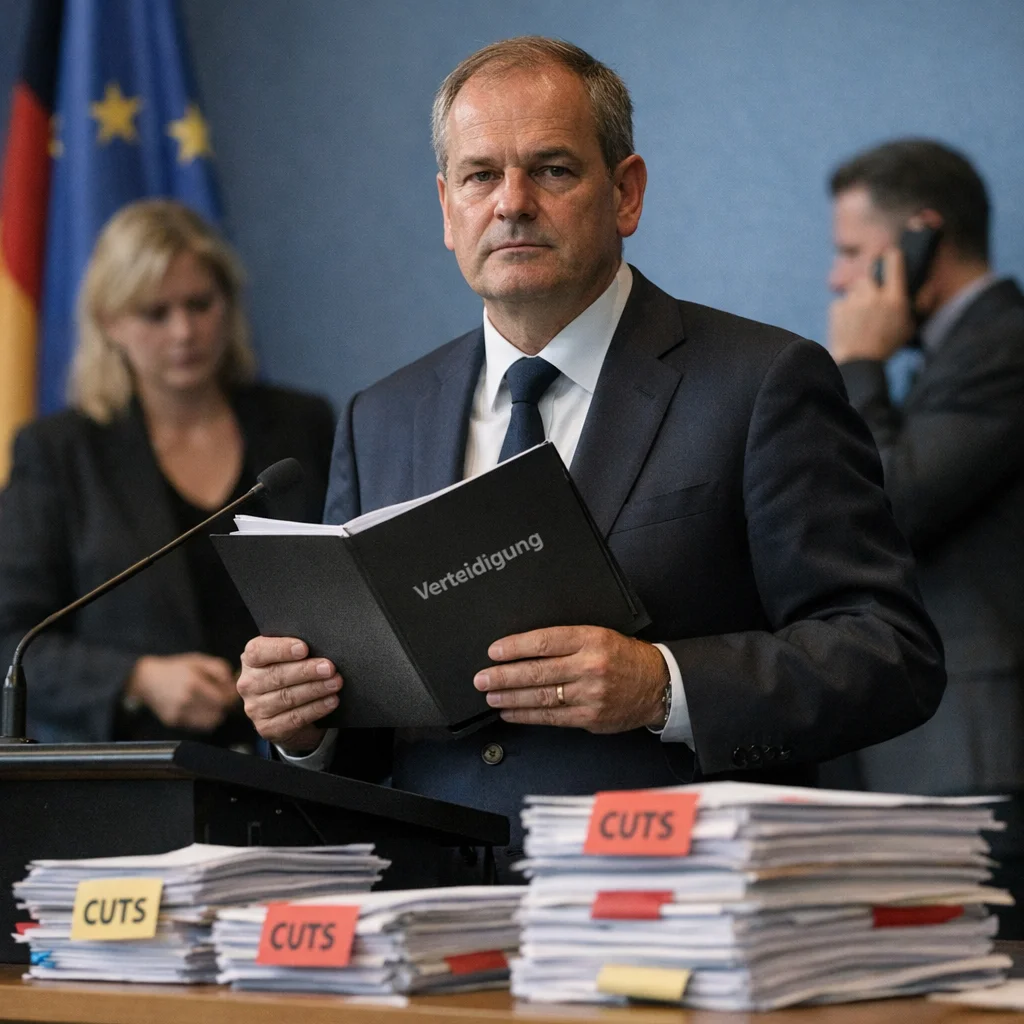
The sacred budget, the dirty little priorities
Brussels was informed, in that smooth bureaucratic tone reserved for bloodletting with stationery, that the scissors were coming. Schoolchildren, farmers, and climate programs were waved out of the room with the same administrative tenderness usually used for unpaid invoices and dead software. Friedrich Merz, who can only seem to find 400 billion euros when the knife is pointed at someone else’s lunch, has rediscovered fiscal discipline with the flushed zeal of a man adjusting his tie after being caught in a locked file room with the donor class.
And on the ground, the damage is not philosophical. It is wet plaster and cold corridors. It is a primary school in Brandenburg with a roof leak so persistent the kids have learned to read the weather through the ceiling. It is a farm cooperative outside Leipzig told its subsidy line has been “recalibrated,” which is budget-speak for being left to bleed slowly in a field of paperwork. It is a climate retrofit for a housing block in Wedding quietly canceled because the procurement office decided the spreadsheet looked prettier than the tenants felt.
That is the old European trick: starve the nursery, polish the cannon, and call the whole thing adulthood. Berlin keeps talking about the end of comfort as if comfort were some decadent vice and not the fragile, expensive condition that keeps ordinary people from being ground into civic mince. Merz’s camp wants to trim the shared budget with the compassion of a dentist pulling teeth from someone else’s jaw, while the defense envelope is handled like a holy relic with a clearance badge.
At the Chancellery, one official used the phrase “non-negotiable” about weapons spending, which is how politicians say they have found an erection the public is expected to finance and admire from a respectful distance. Another source, speaking on condition of anonymity because he still had a conscience and feared it might be photographed, said the budget fight had become a performance of masculinity so thin it could be folded into a procurement envelope and slipped under the door of Rheinmetall like a love note from a frightened schoolboy.
The cast is familiar, and that is part of the obscenity. The Christian Democrats get to cosplay as stern guardians while quietly obeying the donor-class catechism. Budget hawks in the Bundestag mutter about responsibility with the devotional fervor of men who have never had to choose between a broken boiler and a child’s school trip. Defense lobbyists in polished shoes circulate around committee rooms like perfumed bacteria, whispering about “readiness” and “strategic autonomy” while every number on the page grows a little more obscene. Meanwhile commuters on the S-Bahn, teachers with chalk dust in their cuffs, and contractors waiting to be paid are told the state cannot possibly do everything, except apparently it can always do more for weapons and less for everyone else.
The hypocrisy is not a side effect. It is the operating system. Right-wing hardliners pose as grim protectors of Europe, their moral posture as stiff as a rented suit. Centrist technocrats, those immaculate eunuchs of the spreadsheet, call it prudence and mistake their cowardice for competence. The urban left, in its own little scented bubble, posts peace slogans from apartments heated by systems they would never have to repair. Everyone is aroused by the ritual, nobody wants to touch the bill with bare hands, and the entire continent is left with the impression of a state that can still get hard for war but has forgotten how to stand up for a school roof.
There is a particular bureaucratic grotesquerie here: the budget chapter for military procurement gets names like “resilience,” “modernization,” and “strategic capacity,” while the chapters for farms, schools, and climate adaptation are discussed as if they were embarrassing relatives at a funeral. The defense committee speaks in the polished dialect of men who have never met a consequence they could not outsource. The finance ministry, ever the obedient chambermaid, tidies the numbers and calls the act of stripping public life bare a sign of maturity.
The cuts will not merely tighten belts; they will buckle communities. A canceled retrofit means a winter of mold and rising bills. A delayed farm payment means a smaller harvest, a harsher loan, another family business sold off to some polished investor with soft hands and hard arithmetic. A leaky school roof means children learning under buckets while ministers pose for cameras beside flags and armored fantasies. This is not austerity as a necessity. It is austerity as theatre for men who need the rest of the country a little poorer so they can feel taller in the frame.
The next fight will be over whether the cuts are merely brutal or also stupid. In Brussels and Berlin, that still counts as nuance, which is how the machine keeps its lipstick on while it eats the furniture.