Brussels Picks a Side, Then Pretends It Didn’t
Von der Leyen and Kallas are selling the EU’s Israel split as serious diplomacy, but it looks more like a status war between people who want the moral high ground and people who want to be photographed near it.
EU Melodrama & Sidewalk Diplomacy Correspondent
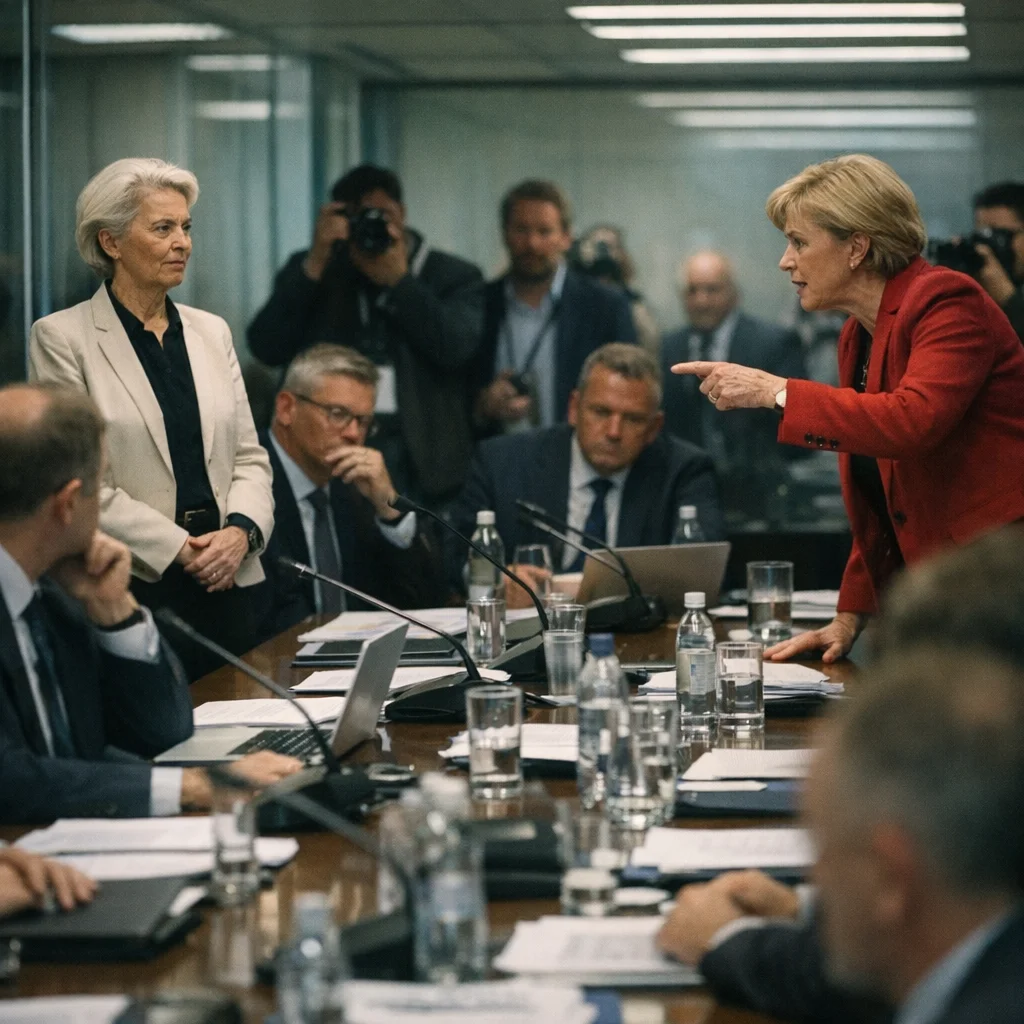
Brussels spent Tuesday pretending its split over Israel was a matter of procedure, while everyone involved behaved like it was a custody battle over the European conscience and the better lighting package. Ursula von der Leyen kept the Commission line polished, antiseptic, and faintly predatory — the kind of statement that smells like expensive soap over a blocked drain. Kaja Kallas kept sounding like she had actually read the file, then circled the parts that made the room flinch. Between them: a continent-wide performance in which the same people who sermonize about restraint cannot stop rubbing shoulders for the cleanest photograph.
The argument began, as these things always do in Brussels, with noble language and grubby ambition. The real machinery is not policy; it is the ritual of portfolio defense. The Foreign Affairs Council wants one tone, the Commission wants another, the European External Action Service wants to look indispensable, and everyone in the Berlaymont wants to be the adult in the room as long as the room is televised and the adult gets to keep the branding. Von der Leyen’s people have settled into strategic caution, which in EU dialect means saying nothing with professional lipstick and hoping the press mistakes blankness for wisdom. Kallas has pushed a harder public line, and the diplomats circling her are acting like candor is a moral sacrament rather than a career lubricant.
A senior official, speaking on condition of anonymity because he had already sent three contradictory drafts through two assistants and one overconfident WhatsApp thread, said the dispute was “not personal.” In Brussels, that phrase means the knife is already in the back pocket and someone is checking whether the wound can be blamed on process. Another official compared the atmosphere to a Coreper meeting hosted by a failed seduction coach: everybody leaning forward, everyone claiming discipline, and all of them hoping the room forgets who has been flirting with which line in the talking points.
The actual Brussels habit is to turn moral questions into committee weather. There are working groups for the wording, coordinators for the coordination, and a small priesthood of policy officers who can spend four hours polishing a sentence until it no longer resembles a judgment. The euphemisms are not accidental; they are the building’s favorite contraceptive. “Humanitarian seriousness” means the institution wants to be seen caring without having to touch anything warm or messy. “Unity” means no one wants to be the first official caught alone with the consequences.
This is why the von der Leyen-Kallas split is so irritatingly revealing. It is not a clash between purity and realism. It is a contest between two brands of self-presentation. Von der Leyen’s camp sells composure like it’s a luxury skin serum for the conscience: smooth, expensive, and designed not to stain the blouse. Kallas’s supporters prefer their virtue with sharper elbows, the kind that lets them pose as adults while quietly auditioning for the next rung up the ladder. The press ecosystem, naturally, loves both. It will launder any institutional vanity if the speaker uses enough grave nouns and looks sufficiently untroubled while doing it.
The left-wing purity merchants and the hard-right performance idiots meet here in the same damp hallway, each pretending to hate the other while feeding on the same oxygen of outrage. One side wants Europe to sound ethical without paying anything resembling a cost. The other wants it to sound hard without having to read past the headline. Brussels, being Brussels, is happy to host both appetites. It calls this balance. It calls this seriousness. It calls this foreign policy while everyone in the room is really haggling over who gets to own the moral furniture.
By Wednesday, officials were expected to continue the ritual of “coordination,” that famously intimate EU verb in which everyone fingers the same draft and nobody admits who opened the file first. Somewhere between the Service, the Cabinet, and the permanent representatives, the language will be massaged until it can pass through a microphone without embarrassing the institution that produced it. The next test is whether ministers can turn this little pageant of vanity into an actual position, or whether Europe will once again discover that its favorite export is a scented mist of principle with the substance removed.