Budweiser’s Berlin Campaign Against Consent
German drinkers have made their verdict obvious: they do not want the brand, the mascot, or the imported confidence. Budweiser keeps showing up anyway, like a man who mistakes rejection for a branding opportunity.
By Clara Brook
Imported Outrage & Kiez Satirist
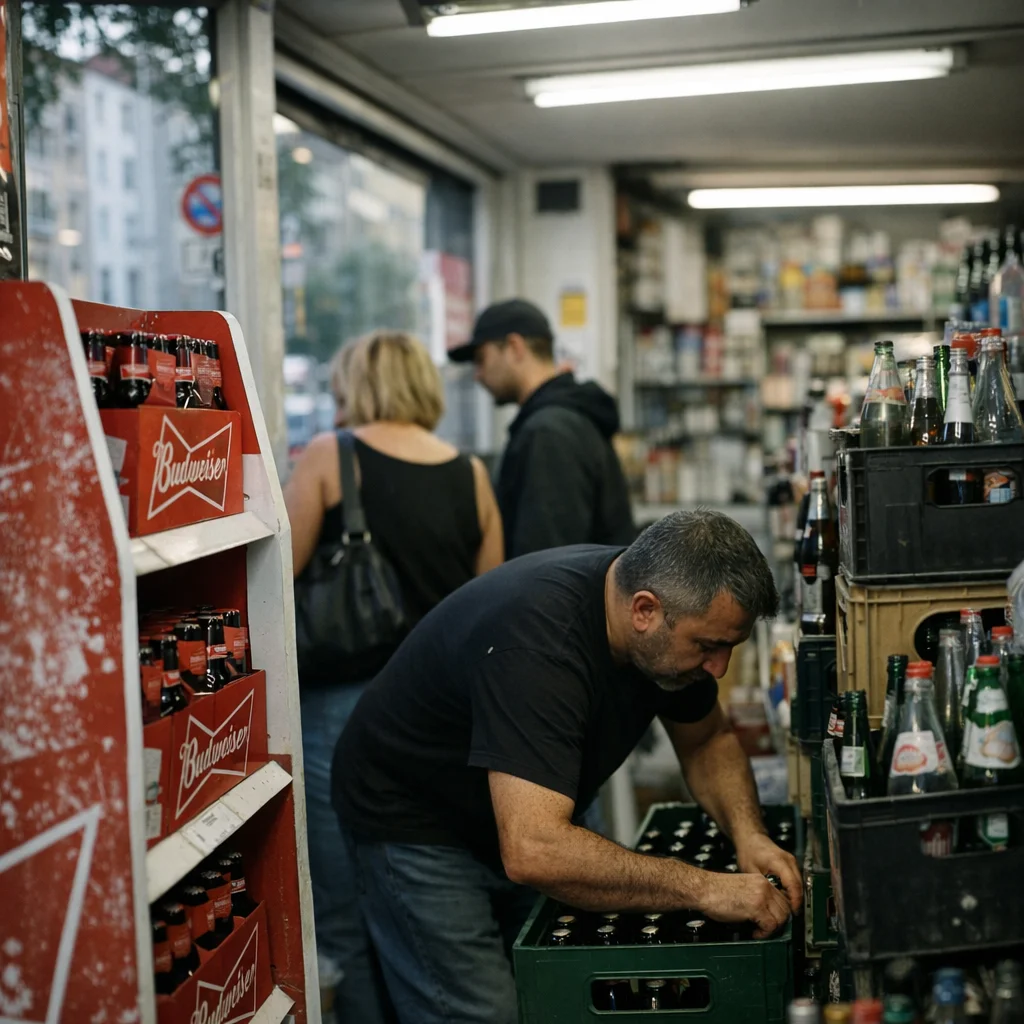
Budweiser’s Berlin campaign has spent the week trawling Wedding like a corporate pickup artist in a too-tight blazer, trying to seduce bottle shops, bars, and kiosks with the heavy-breathing confidence of a man who thinks repetition is charm. The pitch is always the same: red-white-blue heritage, glossy nostalgia, and the kind of “local activation” language that sounds like a middle manager learning seduction from a spreadsheet.
The neighborhood, naturally, responds with the dead-eyed courtesy reserved for men who mistake access for intimacy. In Wedding, imported confidence does not enter a shop and become culture. It arrives, gets sized up next to the Leergut crates and the cheap sunflower seeds, and is quietly put back where it belongs: under the counter, beside the cigarettes, next to the other products that overpromise and underdeliver.
At a Turkish-owned spätkauf near Leopoldplatz, owner Murat Yilmaz said the brand came in with flyers, cardboard displays, and that unmistakable American urge to turn basic thirst into a civic performance. “They left displays, flyers, the whole American theater,” he said. “People asked if it was a political campaign or just beer. Then they bought something else.” By the evening rush, the Budweiser mascot had been parked beside discount water, energy drinks, and the usual lonely pile of Pfand bottles, which is where overfunded branding goes to get humiliated in public.
That is the real problem, and it is bigger than taste. Budweiser is not merely selling lager; it is trying to overwrite neighborhood autonomy with a corporate accent, the same way developers repaint a building and call it respect. The campaign behaves like a transatlantic landlord: it arrives smiling, asks for a little space, then starts rearranging the furniture and telling everyone this is what modernity feels like.
Wedding does not need help understanding what beer is. It already knows the ritual: the late-night crate haul, the one cold bottle after a shift, the cashier who has seen your worst haircut and your worst breakup, the men loitering outside the shop with the solemn focus of people who have lost arguments to gravity. The neighborhood’s beverage economy is built on price, habit, and a kind of rude democratic indifference that no branding workshop can fake. Budweiser’s mistake is thinking beer is a mood board instead of a transaction.
The campaign’s approved language is especially nauseating because it pretends to be humble while wearing all the makeup of conquest. Heritage. Craft. Community. A few recycled slogans and a lot of buttoned-up earnestness, as if sincerity were something you could lease by the quarter. The executives who sign off on this stuff always look like they were assembled in a conference room and taught empathy by a deck of stock photos: smooth shoes, dead eyes, perfect hair, and the moral flexibility of a man who can call cultural imperialism “brand consistency” without laughing.
“You can’t brute-force a preference,” said Jana Lehmann, who runs a bar in nearby Mitte and requested anonymity because she once accepted a free crate and still feels dirty about the transaction. “If a beer has to keep touching your leg to get chosen, it was never wanted in the first place.”
Budweiser, of course, insists it is “committed to the local market,” which in corporate dialect means the budget still exists and no one has yet admitted the campaign is being rejected by the same neighborhoods it claims to understand. So the displays remain, the flyers keep multiplying, and the red-white-blue theater keeps unfolding in Wedding with all the erotic desperation of a salesman leaning too close across the counter, convinced that if he smiles hard enough somebody will confuse him for desirable.
But the people here are not confused. They see a brand trying to colonize the ordinary, and they answer the only way Berlin really knows how: by not caring, by buying the cheaper beer, by stepping around the whole performance as if it were spilled urine in a better costume.