Bureaucrats Selling ‘Feeling Seen’ For €8.90
A new wave of neighborhood wellness branding lets exhausted professionals pay extra to be misjudged politely by a host in black jeans.
Gentrification Symptoms & Pretend-Creative Economy Reporter
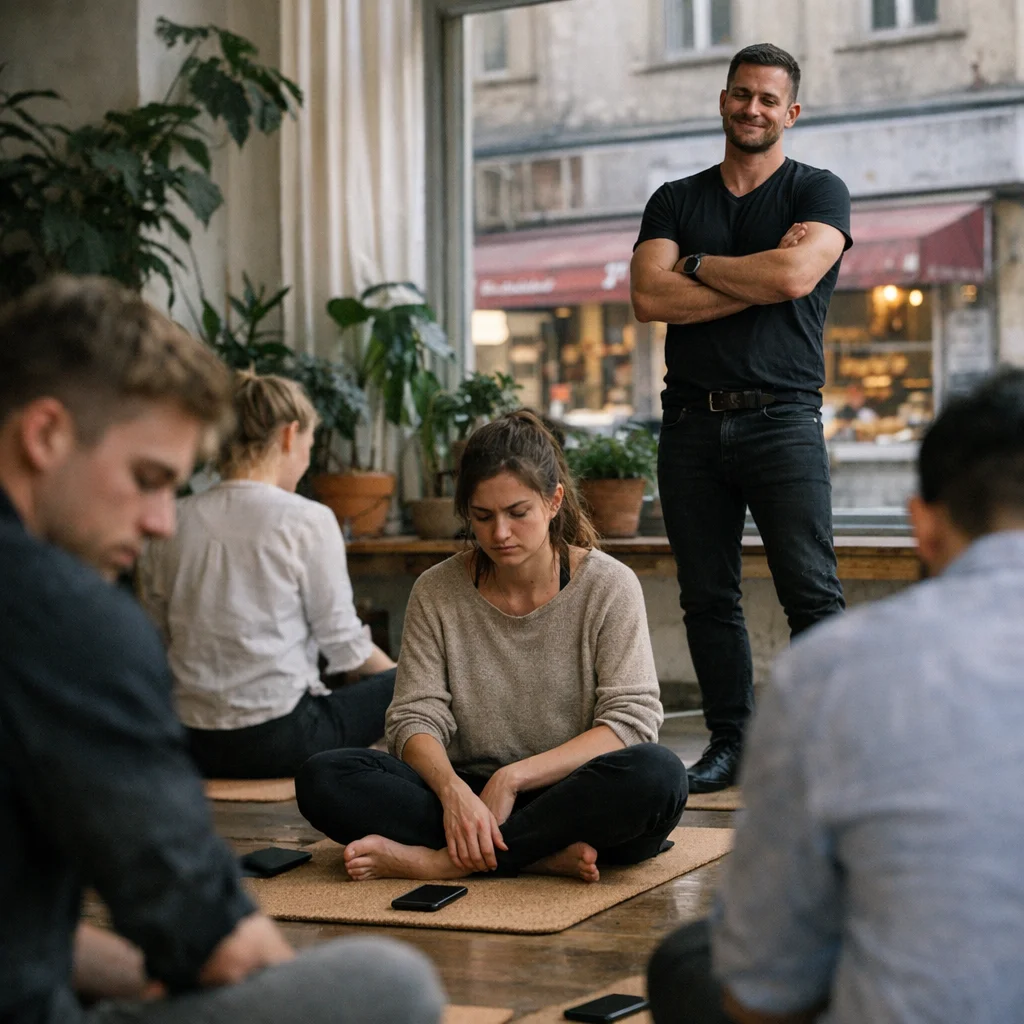
At a bright, plant-heavy meditation studio in Wedding on Tuesday morning, several exhausted professionals paid to be told to breathe correctly and left looking as if they had been audited by their own nervous systems. The app-based session, marketed as a reset, promised calm for the price of a decent lunch; instead it delivered a corporate séance for people who call panic “high-functioning” and mean it as a compliment.
The room itself was a tidy little extortion scheme. Cork mats on the floor, pale tea sweating in glass carafes, a shelf of tasteful ceramic bowls, and at the front a host in black jeans so tight they looked politically ambitious. He wore the expression of a man who had once failed upward into wellness and never forgiven the public for noticing. Every gesture was rehearsed to suggest empathy while quietly begging to be admired, the way a junior founder begs a city grant: with both hands out and the soul already priced.
The studio, wedged between a Turkish bakery, a shuttered locksmith, and one of those glass-box offices where young men type like they’re trying to avoid a court date, offered a live demonstration of what happens when mindfulness meets a quarterly target. Guests arrived already clenched. They sat on cork mats, placed their phones face down like guilty lovers, and were instructed by the app’s soothing voice to “notice the body.” Most of them did. Then they noticed their inboxes, their posture, their own expensive fatigue, and the faint humiliation of paying someone to narrate their breathing like a hostage situation with eucalyptus.
One participant, Miriam K., 34, a project manager, said she booked the session because she thought she was “behind on sleep,” which is a charming corporate euphemism for slowly rotting under the fluorescent light of ambition. “By minute four, the app told me to observe my thoughts without judgment,” she said. “That’s difficult when the thoughts are rent, impostor syndrome, and the message I left unread for six weeks because I’m apparently an adult with a calendar and no nerve endings.”
At the checkout screen, the scam got uglier in the most ordinary way. The app offered “supporter pricing,” “community pricing,” and a premium option that included a prerecorded thank-you from the founder, delivered in the tone of someone accepting a compliment from a donor. One woman in a cream blazer tapped the highest tier without blinking, the way status-addicted people buy a better class of self-contempt and call it ethical consumption. Two men with startup hair and the blank, damp confidence of people who have never been told no at work hovered over the tip prompt like they were choosing a moral accessory. Nobody looked relieved. They looked purchased.
The company behind the app says it is “democratizing inner peace,” a phrase with the moral odor of a landlord claiming to humanize eviction. Its ads feature women in loose linen staring at rivers as if capitalism were a weather system and not a set of people with rent appetite. In practice, the product behaves like a small black mirror: it reflects whatever rot you brought in and charges extra for the privilege of seeing it in a nicer typeface. By the end of the week, users are said to report better sleep, more focus, and a new talent for catastrophizing in cleaner fonts.
A district cultural official praised the trend as supporting “neighborhood wellness ecosystems,” which is bureaucratic paste for privatized misery with a local flag on it. That’s the trick now: wrap the annexation in soft language, let the district bless it, and call it care while the old neighborhood is repackaged into a fragrance sample. The officials always sound proud of their own vocabulary, as if saying “ecosystem” can launder the fact that ordinary life is being carved into subscription units.
Even the leftier customers, the ones who still say “collective care” with a straight face and a founder’s credit card in their pocket, seem to enjoy the little humiliation ritual of self-surveillance. They want liberation, but only after a seven-day free trial and a gentle reminder that their breathing is inefficient. They are not seeking peace so much as a more tasteful way to continue being unbearable.
Outside, old men smoked by the bakery while a courier argued with his phone in the rain. Inside, the app suggested users scan their emotions like a bar code and let go of what no longer serves them. The room went very still, the way a confession goes still when nobody believes forgiveness is included.
The studio says it will expand to evening sessions next month. That should help. Nothing says serenity like paying to be corrected, monetized, and mildly fondled by the language of care, then trying to explain the whole episode over an oat drink to someone who also thinks collapse is a brand aesthetic.