BVG Train Car on U6 Found With 12 Seats Missing, Replaced by Yoga Mats That “Smell Like Funding”
Commuters near Osloer Straße described a “soft but aggressive” new layout, while transit officials insisted the mats were “not a product launch.”.
Transit & Lifestyle Intrusion Correspondent
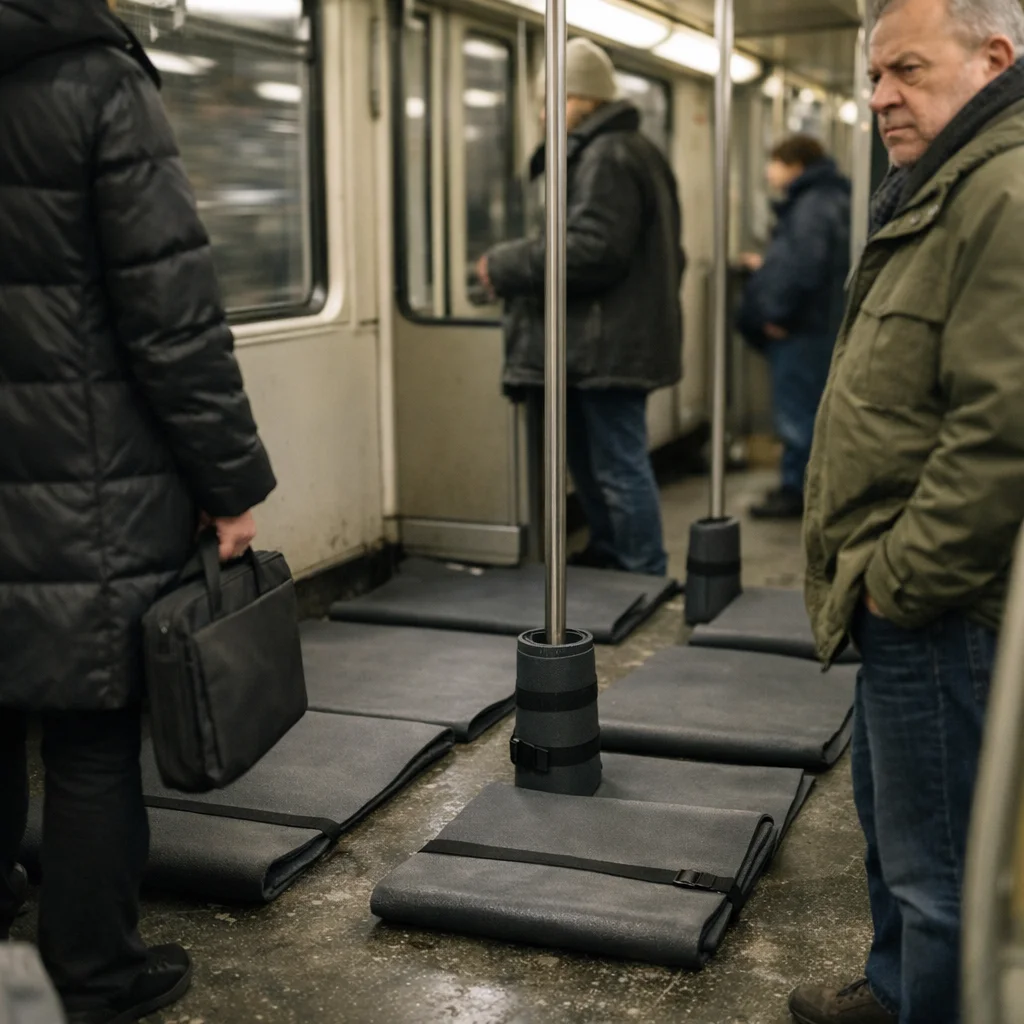
A softer commute, delivered without consent
On Monday, around 8:40 am, passengers boarding the U6 at Osloer Straße encountered what several described as “a suspiciously calm interior redesign”: 12 seats removed from one car and replaced with 12 dark-gray yoga mats, rolled out in parallel rows where the seat shells had been.
“I thought it was a cleaning thing,” said Aylin Demir, 34, a medical assistant from Prinzenallee. “Then I saw the little straps. Someone had a firm grip on the concept. It wasn’t an accident.”
By mid-morning, the mat-car had become a moving etiquette test. Office workers stood over the mats like museum visitors, trying to look unentitled while clearly wanting to lie down. Two tourists asked if they needed to scan a QR code “to unlock the floor.”
Witnesses describe ‘downward dog’ and upward class drift
At Seestraße, Tobias Renner, 29, a product manager living on Malplaquetstraße, attempted to use one mat “in a purely transportational way,” sitting cross-legged with his laptop.
“I’m not saying I’m better than sitting people,” Renner said, adjusting his tote bag like a credential. “I’m saying the mat encourages posture. Honestly it’s a more intimate commuting experience. You can feel the city’s heartbeat through the floor. And also everyone’s crumbs.”
Longtime riders were less poetic. “Seats are for backs. Mats are for people with time,” said Mustafa Yıldız, 52, who runs a small phone-repair counter near Residenzstraße. “They keep telling us Berlin is for everyone, then they remove the part where you sit.”
BVG denies partnership, confirms confusion
A BVG spokesperson, Jana Krüger, said in an emailed statement that the authority was “aware of an unauthorized interior modification” and that maintenance teams were “conducting a deep inspection of fixtures and fastening points.”
Krüger added that BVG had “no cooperation with any wellness brand, co-working provider, or ‘mindfulness mobility’ initiative,” though she acknowledged the mats appeared “new, aligned, and inconveniently premium.”
Workers at the nearby U-Bahn workshop yard described the removal as “clean,” suggesting someone with the right tools—and the confidence of a person who has never been told “no” in German.
Theories point to startups, guilt, and a backdoor culture
A flyer left under one mat—unsigned—promised “SEATLESS TRANSIT: MOVE YOUR BODY, MOVE YOUR MIND,” and listed a web address that redirected to a dead page titled “Stehraum Labs.”
Urban sociologist Dr. Petra Lohmann (Humboldt University) compared the episode to “a Duchampian gesture, except the urinal is now your commute and the art is mild suffering.”
By early evening, riders had developed a routine: pretend not to want the mats, then lunge for them when the doors closed. One passenger was seen quietly sliding into position while telling a friend, “I hate gentrification.”
BVG said the mats were removed by Tuesday morning. The seats have not returned.