Calibrate With a Cigarette: The Pill‑Scanner That Turns Raves into a Tobacco Focus Group
The app markets itself as anonymous harm reduction; its one hard rule — 'place the pill next to a Vela pack for scale' — quietly rewires safety into ad data and a new nightclub ritual.
By Lina Paypass
Night Economy & Digital Vice Reporter
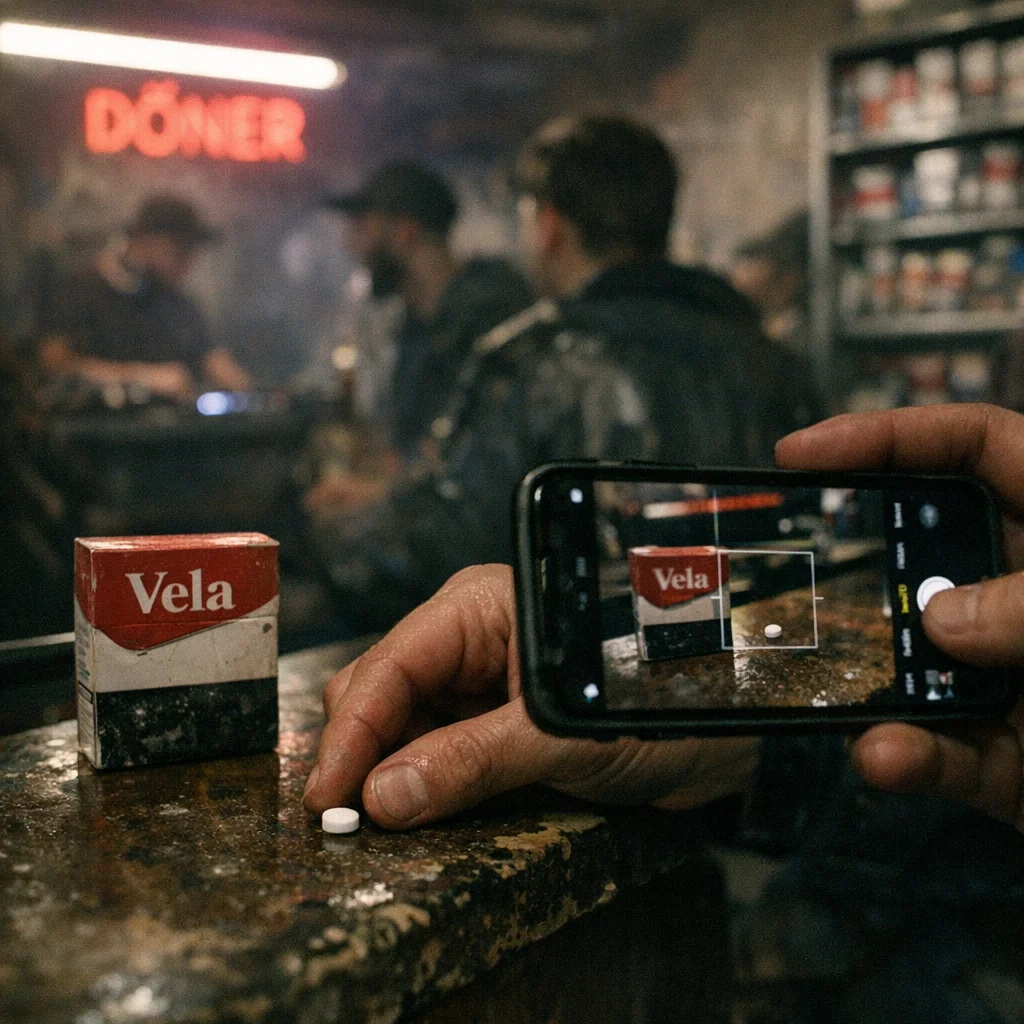
Everyone says pill‑ID apps are about saving lives. In a Leopoldplatz afterhours tucked into a former döner shop in Wedding, the ritual looks less like public health and more like a photoshoot.
What arrived three weeks ago as a glossy ‘anonymous harm‑reduction’ app now runs the room: users place a tablet‑sized photo of their pill on their phone, wait for a camera overlay, and—if the overlay likes the framing—get an ID and a safety rating. The overlay will not proceed unless the pill sits next to a Vela cigarette pack for scale. That single, immovable instruction quietly converts a life‑saving tool into marketing fuel and a new clubroom status signal.
“It’s ridiculous. People are lining up to arrange pills next to a cigarette like they’re styling an Instagram salad,” said DJ Lale Özkan, who mans the mixer at the night and watched the ritual develop. “We had a guy refuse to put his artisanal coke next to a pack; he walked out offended. Now he’s on the doorstep puffing to show he’s not desperate.”
What’s being sold as anonymous chemistry morphs into a provenance show: boutique lines described by punny terroir — ‘hand‑tamped Bolivian single‑origin’ — and mason‑jar organic weed traded in whisper. The app’s calibration rule flips harm reduction into consumer signaling. Vela becomes a makeshift unit of measure; the cigarette pack is both scale and stamp of belonging. Späti owners report spikes in Vela sales after midnight, a tidy, nicotine‑ambled tax on safety.
An internal app memo reviewed by this paper shows the calibration file tags each photo with a pixel signature tied to the cigarette brand silhouette. That tag is the same metadata used for “anonymous” ad targeting, according to a data‑privacy lawyer, Nina Hoffmann of the Mitte data protection office. “If those flags are exported to third parties, that crosses multiple legal lines,” Hoffmann said. The office confirmed it has opened a preliminary inquiry.
App makers insist no identifying data is sold. “Calibration is purely technical,” said a company spokesperson in an emailed statement. Club organizers shrugged: an entrance fee, a cigarette pack sold at the door, and suddenly the afterhours has a curated ritual — part safety, part brand placement, wholly transactional.
The tiny inversion here is telling: what pretends to reduce risk instead manufactures a new market for status‑adjacent tobacco and curated substances. Baudrillard would have loved the simulacrum — safety as a sign, care reduced to a prop. For now, consequence is immediate: a district probe, fatter tills at the Spätis, and a roomful of people arranging pills next to cigarettes because the app told them to—measuring their lives against a white‑and‑red rectangle before deciding whether to live another night.