Candy Shop Puts Everyone on the Register
A Neukölln kiosk now makes customers declare whether they are buying for pleasure, performance, or a private appointment, while the owner counts which answers come with shame and premium prices.
Neighborhood Commerce & Low-Grade Dread Reporter
Candy Shop Puts Everyone on the Register
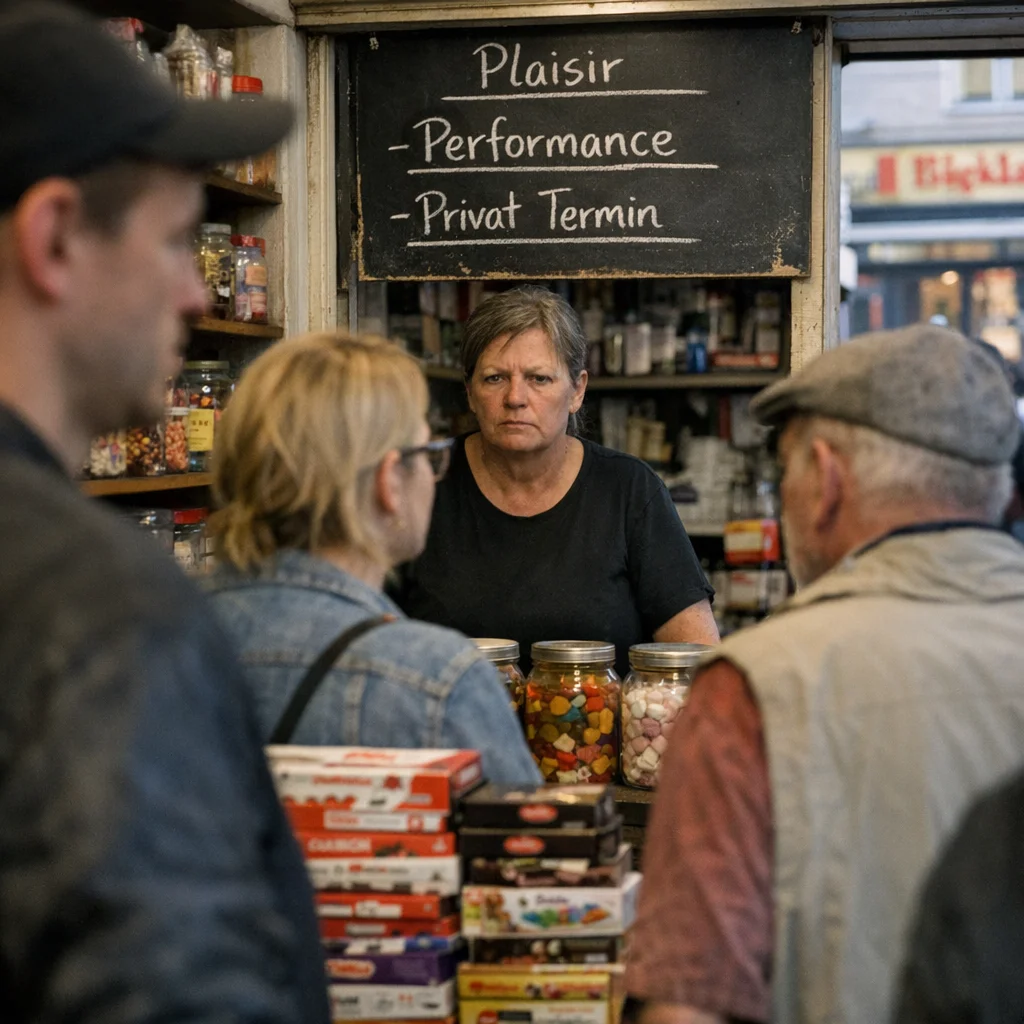
At a small candy kiosk in Neukölln, customers are now asked to state whether they are buying for pleasure, performance, or a private appointment before they reach the counter, and the owner says the rule is meant to keep the room honest. What it has mostly done is turn a snack run into a public audition for innocence, lust, and class anxiety.
The board was installed last week at Süßer Stand, a narrow shop wedged between a barber, a Turkish grocer, and a café that serves oat milk with the expression of a priest handing out ashes. The new categories appeared above the sweets in block letters: pleasure, performance, private appointment, and a premium line labeled “discreet.” Customers must choose one before ordering, and the cashier then decides whether the purchase comes with a lecture, a smile, or the kind of silence usually reserved for family scandals.
Owner Deniz Yilmaz, 52, said the system was created after “too many people came in acting innocent while ordering like they were rehearsing adultery.” He said he wanted transparency, not shame, though the menu now prices shame separately. A box of imported chocolates costs more if the buyer selects performance. The same bag is cheaper under pleasure, unless the cashier suspects the customer is lying, in which case the price quietly rises again.
The real trick is the register itself, which has become less a cash drawer than a moral zipper: everyone has to lower something before they can leave with the goods. The display screen asks for the category in the same flat font used by self-checkout machines and clinic forms, as if appetite had been standardized by the city. Every receipt prints the chosen line in bold, followed by a tiny advisory: “Respect the terms of your craving.”
“It’s basically a confession booth with licorice,” said Marta Klein, 34, who lives nearby and asked not to use her full surname because she had already selected private appointment and did not want her landlord reading her face through the receipt. “You can tell who has a therapist and who has brunch friends. The brunch people are always the loudest and the driest.”
By midday, the line outside had become a little theater of moral posing. One man in linen declared his purchase “for a date,” then corrected himself to “for a shared experience,” which earned him an extra charge and a look from Yilmaz that suggested both diagnosis and contempt. A woman in a yoga jacket selected pleasure, paused, then asked whether “mindful indulgence” counted as a higher category. It did. A man from a co-working space tried to split one order into “gift,” “self-care,” and “research,” and was told the shop did not offer bundle pricing for emotional fraud.
The district office said it had received no complaint, which in Berlin usually means the paperwork has not yet found a reason to feel alive. A spokesperson for consumer protection said businesses are free to arrange their pricing, but not to “weaponize embarrassment as a loyalty program.” By early evening, the kiosk had already become the neighborhood’s favorite mirror: the Turkish aunties bought sweets without blinking, the startup crowd over-explained everything, and the people who talk most loudly about consent were the first to object when the cashier asked what they were really hungry for.
Yilmaz said he may add a fourth line for customers who insist they are “just browsing.” The next delivery of chocolate hearts is due tomorrow, and he plans to charge them for the confession. In a neighborhood full of people who want intimacy without consequence, the register has already done what the city couldn’t: it made everyone pick a position, pay for it, and take the receipt home like a collar.