Cashmere, Consent, and Goats in Plauen
Saruul Fischer markets Mongolian craft as luxury authenticity, but the real production line runs through animals, labor, and export etiquette.
Gentrification Symptoms & Pretend-Creative Economy Reporter
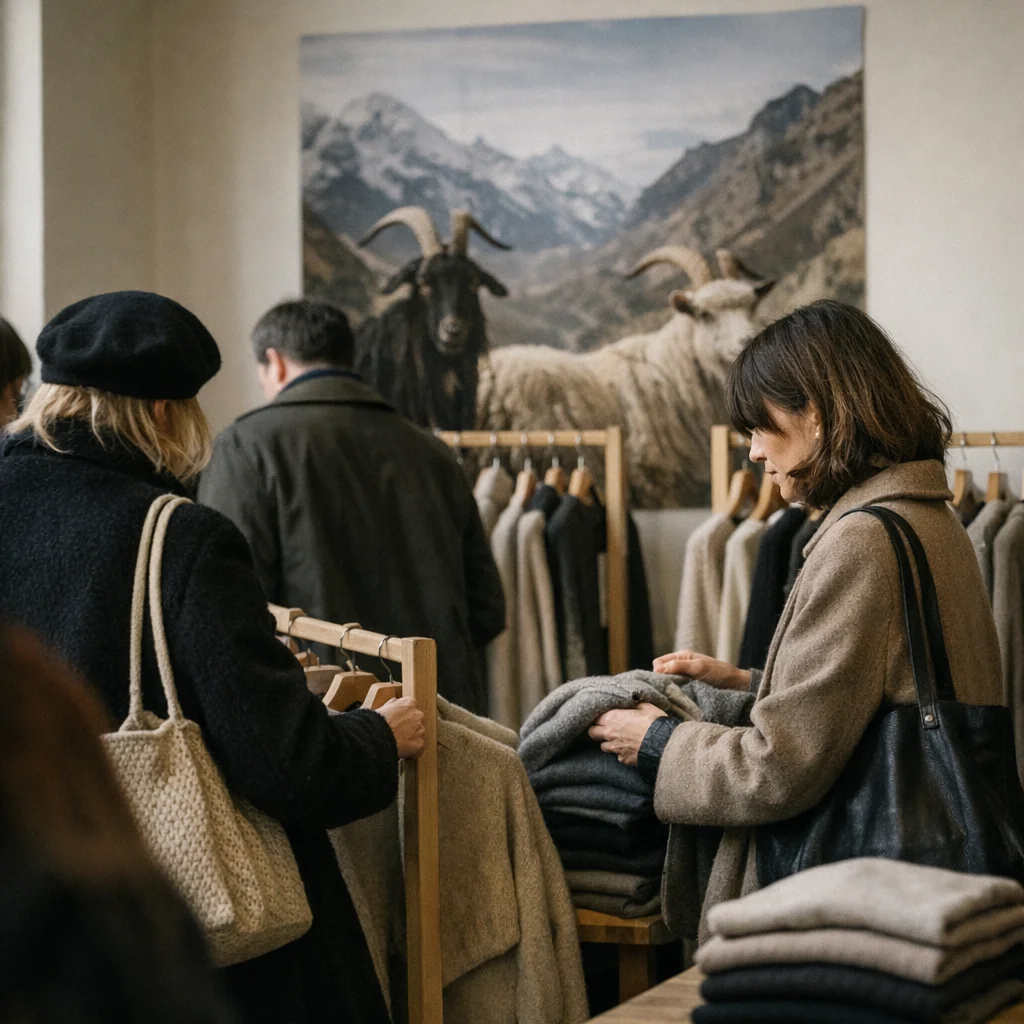
Saruul Fischer’s cashmere line has arrived in Berlin with the polished indecency of a private invitation slipped across a table in Mitte: talk of handcraft, dignity, and cultural respect, all wrapped around a garment that wants to be touched like it has never had to answer for itself. In Plauen, where boutique virtue likes to dress up as local empathy, the line has already found its ideal clientele — gallery people, district-adjacent consultants, and couples who say “consent” the way hedge funds say “impact.”
The pitch is built like a courtship with paperwork. The sweaters are presented as proof that luxury can be ethical if you name the right villages, praise the right artisans, and keep the animal in the frame long enough for the buyer to feel absolved before the first fitting. But the arrangement is less philosophy than procurement with lipstick: the countryside is asked to produce warmth, the capital gets to dress that warmth in innocence, and the goats are treated like silent accomplices whose only job is to keep the fantasy soft enough to rub against.
At a pop-up near the Plauen station, a buyer in a camel coat with a tote bag full of institutional feelings said she admired the “living tradition,” then spent the next ten minutes asking whether the neckline made the heritage look more available. That was the room in miniature. Everybody wanted the source to stay arousingly distant: close enough to flatter the conscience, far enough away that no one had to deal with smell, weather, or the people actually doing the work. Berlin loves that distance. It calls it sensitivity when it is really just appetite with better branding.
Fischer, who has built her reputation on translating Mongolian techniques into a premium German register, knows the market is full of people who want to be taken seriously while being lightly handled by the right moral narrative. Her label offers exactly that. The language is respectful until you follow the trail of the markup, and then the whole operation starts to look like a very expensive seduction economy: the animals are framed as if they consented to the mood board, the labor is made to disappear after the foreplay of storytelling, and the customer leaves believing she participated in preservation rather than purchase.
A local district-office spokesman, speaking with the strained innocence of a man who has spent too much time approving things he pretends not to understand, said the borough sees no problem as long as the pop-up keeps the sidewalk passable and avoids “unnecessary intimacy with public space.” That is Berlin’s preferred posture in one sentence. It will tolerate any amount of extraction so long as the display remains tasteful and the guilt arrives folded neatly.
By late afternoon the rack was thinner, the smiles were still rehearsed, and a few shoppers were debating whether handmade prestige feels more ethical if the maker remains poor enough to preserve the fantasy. Fischer’s tour is expected to continue next week, where the only thing tighter than the cashmere will be the city’s grip on the story it uses to make itself feel chosen.