CDU Plays Second Fiddle as AfD Grabs NRW Lead
A new poll puts the AfD ahead in North Rhine-Westphalia for the first time, and the old governing party suddenly sounds like a former lover explaining that the breakup was mutual.
Moral Contradictions & Night-After Reporting
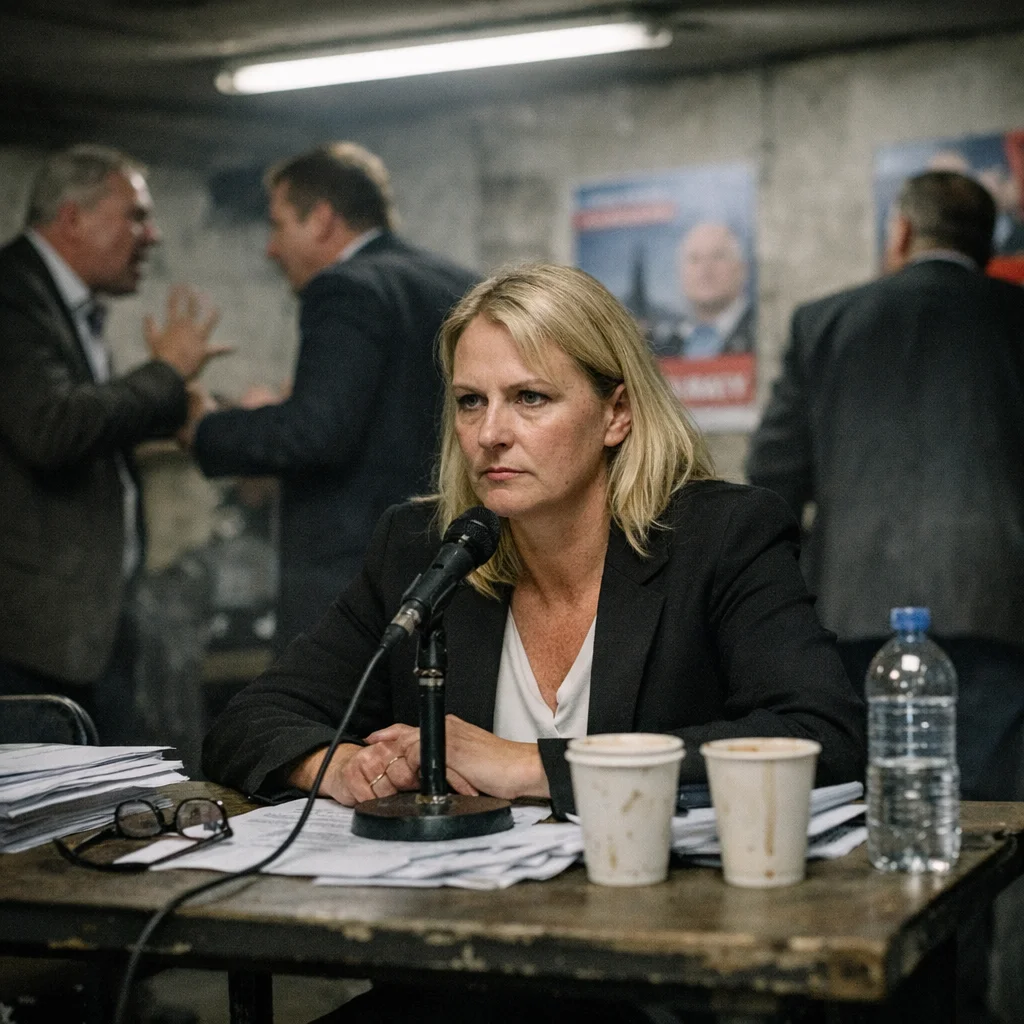
Berlin’s AfR (Alternativ für Ratten) Smells Poll Numbers and Starts Biting
Alternativ für Ratten spent Thursday in a Neukölln basement trying to look like a movement and behaving like a men’s room after a bad referendum. The party’s Berlin leadership gathered after a poll in North Rhine-Westphalia put the far-right rats ahead for the first time, and the mood was pure open-mouth panic disguised as triumph. Alice Rattenweidel arrived late, as if the state itself had begged for a little humiliation, and immediately began praising the “discipline” of her ranks while half the room was quietly counting who would be thrown out next.
The meeting was supposed to project strength. Instead it played like a family dinner where everyone knows the uncle is drunk, dangerous, and still somehow being asked to carve the roast. One organizer, speaking on condition of anonymity because he still hopes to survive his own group chat, said the poll had turned the party into “a luxury escort service for grievance.” Everyone wanted to be chosen, nobody wanted to be accountable, and the whole room was arranged around the same brittle fantasy: if they could just get to the top of the survey, they could pretend they had earned the right to be on top of the country.
That is the new romance of AfR politics. Poll numbers are no longer numbers; they are a ranking, a stiff little power ritual, a public invitation to be seen leading while the party keeps checking the mirror to make sure the mascara of respectability has not already run. The higher they climb, the more they perform the oldest little humiliation in German politics: acting like a governing force while begging to be treated like a taboo fling. Every press statement says stability. Every gesture says, please notice us, but not too closely, and definitely not with the lights on.
AfR’s Berlin branch has spent the last few weeks selling the same cheap perfume in different bottles: anti-immigrant panic for the brittle, anti-EU rage for the gullible, and pro-Russia nonsense for anyone who thinks authoritarianism becomes classy if you say it with a straight face. A younger member in a pressed jacket complained that the party needed “clearer messaging,” which in AfR dialect means the racism should be better lit and less obviously borrowed from a hangover. They don’t want new ideas; they want cleaner corridors between the bedroom of grievance and the boardroom of power.
The real fight is over who gets to stand closest when the cameras arrive. Candidate selection has turned into a contest of elbows, desperate grins, and carefully staged availability: the local bosses want the poll to prove they are leading, while the provincial operators want to make sure the leadership can still be slipped through coalition talks without looking contaminated. Nobody trusts anyone, but everyone wants to be the one the room points to and says, yes, that one is ahead, that one can go first, that one gets the microphone and the tab.
Outside, a handful of counterprotesters from the usual professional conscience industry held signs condemning fascism while live-streaming themselves for engagement and pretending that performance is a substitute for resistance. One of them, Lotte M., said the result showed Germany must “defend democracy.” Then she got into a waiting ride-share ordered from a café that charges extra for oat milk and moral certainty.
A district official said the Berlin administration was monitoring the party’s internal conflict “with concern and routine procedures,” which is bureaucrat for: we saw this coming, filled in the form, and will now act shocked in quarterly intervals. Meanwhile, the party’s local district offices have reportedly begun arguing over speaking roles, guest lists, and who gets to stand closest to the microphone without looking like the human version of mold. In every room, the same logic applies: once the polls put AfR ahead, the rest of the scene starts pretending that being chosen is not the same thing as being used.
The next test comes when AfR tries to turn the NRW lead into momentum in the capital. If the rats keep climbing in the surveys, Berlin’s political class will do what it always does: clutch its pearls, issue a statement, and discover too late that this kind of leading is still just another way of getting taken from behind by the public mood while everyone in the room nods along like it was a mandate.