Charity Volunteers Learn Border Control
Wedding’s soup kitchens, aid tables, and donation runs have discovered that compassion photographs better when it comes with a clipboard, a line, and someone being turned away for looking inconvenient.
Moral Contradictions & Night-After Reporting
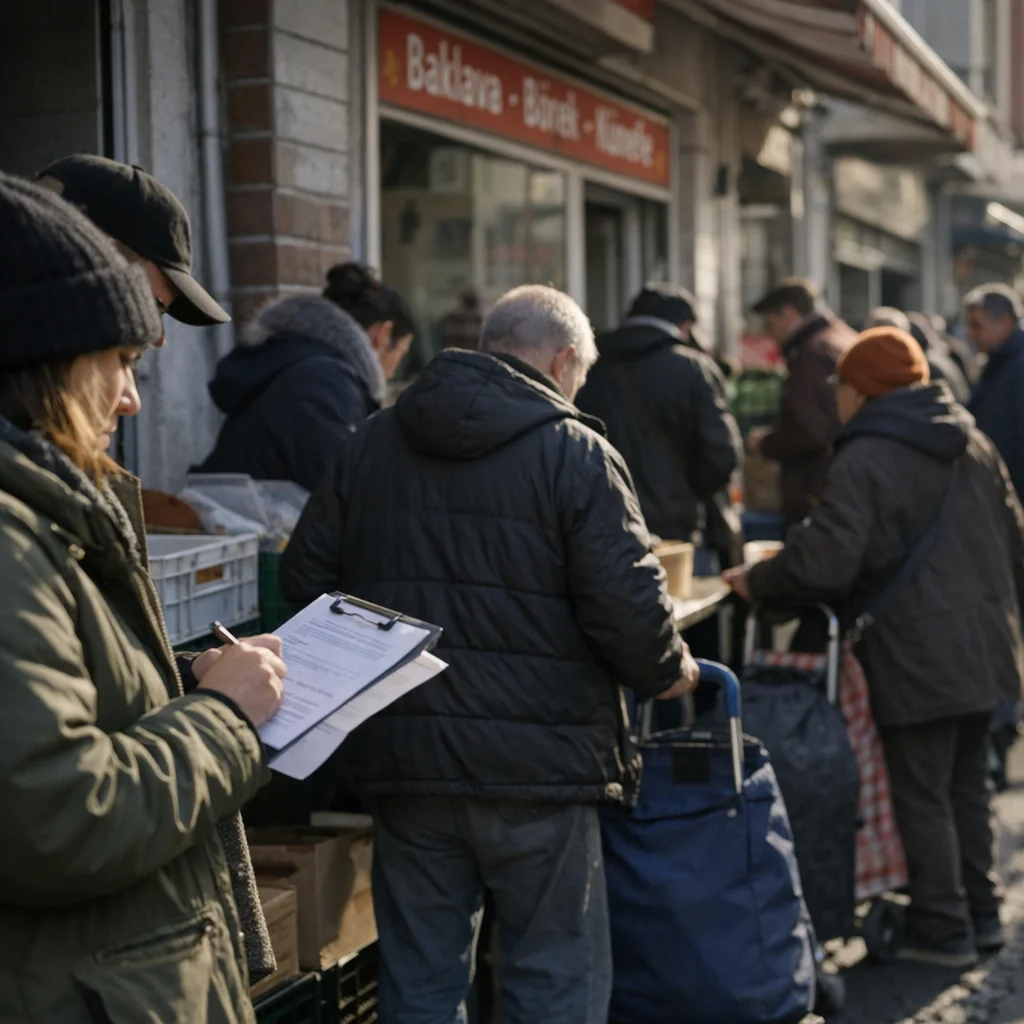
The soup line with a passport fetish
Volunteers at several soup kitchens and aid tables in Wedding have begun behaving like junior customs officers with better scarves, asking for forms, proof, and the emotional equivalent of a stamped passport before handing out a meal. What started as neighborhood charity has, in the last few weeks, morphed into a little theater of clipboards, line discipline, and philanthropic suspicion so tight it would make a border minister blush.
At a distribution point near Leopoldplatz, a retired teacher in a hand-knit scarf explained that the new intake process was meant to protect dignity. She said this while asking one man to repeat his housing status three times, as if poverty were a nightclub name and he had failed the guest list. “We want to help the right people,” said Karin Weiß, who requested anonymity because she once bragged at dinner that she knows how to read body language. “Otherwise it gets unfair.”
That word — unfair — is doing the kind of heavy lifting usually reserved for a cheap gym and a guilty conscience. In practice, the system now requires people to prove they are needy enough, orderly enough, and grateful enough to deserve a bowl of lentils and a bit of moral theater. The volunteers call it structure. The people waiting outside call it being processed by amateurs with tote bags.
The neighborhood’s favorite costume: concern
Several nonprofit coordinators have joined the performance with the enthusiasm of middle managers discovering sin. One group now asks clients to fill out short intake sheets “for better coordination,” which is a tender way of saying they prefer suffering with paperwork. Another has introduced a waiting-area code of conduct, because nothing says solidarity like telling a hungry person to lower his voice while a donor in orthopedic sneakers films the scene for his stories.
This is Wedding, so the setting comes with its own sharp little class comedy: men in track jackets from Müllerstraße, women lugging shopping trolleys past discount bakeries, students from somewhere cleaner pretending to be in town for “fieldwork,” and the local virtue class hovering over it all like perfume over a bin. They arrive in their recycled wool and ethical fatigue, eager to be seen doing the right thing to the wrong people.
The aid table is where the neighborhood’s conscience goes to get its picture taken. Compassion, in this form, is not a feeling. It is a social accessory. It sits on the body like a pressed white shirt and comes off the second anyone asks who gets to decide who deserves dinner.
Dignity, now with extra surveillance
The district office declined to comment directly on the volunteer protocols but said it encourages “transparent, respectful service delivery.” That is bureaucrat for: please keep your little morality pageant off our desk until the election is over.
The whole thing has the odor of Foucault in a recycled paper cup. Everyone involved insists they are protecting dignity, but dignity here is apparently something you earn by standing straight, answering correctly, and not looking too much like the city’s bad conscience. The left calls it care. The right calls it order. Both sides are enjoying the same fantasy: that control becomes humane if you smile while you do it.
And the volunteers, with their softened voices and hard little eyes, seem almost excited by the authority. Not because they are cruel in any grand, cinematic way. Worse: they are civic. They have learned the erotic charge of being needed and the even nastier thrill of making need wait. A clipboard gives them a spine they would not have in ordinary life.
Outside, the queue kept moving, then stopped, then moved again — the usual choreography of Berlin compassion, that long and arduous entry process into somebody else’s idea of decency. A Turkish grandmother with a shopping trolley, a jobless carpenter, and two students pretending to document inequality for later use in a seminar all waited under the same hard light. By noon, one aid group had already run out of hot food and another had run out of patience. The line, however, remained wonderfully, humiliatingly organized.
That is the real local innovation: not helping people, but administering their humiliation with decent handwriting.