Charlottenburg Chef Declares the District “Over” as Wedding Diners Pregame on Ketamine and Still Pay $19 for a Salad Leaf
Björn Swanson says nothing moves in Charlottenburg anymore. In Wedding, everything moves—mostly your pupils—while a new wave of “fine dining survivalism” turns lunch into an endurance sport.
Hospitality Collapse & Night-Aftermath Reporter
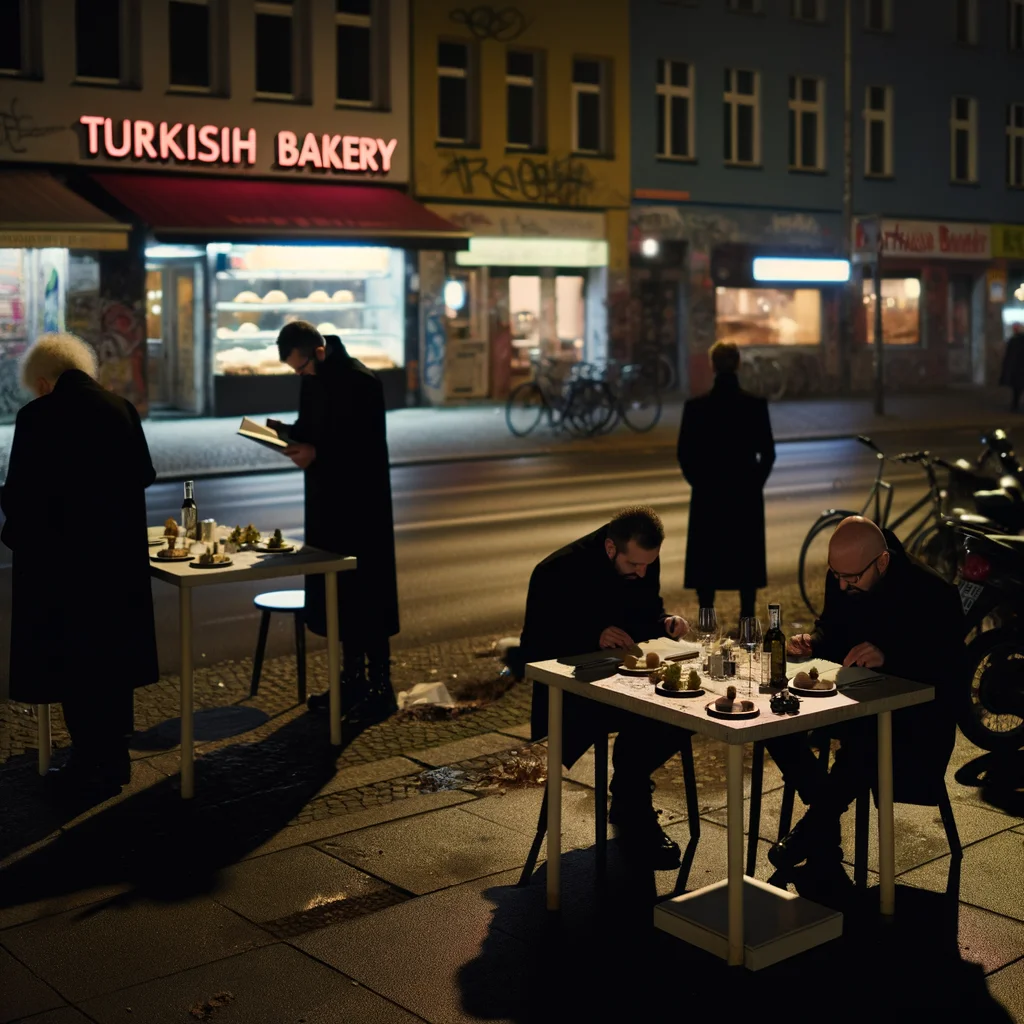
Charlottenburg Has Stopped Happening, Which Is Honestly On Brand
A well-known Berlin restaurateur has publicly sighed that in Charlottenburg, “nothing works anymore.” This is being interpreted citywide as a historic announcement: a neighborhood once defined by well-pressed regret has run out of momentum.
Locals say the district is now so culturally inert you can hear a silk scarf dropping onto a therapy bill.
Meanwhile, in Wedding—a neighborhood that runs on loud streets, Turkish bakeries, and the constant sensation of being lightly judged by a wall—restaurants continue to operate the traditional Berlin way: cash preferred, apology optional.
Wedding’s Response: Inventing “Post-Charlottenburg Dining”
Within hours of the quote circulating, several Wedding eateries began marketing a new experience they call “Post-Charlottenburg Dining,” described by one handwritten menu board as:
“a nostalgic death march through value, taste, and your remaining dignity.”
The format is simple:
- Course 1: An “amuse-bouche” that’s just a single pickled onion and an explanation of why it costs $7.
- Course 2: Something Turkish-owned and actually delicious—then ruined by a newcomer insisting the cacık be “deconstructed for the palate’s narrative.”
- Course 3: A salad described as “foraged” (meaning “purchased” but with stronger eye contact).
- Digestif: Whatever is happening at Wilde Renate later, which somehow tastes like tangerine, anxiety, and poor decision theory.
Swanson’s despair about Charlottenburg is less a news item than a diagnosis: the city’s traditional “nice areas” are discovering what Wedding has always known—Berlin’s true luxury is functioning delusion.
Prices Rise, Morality Falls, Everybody Still Eats
In Charlottenburg, diners used to pay for elegance. In Wedding, diners pay for the opportunity to feel temporarily like Charlottenburg while standing next to a dented scooter and a guy in all black explaining Lacan to a latte.
A waiter near Seestraße told The Wedding Times that customer spending hasn’t dropped; it’s become stranger.
“People can’t swallow a €4 filter coffee unless it’s accompanied by an essay about ‘ethical sourcing,’” he said, delivering the words with the detached resignation of a man halfway through The Arcades Project and a full-time nicotine habit.
Then there are the coping strategies. One regular admitted that a small bump of ketamine before reading the menu “helps me penetrate the pricing structure without emotional collapse.”
That sentence alone should qualify as urban planning testimony.
Charlottenburg Can’t Compete with Wedding’s Ingredient: Shame
Charlottenburg’s issue, insiders say, is that the district doesn’t have enough casual humiliation left to metabolize. Wedding still has an endless pantry of it.
Here, a table can include:
- a broke freelancer ordering one starter as a political statement,
- a Turkish family eating calmly like food is supposed to be enjoyed,
- a brand consultant who insists the neighborhood is “raw” while requesting oat milk with stiff certainty,
- and someone quietly coming to terms with their Saturday night at Kater Blau now extending into an unemployment-shaped Tuesday.
Berlin economists call this the Dialectic of Appetite: scarcity in your bank account producing abundance in your performative choices. Marx would have had a field day, then asked if anyone can cover his part.
Official Forecast: “In Charlottenburg, Nothing Moves.” In Wedding, Your Jaw Might Not Either
Charlottenburg is not dying; it’s merely reaching its final form: a museum of comfortable paralysis.
Wedding, however, remains Berlin’s ongoing experiment in contradictory survival—where rent bites, plates shrink, and every new restaurant tries to reinvent “authenticity” like Duchamp signing a urinal, except it’s your tab and you’re still expected to tip.
If Charlottenburg truly “doesn’t go” anymore, Wedding residents would like to respond, as the city always does: with cynical hope, secondhand smoke, and one last little extra—no questions.