Chemnitz Cops Finger Six Party Crashers Who Finally Come
After a brutal Oktoberfest brawl left nine injured in Beicha, investigators have identified six suspects while the state prosecutor weighs formal charges that could expose local tolerance for seasonal violence.
Crime & Kiez Satirist
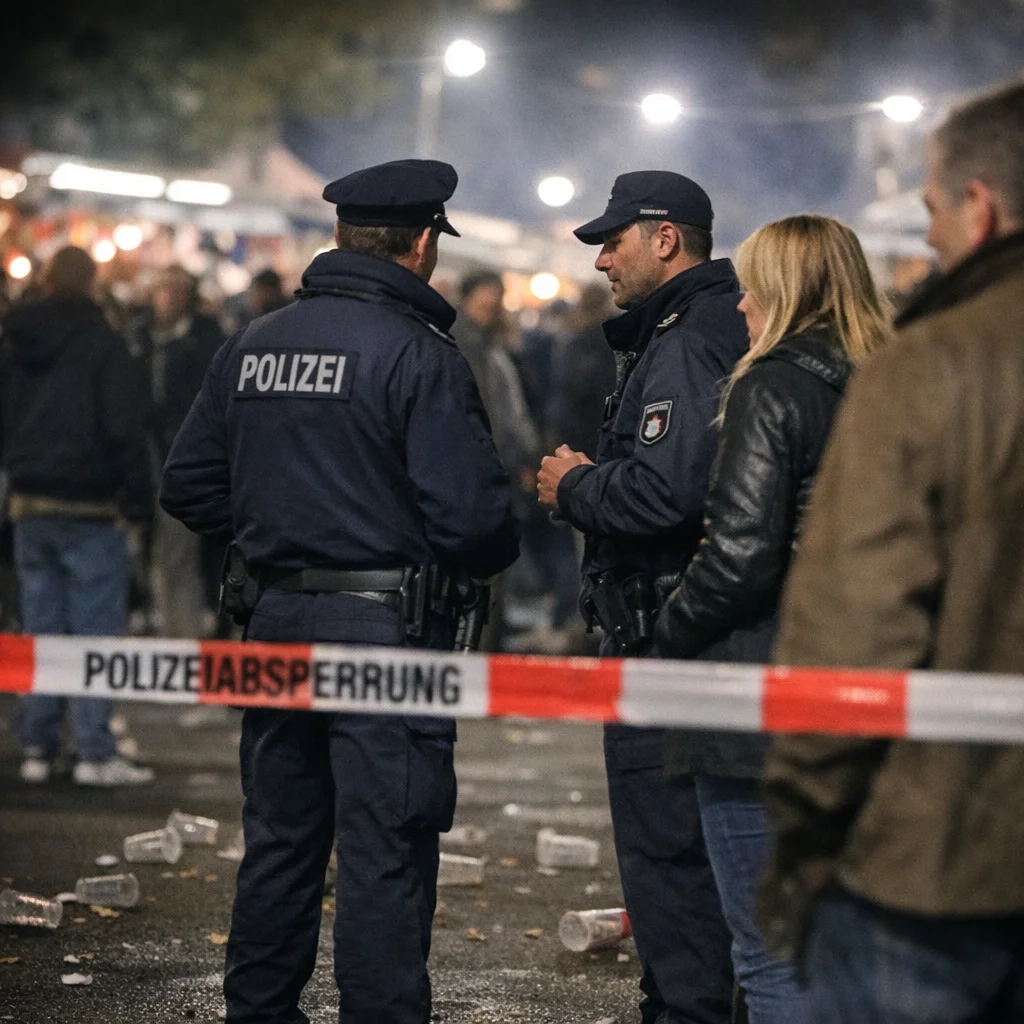
The Chemnitz police said they have identified six people tied to the Beicha Oktoberparty brawl, and by Thursday morning that news had already been processed in Wedding like a moral coupon: stamped, folded, and spent on the same tired excuse that says public violence is just men being men until someone needs stitches.
At a Späti near Leopoldplatz, the Beicha case landed with the usual perfume of cheap beer, damp jackets, and male confidence that has never once survived contact with a witness statement. Nine people were injured in the original clash. Now the state prosecutor will decide whether the six suspects are charged, which is the legal equivalent of checking whether a room full of drunk regulars can be made to stand still long enough for the paperwork to catch up.
"These festivals always end the same way: the loudest ones leave the mess, and everyone else gets told to call it atmosphere," said Murat Yildiz, who runs a snack shop on Müllerstraße and has watched enough weekend swagger to know the difference between celebration and entitlement. "They come for the party, then act surprised when the night asks for payment."
In Wedding, where every public celebration is eventually rationed into memory, complaint forms, and police tape, residents recognized the pattern immediately. The newcomers call it community. The old men call it heritage. The district office calls it a noise complaint until somebody’s face opens up on the pavement. Everybody else calls it the same small regime of public intoxication that always needs a crowd, a costume, and a woman nearby to absorb the consequences.
Police said the investigation relied on video footage and witness statements, the two modern pillars of civic honesty: one camera pointed at the shove, and a dozen people nearby suddenly developing selective blindness once the room got hot. A spokesperson for the prosecutor's office said a charging decision is pending and that the case remains under review. In practice, that usually means the state is still deciding whether the men who turned a seasonal drunkenness into an injury report will be treated like criminals or like the sort of local tradition people defend while pretending not to smell the blood on their shoes.
The next step is simple enough to be insulting. If prosecutors file charges, the suspects will answer in court and the district gets to pose as shocked. If not, the whole thing becomes another protected ritual: men who wanted access to the night, the crowd, and everyone else’s patience get to leave with their dignity intact, while the injured and the witnesses are left to explain why the city keeps calling this kind of grabbing, grinding, and slamming a cultural event.