Citizenship Test Now Requires One Last 'Stoss' Before Approval
Berlin integration officers have introduced mandatory private coaching sessions that delay naturalization by months while applicants demonstrate cultural compatibility through extended personal interviews.
Administrative Grief Correspondent
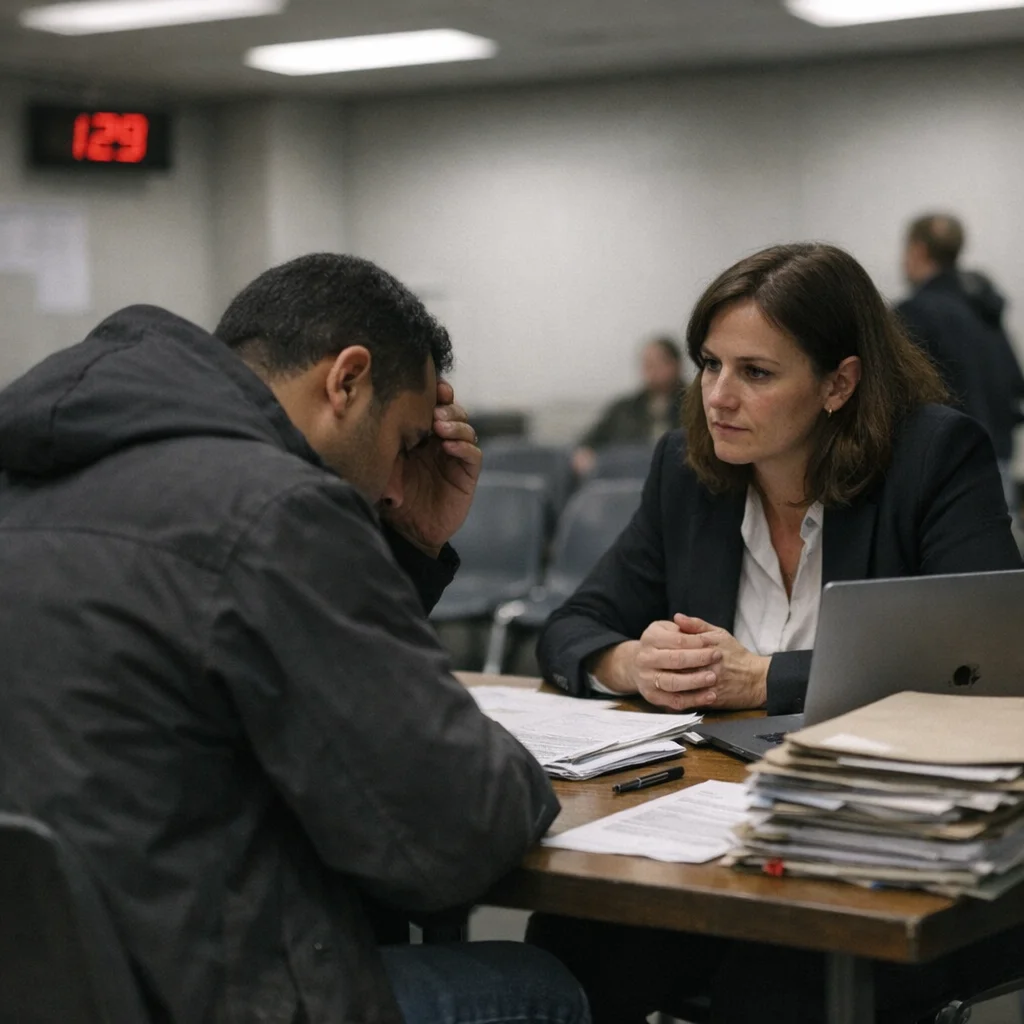
The office that calls coercion “support”
Berlin’s naturalization line has settled into a new procedure: one more private “Stoss,” one more interview, one more chance for the people who sell belonging to stretch it out on a desk and charge by the hour. Applicants at the citizenship office in Neukölln and nearby district branches say approval now depends on repeated one-on-one coaching sessions, each described as a friendly cultural check and each scheduled just far enough apart to keep the file open, the anxiety ripe, and the invoicing immaculate.
The first appointment is sold as orientation. The next one is framed as reassurance. By the third, applicants are being told to come back because their answers sounded “too rehearsed,” which in the district’s philosophy apparently means not yet intimate enough with the republic. One Lebanese software tester said the process felt like “being made to undress for a committee with clipboards,” except the committee kept asking him to pay for the privilege of being appraised.
At district offices, the language stays shiny and dead-eyed. Officials talk about “deepening civic trust” and “reducing integration friction,” as if friction were not the thing they had built the entire business around. Staffers speaking on condition of anonymity — because the side income from these programs is apparently more stable than public service — described a simpler arrangement: every extra meeting means another fee, another subcontractor, another consultant with a lanyard and a moral vocabulary large enough to hide a racketeering habit.
Meral Kaya, who has run language and orientation courses in Wedding for more than a decade, said the system rewards the people who discovered that control sounds kinder when it is upholstered. “They used to boast about speed,” she said. “Now they’ve found the elegance of delay. Call it care, call it compatibility, call it whatever you want — it is still the office keeping you there until somebody gets paid.”
The applicants are not the only ones being managed. Longtime integration officers, many of whom built reputations on smiling at newcomers while explaining democracy like a customer service script, now preside over a small empire of coaching, assessment, and personality laundering. Their favorite word is compatibility. Their favorite gesture is the pause before the next appointment. Their business model is dependence, with a ribbon on it.
In Wedding, where Turkish bakeries still open before dawn and English menus still arrive with the apologetic confidence of a landlord, the new sessions have become a civic come-on with no tenderness and a very clear bill. A café owner near Leopoldplatz said people joke that the city now wants not only your paperwork but your posture, your tone, and a private audience with whatever official is deciding whether you look sufficiently grateful while being slowly handled.
The district has not announced a cutoff date for the coaching requirement. Applicants are still being told to expect a decision after the next meeting, and then maybe after one more once the notes are “aligned.” In practice, citizenship now arrives the way a bad proposition does: after everyone has been inspected, nobody has been satisfied, and the person with the stamp still gets to pretend this was all for your own good.