Civic Pride Sells Out at the Printer
Neighborhood officials, campaigners, and startup consultants are co-producing a public virtue festival with sponsorship tiers, branded recycling bins, and a panic that nobody will attend unless it looks expensive.
Civic Hypocrisy & Neighborhood Compliance Reporter
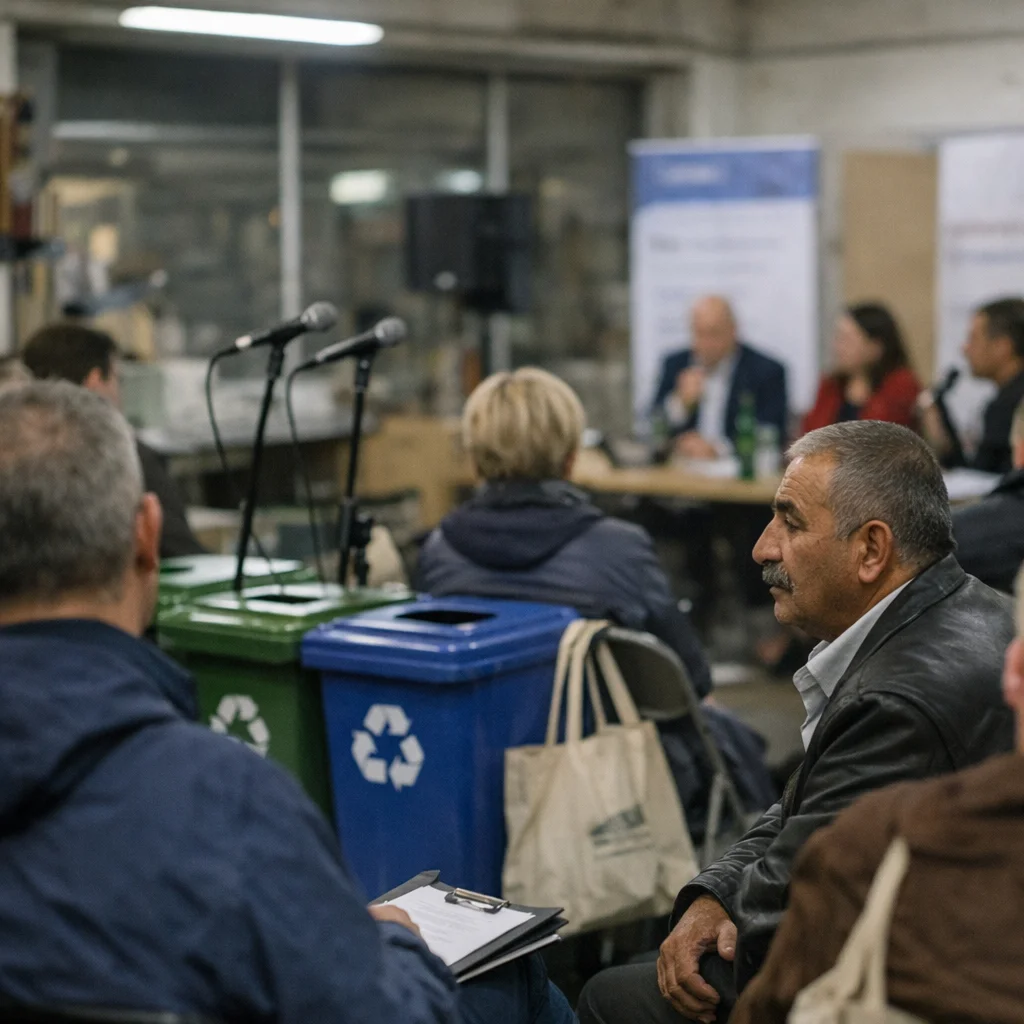
City Hall’s little parade of public virtue rolled into the old print shop in Wedding on Thursday night, where neighborhood officials, campaign consultants, and startup handlers gathered to celebrate an inclusion festival so overfed by sponsors it looked less like community work than a soft-focus laundering operation for everyone’s reputation.
The event was sold as an open invitation to residents: Turkish shop owners, longtime tenants, first-time cyclists, arts administrators, and anyone still naive enough to think “community engagement” means something messier than a moderated circle and a photo afterward. In practice, the evening moved like a procurement séance. The decisions were already made in some polished side room with bottled water and self-importance; the public was then invited to clap along while those decisions were renamed “co-creation,” the bureaucratic equivalent of pinning a ribbon on a bruise.
The guest list did the sorting before the speeches even started. The people with the microphones were the usual tiny priesthood of legitimacy: nonprofit executives with emergency-pink cheeks and inflated vocabularies, district-adjacent fixers who look as if they were born apologizing, and one sustainability consultant with a shaved jaw and the glazed confidence of a man who has never met a grant he didn’t want to stroke. He stood beside branded recycling bins and called them “participatory infrastructure,” which is exactly the sort of phrase that should come with a breathalyzer and a warning label.
The bins themselves were treated like little chrome altars to public innocence. They were expensive, logoed, and more carefully lit than most of the people who had to live with the event afterward. Somewhere between the sponsor banner and the tote bags, the whole thing stopped pretending to be a neighborhood gathering and became what it was: status for sale, wrapped in civic language and handed out with the greasy smile of a man trying to buy absolution by the hour.
A Turkish bakery owner from nearby, who asked to be identified only as Cem because he is tired of being invited to these spectacles as ethnic décor and then asked to be grateful for the honor, said he had been promised a real say in the planning. “They wanted my name, my pastries, and my silence,” he said. “That is not participation. That is catering with a conscience. They keep calling it inclusion, but what they mean is: stand there, feed the room, and let the people with better shoes explain your neighborhood back to you.”
Officials insisted, with the dead-eyed conviction of people who confuse repetition for truth, that the process was inclusive. One organizer from the district office said the event had “brought all stakeholders into the same room,” which is usually code for putting everybody under fluorescent lights and hoping the poor, the busy, and the actually affected will get tired before they start asking rude questions. A startup sponsor, dressed like a man who had mistaken austerity for seduction, called the project “a platform for civic belonging.” He said this while people queued for tote bags, those little fabric apologies for public life, long enough to suggest democracy and flimsy enough to rip the minute anyone actually leans on them.
The room smelled like coffee, polish, and the tender panic of people who need to be seen as generous without ever becoming inconvenient. Every sentence contained the same hidden bargain: let us speak for you, photograph you, and maybe if you behave, let you stand near the light. Inclusion, in this corner of Wedding, functions exactly as advertised by cowards and consultants: it opens the door just wide enough to harvest your presence, then shuts before you can bring in your own mess, your own demands, your own ugly little appetite for power.
The whole thing had the decaying glamour of a civic seduction gone stale somewhere between a grant application and a mood board. Everyone wanted to look local without paying local prices, radical without losing the funding, and intimate without being known. The left called it empowerment. The right called it culture. Both were thrilled to outsource sincerity to a roomful of overperfumed intermediaries and call the resulting stiffness “participation.”
By the end of the night, the only honest question was whether anyone would show up once the photographers left and the sponsor logos stopped smiling. The answer was obviously yes: not because the event had earned it, but because public approval is a narcotic and some people will lick the spoon even after they’ve seen the recipe. The officials will call that engagement. The consultants will call it momentum. The residents will call it what it is, if anyone bothers to listen: a rented stage, a borrowed voice, and a neighborhood being asked to applaud while its own face is used as cover.