Clinic Promises ‘Safe Word’ Triage for Men
A Neukölln urgent-care chain now lets patients choose how much humiliation they can tolerate before the nurse calls the next case, which staff call consent and exhausted men call a velvet rope for their erections.
Administrative Grief Correspondent
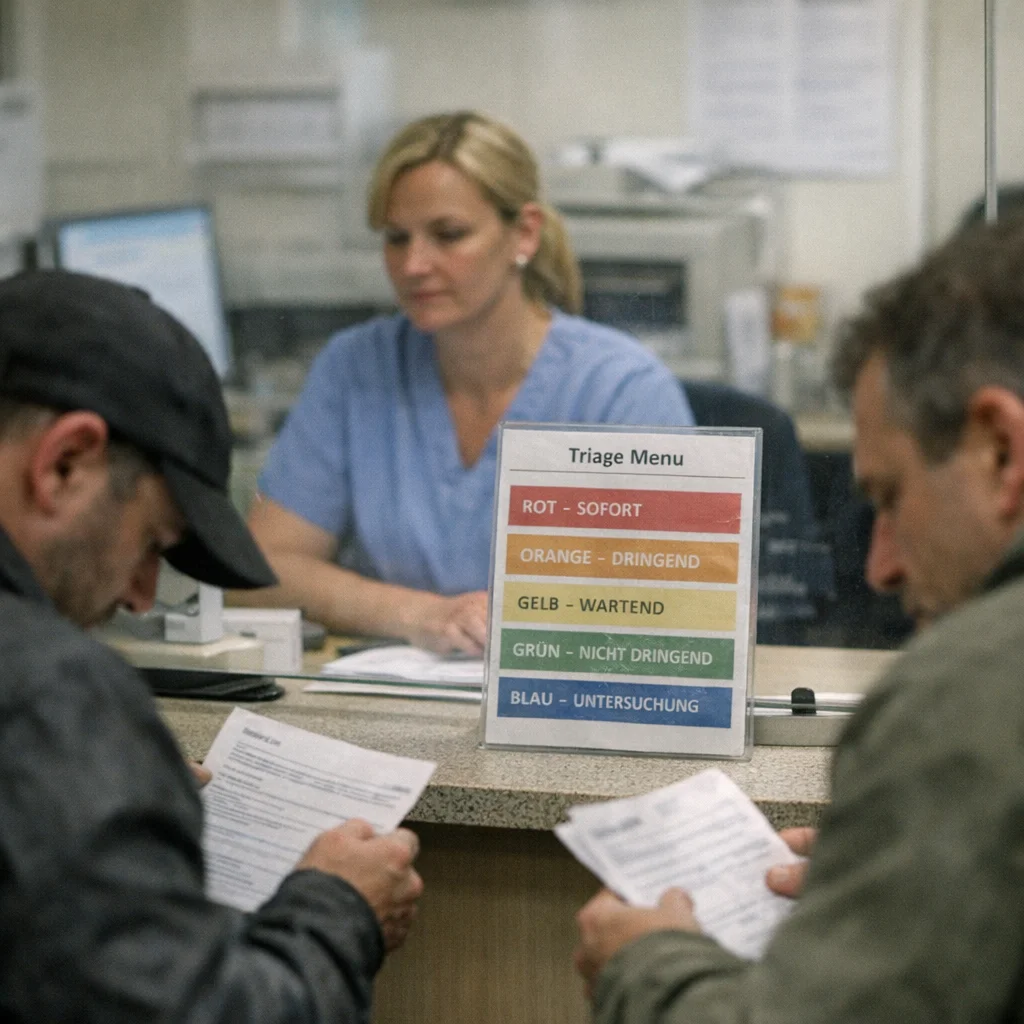
Men arrive fluent; staff reply in brackets
At a Neukölln urgent-care chain with a fresh branch near the Wedding border, men who arrive with the posture of minor emperors are handed a laminated triage menu before they reach a chair. The sheet asks them to choose a safe word, a pressure limit, and the point at which they want the nurse to stop pretending their confidence has diagnostic value. The clinic calls it intake. The waiting room hears something closer to a consent form for having one’s ego handled, measured, and eventually pinned to a clipboard.
The chain, MedHaus Süd, rolled out the system after staff said the old routine had turned every reception desk into a stage for unpaid masculinity. Men were arriving with chest pain, sinus infections, and the kind of self-regard that arrives before the symptoms do, then trying to negotiate the room like it was a private club with weak lighting. Now they are asked, immediately and without romance, how much humiliation they can tolerate before being called next. One receptionist, Meral, said the point was to stop “men who think being difficult is foreplay.”
“We are not here to admire the performance,” she said. “If a man needs six minutes to pronounce his own name and still can’t stop hovering over the desk, he is not a priority. He is a man begging to be processed.”
The first page of the menu offers classic choices: normal handling, gentle handling, and “firm but respectful,” a phrase that has done enough damage in Berlin to qualify as public infrastructure. The second page gets more honest. Patients can request that staff keep a neutral face, avoid reassurance, and call them by number if they begin slipping into speeches about being “easygoing.” Every time a patient violates the boundary he selected, the system adds a charge labeled “loss of control fee.” In practice, the clinic has found a way to bill men for the exact moment their swagger stops working.
Management insists the policy is about dignity. The brochure uses the same sterile vocabulary now beloved by every institution that wants to sound humane while applying pressure: choice architecture, boundary setting, mutual respect. But the mechanism is blunter than the marketing. The louder the man insists he is relaxed, the slower the service becomes. The more he performs self-command, the more the clinic treats him like a patient whose body is already contradicting him in public.
By the end of the first week, the front desk had become a little court where inflated masculinity was stripped down line by line. One man tried to mark “maximum discretion” on the form and then announced, loudly enough for three strangers, that he didn’t mind being “handled.” Another asked whether the nurse could use a firmer tone, as if his pulse had joined a dominance seminar. A third refused the safe word entirely, then got offended when the receptionist wrote “uncooperative” beside his name and sent him back to the chairs with a number that made him look smaller than his own knees.
Staff say the menu has sorted the merely ill from the theatrically entitled. The sick are seen. The rest are made to wait in the shape of themselves. Younger office men, still marinated in startup morale, arrive expecting their discomfort to be admired as vulnerability. Older ones bargain like they are buying a used couch with no upholstery and too much history. Every one of them eventually learns the same lesson: the clinic does not care how persuasive they sounded on the way in. It cares whether they can keep their boundaries once someone in scrubs starts reading them back.
A district health spokesperson said the chain had not broken any rules, though it had received complaints from men who objected to being asked to define their limits before anyone had even checked their blood pressure. MedHaus Süd said it would review feedback but had no intention of removing the menu. For now, the branch near Wedding remains full of men trying to look unbothered while the clock, the counter, and the invoice quietly work together to expose the real condition: an erection of personality collapsing under its own administration.