Club Commission Approved Your Little Breakdown
Wedding’s nightlife economy has discovered that crisis management sells better than ecstasy, so the promoters, pill pushers, and wellness middlemen now package breakdowns as a premium service.
Nightlife & Fiscal Insomnia Correspondent
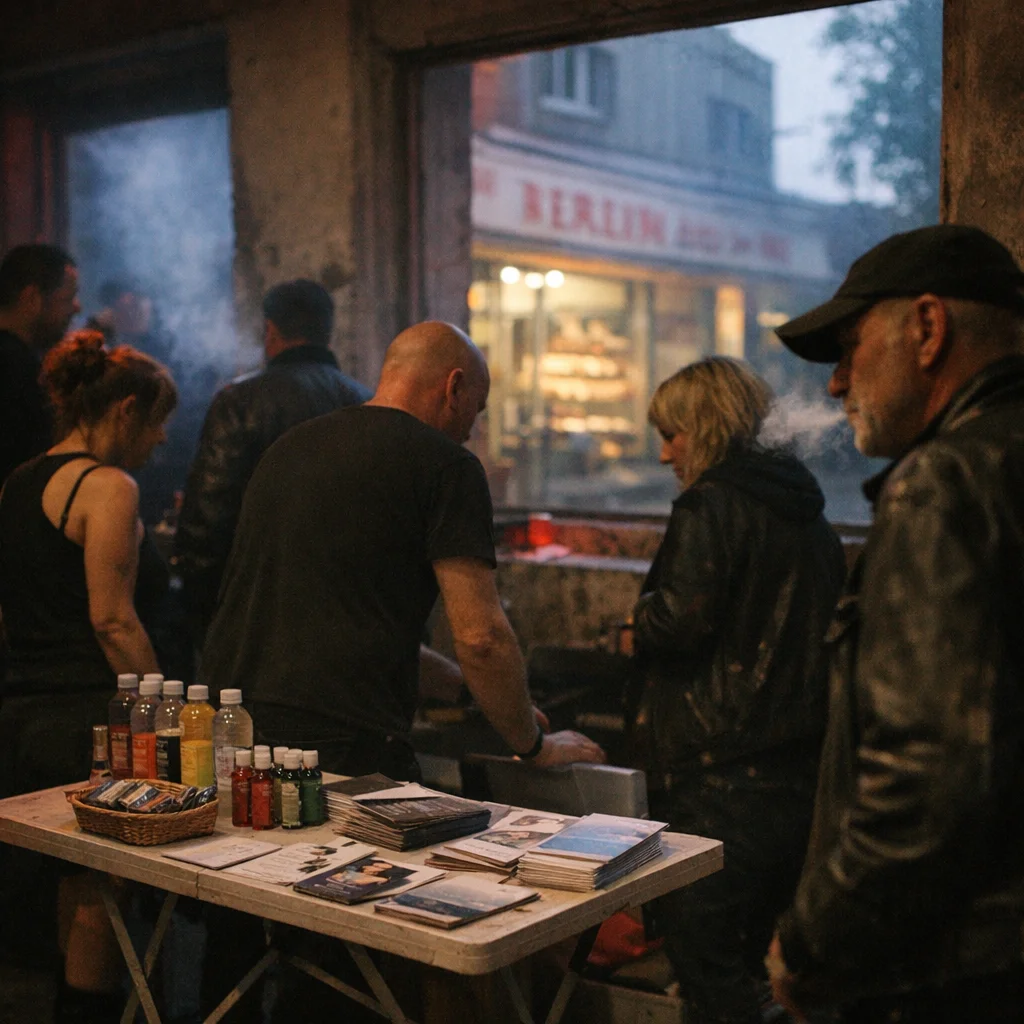
Crowds of former kings and self-appointed archivists of the dance floor gathered Thursday night at a club in Wedding that now doubles as a museum of unresolved adolescence. The event, billed as a “legacy ritual,” drew the usual late-model casualties of Berlin club culture: people who peaked when door policies felt like personality tests and have since treated work, therapy, and sunlight like hostile foreign powers.
The room filled early with men in black, women in black, and a few cultural operatives dressed like they were still waiting for the right bouncer to certify their relevance. They moved with the brittle confidence of people who believe a stamped wristband from 2014 is a form of citizenship. Outside, the Turkish bakery on the corner closed before midnight; inside, the crowd bought bottled water at club prices and talked about “the scene” with the solemnity of people who have mistaken a long hangover for political consciousness.
“It’s not nostalgia,” said Dennis Voigt, 39, who requested anonymity because his girlfriend does not know he still owns a fan and goggles. “It’s continuity.” He said this while trapped in a conversation that begins with Marx and ends with a guest-list grievance. Nearby, a former promoter described his career as “brand stewardship,” which is what people call failure when they’ve learned to monetize their own embarrassment.
The real genius of the night was not the music, which thudded along with the emotional range of a locked filing cabinet. It was the business model. Wedding’s nightlife economy has discovered that if you package a breakdown correctly, you can sell it twice: once as liberation and once as aftercare. The same crowd that once sneered at wellness now queues for it, provided the breathwork comes with industrial lighting and a queue that makes them feel chosen.
By midnight, the collapse economy was fully operational. A former resident DJ was running “post-club recovery sessions” from a folding table near the bar, complete with electrolyte shots and breathwork cards. A woman who once wrote a glowing essay about “collective release” was charging for private “boundary integration” consultations, which is a very expensive way of saying she still cannot stand being alone after the lights come up.
A representative from one of the city’s nightlife advisory circles reportedly drifted through to “observe the ecosystem.” That is Berlin bureaucracy in its favorite costume: it lets venues convert disorder into branding, calls the paperwork preservation, and then congratulates itself for protecting a scene it has already priced into exhaustion. The grants arrive. The noise complaints are filed. The doors stay selective. Everyone involved gets to pretend this is resistance instead of a rent stream with bass.
The humiliating part is how eager everybody is to be managed. The aging ravers still want to be looked at like they are dangerous, while quietly refreshing their phones to see whether they were posted by the right account. The promoters want radical optics without radical consequences. The wellness middlemen want the wreckage of nightlife without the sweat, the vomit, or the people who used to make the room feel alive. Even the “anti-commercial” crowd performs its purity like a luxury good: black clothes, deadpan faces, and the thrill of appearing too above it all to admit they are there to be sold something.
Club staff said the night was calm, aside from a minor dispute over a booked “emotional containment corner,” which was apparently occupied by three people claiming to be “between projects,” a phrase that in Wedding translates roughly as: unemployed and overconfident. Elsewhere, a promoter’s assistant was seen handing out drink tokens with the solemnity of a border official.
The event’s next panel is advertised as a discussion on “sustainable nightlife futures,” which in Berlin usually means extending the life of a bad idea just long enough to invoice it. Expect the usual suspects: grant-scented cultural parasites, venue managers speaking in the language of care, and nightlife bureaucrats who can’t dance but can definitely approve your emotional erosion.
By dawn, the last believers were drifting toward the tram with mascara in their cuffs, bruised egos in their throats, and the stubborn conviction that they had participated in something authentic. The next event in the series is already sold out. Of course it is. Berlin will always find a way to monetize refusal, especially when it comes with a guest list and a drink token.