Club Kids Ask the Pharmacist for Consent
Wedding’s nightlife has discovered a new moral alibi: a counterculture of “safe” pills, laminated warnings, and people who want to feel transgressive without ever looking sloppy.
Nightlife & Fiscal Insomnia Correspondent
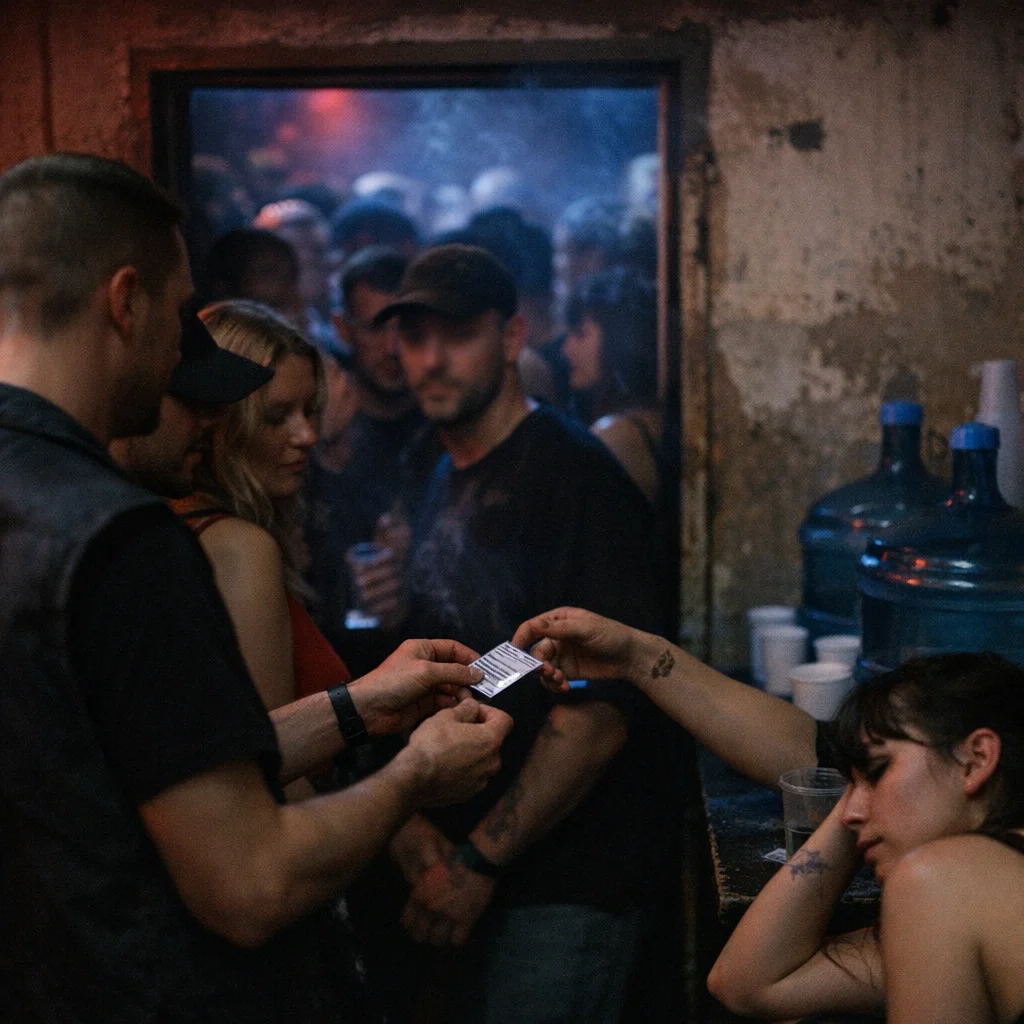
The basement as moral laundromat
At a packed basement party in Wedding on Saturday night, promoters, so-called wellness hosts, and several aggressively self-impressed regulars began handing out laminated “consent cards” for pills, powders, and mysterious little tablets, as if the city’s ugliest appetites could be made civilized with better cardstock and a few borrowed terms from public health.
The event, held near Leopoldplatz and advertised with the kind of fake sincerity usually reserved for grant applications and airport apologies, promised a “responsible night” complete with peer support, water stations, and a code of conduct written by people who still mistake language for ethics. By midnight, the hand stamps were dry, the egos were wet, and half the room was performing sobriety as a kind of BDSM for the middle class: tightened, curated, and deeply perverse in its need to look enlightened while everyone’s breath turned sour and the eyeliner started to melt into trench art.
“It’s not about rules,” said Arne K., 31, a promoter who requested anonymity because his own flyers still contained three different spellings of the word “care.” “It’s about creating a safer container.” A container for what, exactly, was less clear, though the room suggested the answer: status anxiety, chemically assisted flirtation, and a whole lot of people trying to look spiritually available while chewing their jaws into dust.
Wellness language with a dealer’s grin
The line outside included a graphic designer from Neukölln in thrifted workwear, a philosophy grad student quoting Foucault like a man trying to negotiate his way out of a bad threesome, a pair of expats claiming they were there “for the sound” while quietly pricing the room by the level of dehydration, and one wellness worker from Mitte who kept describing everyone as “fierce” with the dead-eyed confidence of someone who charges extra for compassion.
Inside, the new etiquette was enforced with the smugness of a seminar and the precision of a narcotics raid conducted by people who own linen. A volunteer in a black vest handed out little cards listing “yes,” “maybe,” and “not tonight,” which would be almost touching if the entire scene were not built on the oldest lie in nightlife: everyone wants the thrill, nobody wants the shame, and nearly everyone would like both delivered in a recyclable format.
There were little paper cups, trembling hands, crushed eyeliner, and the exhausted shine of people who have made hydration into a personality. Several guests kept checking their phones as if consent might arrive by notification. One man near the DJ booth was doing that peculiar modern thing where a person claims to be “present” while visibly preparing a spreadsheet in his head. Another kept announcing he was “being intentional” with the grim vanity of a man fingering a rosary he bought from a concept store.
Wedding pays the noise tax, again
Wedding has seen this movie before, because the neighborhood is where Berlin dumps its imported contradictions and then congratulates itself for the journey. First came authenticity, then sustainability, then intentionality, which is what privileged people call bad behavior after a briefing. Now it is harm reduction, the city’s favorite deodorant: spray it over enough bass, ego, and unpaid social theater, and suddenly the stink is “progress.”
The Turkish bakeries, late-night kiosks, corner shops, and exhausted long-timers outside the venue did not get a seat at the seminar. They got the bass through the walls, the bottles on the pavement, the perfumed moral panic drifting out of the door, and the familiar contempt of a nightlife class that arrives in a working neighborhood to cosplay liberation while treating everyone else like scenery with rent receipts.
That is the real structure here, and it is uglier than the flyers admit. Promoters need the language of care to sell the fantasy. Wellness workers need the scene to justify their own little careers in managed empathy. Cultural grant bureaucrats love the whole arrangement because it lets them pretend Berlin’s nightlife is an ecosystem of civic virtue rather than a subsidy for the emotionally underfed. And the expats, those pristine little missionaries of consequence-free decadence, get to feel radical while consuming the city like a buffet with guilt-free napkins.
By around 4 a.m., the laminated cards were curling at the edges, the water station looked like a shrine to performative hydration, several guests had lost the distinction between consent and logistics, and the DJ was still selling transcendence to people with day jobs, expensive shame, and the kind of pupils that make honesty look medically unnecessary.
The organizers said they may expand the program next month. Residents said they would prefer the old-fashioned version of chaos: at least it admitted it was hungry, horny, and stupid instead of dressing itself up as ethics and asking for applause.