Club Medics, Dealer Saints, and the Mandatory Hydration Lie
A new wave of nightlife “care” in Wedding is being sold by promoters, first-aid crews, and ex-dealers who want the moral glow without admitting who actually keeps the floor moving.
Bathroom Diplomacy & Night-Policy Correspondent
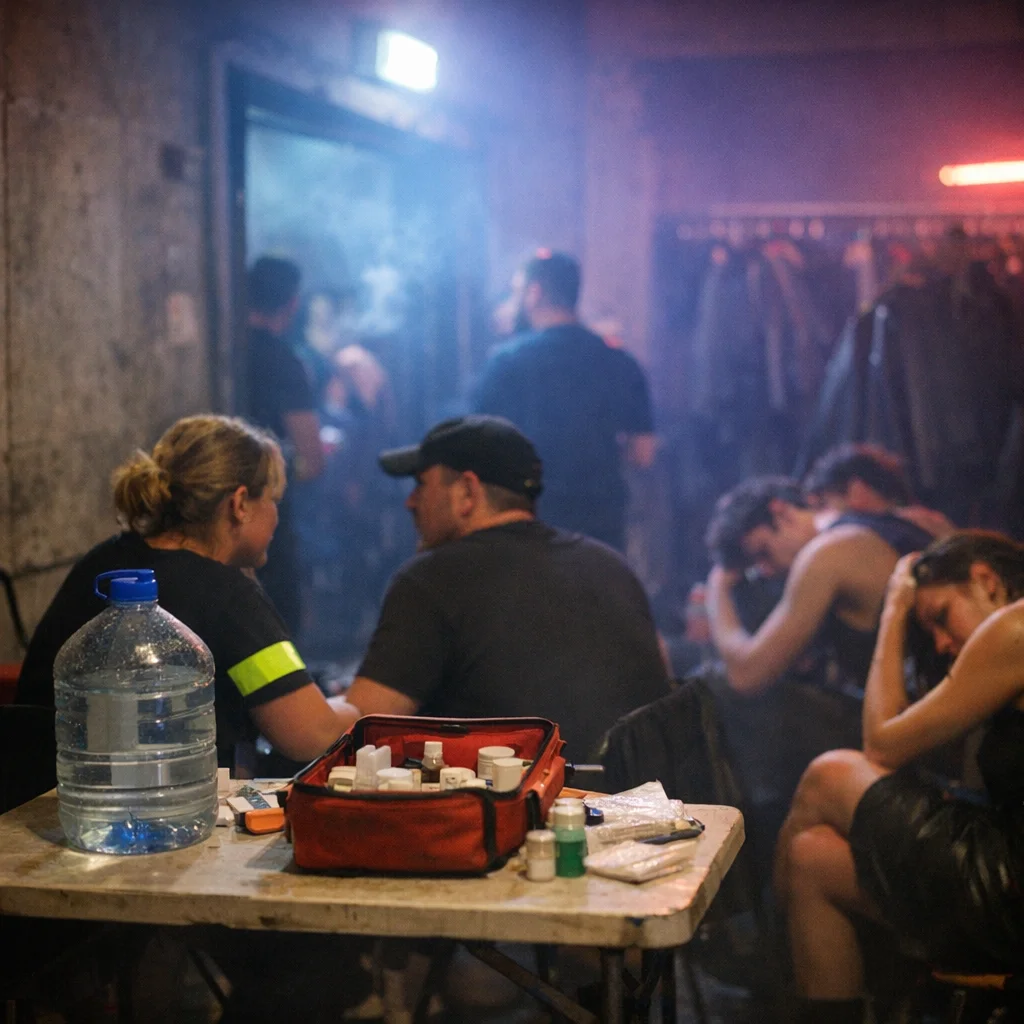
In Wedding’s clubs, the newest status symbol is not a velvet rope or guest list; it is a volunteer medic in a neon armband, posted beside the bar like a nervous saint with a clipboard. Promoters call it community, owners call it responsible nightlife, and everyone else calls it what it is: a way to dress up basic survival as a premium feature and then invoice the room for enduring it.
At a warehouse party off the canal, the first-aid table sat between coat check and a speaker stack loud enough to make your fillings apply for asylum. A sign promised hydration, calm space, and “care culture” in breezy font. What it did not promise was honesty. By midnight, the same crowd that pays extra for safe-seeming chaos was pressing toward the medic station with blown pupils and the anxious shine of people who have turned self-erasure into a social calendar.
Outside, on Pankstraße, the Späti was doing what the city does best: selling warm beer, battery packs, and regret. A delivery rider leaned on his bike and watched a line of black-clad bodies spill out of the club for air, then back in for more abuse with a smile. A couple of local kids cut past them toward the night bus, looking at the scene the way the neighborhood has learned to look at gentrification: suspiciously, with the contempt of people who know which rent is going up because someone else wants a “vibe.”
“We are not running a spa for chemically ambitious adults,” said Maya K., a volunteer medic who asked not to be named because she still has to see these people at the Späti. “The venue wants the aura of responsibility without paying enough staff to handle the ugly part. They want mercy on the flyer and deniability at the door. When it gets messy, they smile like they invented ethics.”
That is the racket. Not care, but care branding. Not harm reduction, but liability theatre. Not community, but an unpaid labor pool with a rainbow sticker. The promoters—usually men with immaculate sneakers and the self-regard of minor royalty—love to talk about inclusion while everyone else does the actual bleeding, carrying, calming, and cleaning. They arrive at 10 p.m. with a statement about togetherness, then vanish around 2:30 a.m. when the room starts sweating through its mascara and morals.
And then there are the ex-dealers, the reformed boys of the local gospel circuit, now posing as neighborhood elders because they learned that a past in the trade can be repackaged as authenticity if you say “growth” often enough. Growth, in this context, means laundering one little racket’s grime into another’s funding deck and asking for applause because you used to sell the same disaster you now moderate. It is Foucault with a guest list: discipline for the fools on the floor, freedom for those who know how to leave before dawn.
At 2 a.m., a bartender with the dead voice of an overworked priest kept chanting the mandatory hydration line as if repetition could make it less stupid. A dancer in a black mesh top rolled her eyes so hard it looked like she was trying to exit through the back of her skull. Near the smoking area, a promoter with polished teeth explained that the venue’s new care policy had “changed the culture.” It had, in the same way a condom changes a one-night stand: enough to make everyone feel cleaner while nothing underneath becomes less transactional.
There was, of course, a district statement. The office welcomed “initiatives that reduce risk,” then added, with bureaucratic modesty bordering on perversion, that operators remain responsible for staffing, crowd safety, and emergency response. Translation: if the scene wants to cosplay Florence Nightingale in a harness, fine, but the city still expects someone to answer when the room starts sliding into chemical prayer and everybody suddenly discovers they are committed to personal freedom.
By morning, the medic table had been wiped down, the volunteer chat was full of burnout complaints, and the club’s social media account had posted a smiling photo of a water jug like it was public health policy instead of a damp prop. Somewhere nearby, a cleaner was dragging a bag of bottles toward the curb while the party people slept off their righteousness. That is Wedding in one sentence: the neighborhood where the bodies stay up late, the slogans go to bed early, and the ones left holding the mop are always the least invited to the afterglow.