Clubland Opens a Prayer Desk
Wedding’s midnight economy has discovered repentance as a service. Promoters, DJs, and harm-reduction freelancers now offer confession, spiritual cover, and a branded path back to the dancefloor for anyone too hungover.
Nightlife Identity & Self-Deception Correspondent
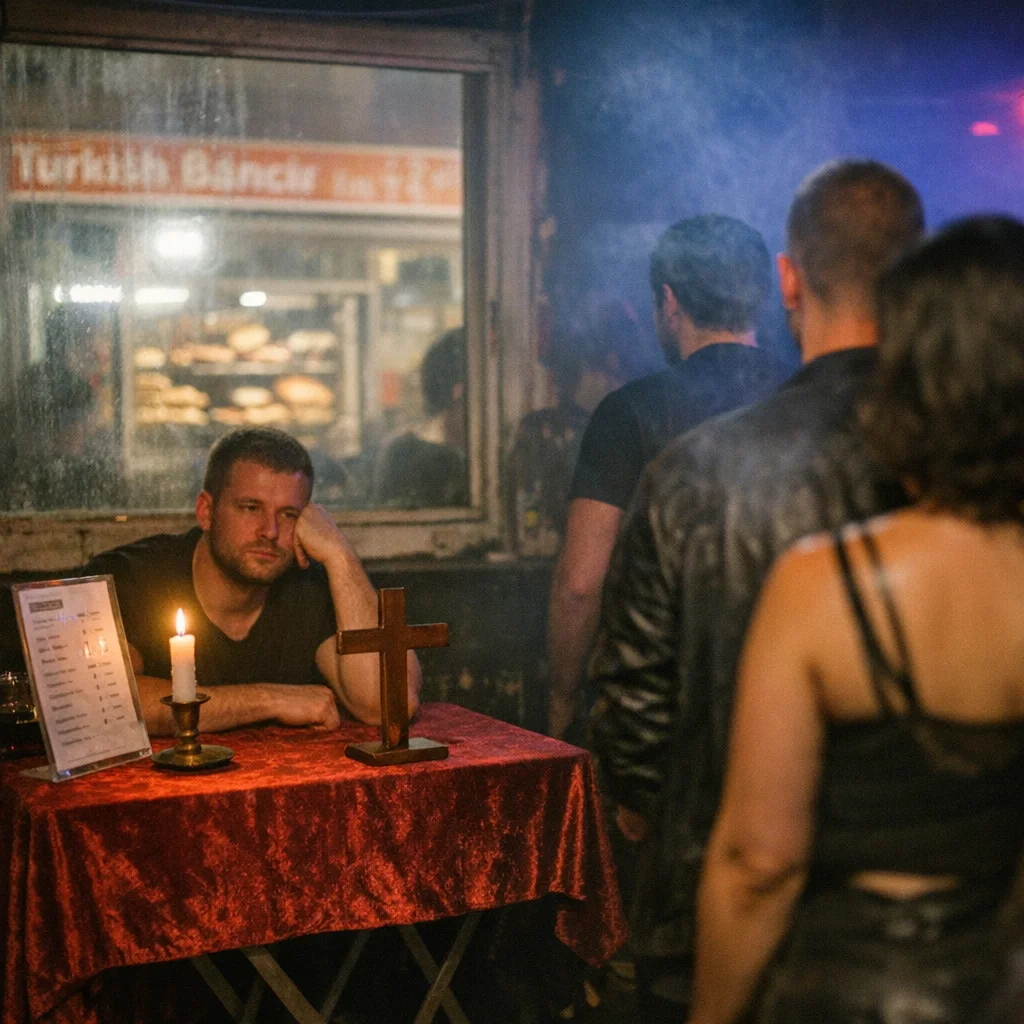
Confession Booth, Sponsored by Guilt
At a basement venue in Wedding, a folding table draped in black velvet sits beside the cloakroom like a minor altar to transactional shame. Promoters, DJs, and self-appointed care workers now offer repentance between sets, which in Berlin means a service with branding, a mailing list, and just enough moral language to make the cash drawer sound humane.
It started as a joke after a Sunday lineup that had already chewed through the room’s self-respect and spit it back onto the sticky floor. By the next weekend, the joke had been laminated into policy. A handwritten sign announced a "re-entry support desk," which is corporate tenderloin for: arrive wrecked, needy, ketamine-soft, or emotionally overcooked, and we will help you narrate your collapse before you are permitted back under the strobes.
One organizer, Felix Mertens, said the idea was meant to "normalize aftercare," a phrase so lubricated with NGO perfume it could probably file taxes. He asked not to be named in print, reportedly because he had once described unpaid labor as a community practice and still had to live with the rash. By midnight, the desk had become the hottest confession booth in the room: not because anyone believed in absolution, but because the ritual gave them a better way to perform helplessness.
The queue looked like a residency application written by a drunk algorithm. Young founders in black mesh, left-wing freelancers with dead eyes and tote bags full of borrowed politics, wellness consultants who say "holding space" the way priests used to say mass, and expats who learned three German nouns and now use them as moral camouflage all lined up to be told they were still basically good people. They murmured about boundaries, recovery, and consent while adjusting their outfits like they were about to be judged by a panel of very tired saints. Then they went back to pressing their bodies together in the dark, everyone pretending the sweat was spiritual when it was mostly just the room doing what rooms do.
A woman from Neukölln, dressed in a nurse costume that landed somewhere between camp and fraud, said the desk helped people "process the night." A moment later she admitted the operation also sold stamped cards for a later "cleansing hour," complete with tea, a candle, and the kind of careful typography that screams moral collapse with a grant application attached. First the confession, then the upsell. First the trembling lip, then the QR code. Berlin’s favorite sincerity is a sandwich of self-disgust and premium packaging.
There was also a sign listing prices, because nothing says spiritual care like a menu. Ten euros for "grounding," fifteen for "aftercare tea," twenty for the deluxe version with a private chat and a wrist stamp that supposedly meant you had been looked after. The whole thing had the texture of someone turning their shame into a side hustle and then calling it community resilience.
Not everyone was impressed. A bartender who has survived three moral revolutions, two concept bars, and one bathroom lock that should have qualified as a hate crime called it "Catholicism with techno." The line, he said, was full of people who want to feel filthy in an artistic way and purified in a socially acceptable one.
"They want absolution without the inconvenience of guilt," said Arman Yildiz, who owns a nearby Turkish bakery and watched the queue curl down the block like a fever dream with tote bags. "In the old days they came for beer and bad decisions. Now they want a certificate and a softer landing for the same appetite." His pastries, he added, offer no debrief, no wellness language, no moral foreplay — only sugar, butter, and the humiliating fact of being alive.
The district office said it had received no formal application for a prayer desk, which is probably because the city has not yet decided whether this is hospitality, therapy, or a fire risk with a sound system. Club management said the desk will remain until further notice, or until the promoters discover they can charge more for remorse in a better font and call it harm reduction.
By dawn, the most dedicated among the forgiven were leaving with ink stamps on their wrists, a sermon in their lungs, and the same greedy need for attention that brought them there in the first place. The music stopped. The candles went out. The line outside the desk got longer, because nothing in Wedding ever truly dies if it can still be monetized.