Cocaine Forms, Chaos, and the New DJ Visa
Wedding’s nightlife economy has discovered that the best way to look international is to make every promoter, light jockey, and washed-up selector prove they are “culturally relevant” to the labor office.
Moral Contradictions & Night-After Reporting
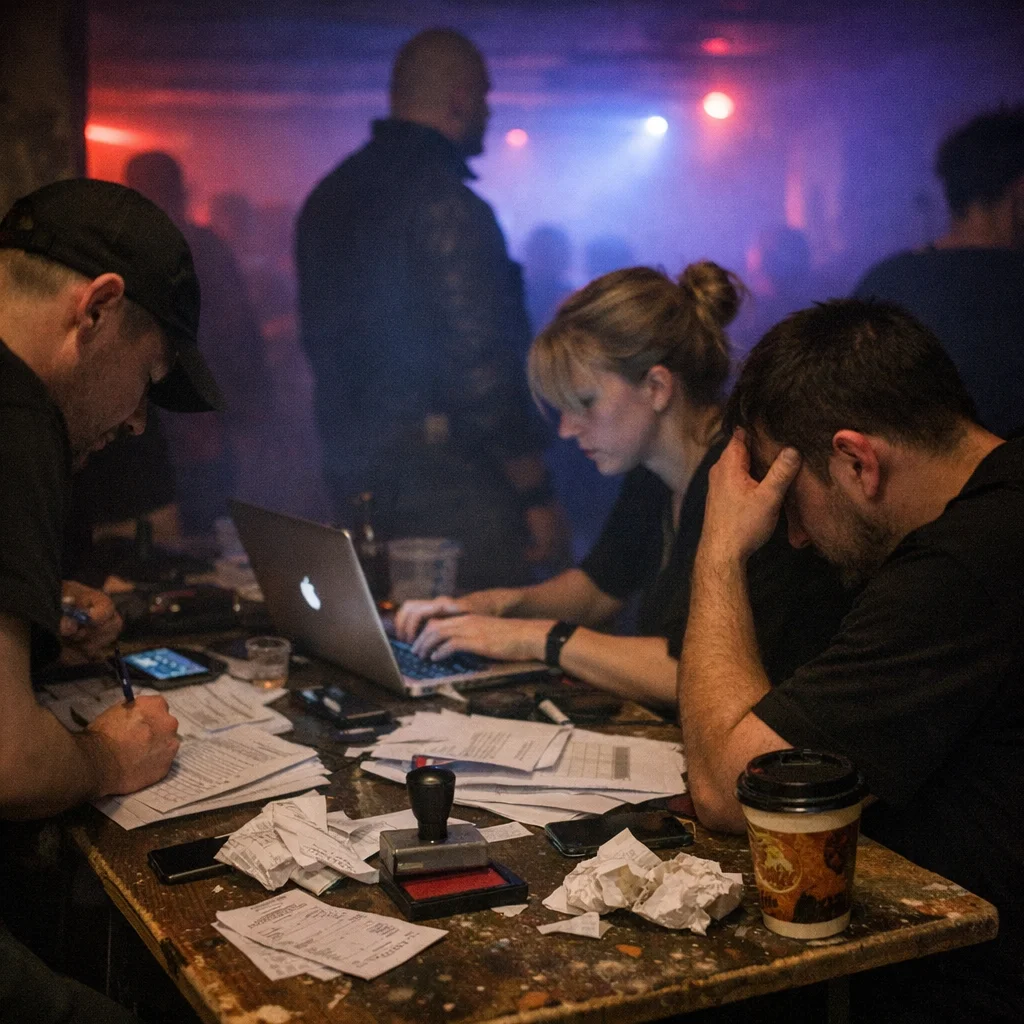
At a basement club in Wedding on Thursday, promoters, DJs, and a half-dozen visibly haunted accountants spent the evening pretending nightlife runs on professionalism instead of freelancers, favors, and the kind of chemically padded confidence usually sold by a man in a leather jacket who says he knows a shortcut. The new paperwork regime, delivered with the German state’s beloved talent for converting private rot into public procedure, now demands that club operators prove everyone from the light jockey to the “international guest selector” is culturally relevant, legally tidy, and not just a stylish parasite with a USB stick and a hard stare.
First came the forms. Then came the theater. By late afternoon, one collective had taped mock schedules to the wall like a labor tribunal staged inside a bankrupt design studio, while a booker in expensive boots tried to explain why three DJs, two graphic designers, and a “community liaison” each required their own declaration of usefulness. Outside, a späti under the U8 tracks sold warm beer to people waiting for the night to pretend they had a purpose. Inside, a Turkish owner from the corner kebab place watched the whole thing with the exhausted expression of a man who has already seen three revolutions, all of them invoices. “More paperwork than a divorce and less dignity than a donor-funded panel,” he said.
The district’s favorite trick is to call this compliance. The people living off the scene call it survival with better stationery. Clubs are responding the only way they know how: by staging competence in public and panic in private. One venue spokesperson insisted the operation had “full procedures,” then admitted those procedures currently live in three Google Docs, one WhatsApp group, and the skull of a sound engineer who has not slept properly since Thursday last month. He polished a stamp pad like it was a family relic and said, with the dead-eyed sincerity of a man trying to keep his rent paid, “We are not a scene. We are a temporary republic of invoices and morning-after excuses.”
That may be the closest thing to honesty in the room. Everyone who has ever nodded solemnly about anti-capitalist culture while charging twelve euros at the bar is now discovering that ideology does not help when a labor office inspector wants tax numbers, contracts, and proof that your “resident selector” is not just a handsome drifter with a nicotine habit and a jacket priced like a month of groceries. The collective leads want solidarity, the promoters want status, and the venue managers want the state to stop peeking behind the curtain long enough for them to keep laundering vanity through the word community.
The performance gets filthier the longer it goes on. By 9 p.m., the room is full of people smelling like sweat, cold smoke, cheap cologne, and the stale bravado of stimulant optimism. Everyone is exhausted in the theatrical way that means they still believe exhaustion makes them interesting. A DJ with perfect cheekbones and dead eyes keeps insisting the paperwork is “part of the struggle” while someone else, bent over a laptop at 3 a.m., is actually doing the struggle: entering names, dates, and contract details with the expression of a person being slowly seduced by bureaucracy.
Berlin spent years selling the story that its clubs were democratic temples of liberation, as if a bass bin and a guest list could absolve property prices, labor fraud, and the spiritual emptiness of people who call every hangover political. Now the labor office has arrived with a clipboard and the emotional range of a disappointed landlord. It turns out the scene’s central fantasy was never freedom; it was exemption. The fantasy was that chaos could be curated, that a room full of black clothing, bruised egos, and wet ambition somehow amounted to civic virtue. The new visa logic, or compliance theater, or whatever sterile little name the district gives it, simply exposes the truth: this whole ecosystem is a chain of improvisation, status hunger, and exhausted bodies trying to look like an institution before sunrise.
District authorities say inspections will continue, and several collectives are already delaying bookings until their paperwork stops resembling a ransom note written by a graduate seminar. By next weekend, the city may still have its parties. It will just require more signatures, fewer lies, and a much stronger stomach for people who confuse being understaffed with being radical.