Cocaine-Friendly “Authenticity Tour” Promises Visitors a Real Berlin Night, Delivers a Branded Plastic Bag and Shame
In Wedding, the hedonism economy has matured: strangers now monetize other strangers’ lost weekends, selling curated disorientation with optional morality waivers.
Night Tourism & Soft-Vice Economics Correspondent
The New Souvenir: “I Was Here,” Said the Wallet
There was a time tourists came to Berlin to see history—walls, scars, memorial plaques, a museum room where everyone whispers as if the past is sleeping.
Now they come to be a rumor. Specifically, a rumor with a wrist stamp that looks like it was applied by a desperate notary.
This week in Wedding, The Wedding Times embedded itself (against our better organs) in the latest profit stream oozing out of the city’s nightlife: guided hedonism packages. They don’t sell a night out. They sell an identity. An all-inclusive Berlin with the human parts gently removed.
Meet the Guides: Credentialed by Confidence
The new economy runs on people with a lanyard, a blank stare, and the strong belief that “local knowledge” counts as a trade certification.
You spot them near U-Bahn entrances and outside the late-night staples that still haven’t been converted into minimalist ceramic galleries that sell bowls “inspired by Eastern grief.” The guides hunt in English because it’s the only language in Berlin that comes with tips.
Their pitch is simple:
- “We’ll avoid the tourist traps.”
- “We’ll do the right doors.”
- “You’ll feel the real Berlin.”
This is said with the same warm authority a banker uses right before penetrating your finances.
A Supply Chain Built on Moral Exhaustion
The dark tourist economy is essentially urban studies with better marketing: locals act as bouncers-by-proxy, pharmacies-by-narrative, and therapists-by-accident.
Here’s what the package actually includes:
- A “curated pre-drink” in Wedding that costs the exact amount you’d pay for rent if rent hadn’t been turned into an erotic thriller.
- A fast lesson in door-theology: dress like a Scandinavian funeral, act like you’re bored by pleasure, and never admit you’re happy. Kierkegaard called it despair; Berlin calls it “the look.”
- A “safe sourcing” detour that isn’t described out loud, but is communicated via eye contact so forceful it should be taxed.
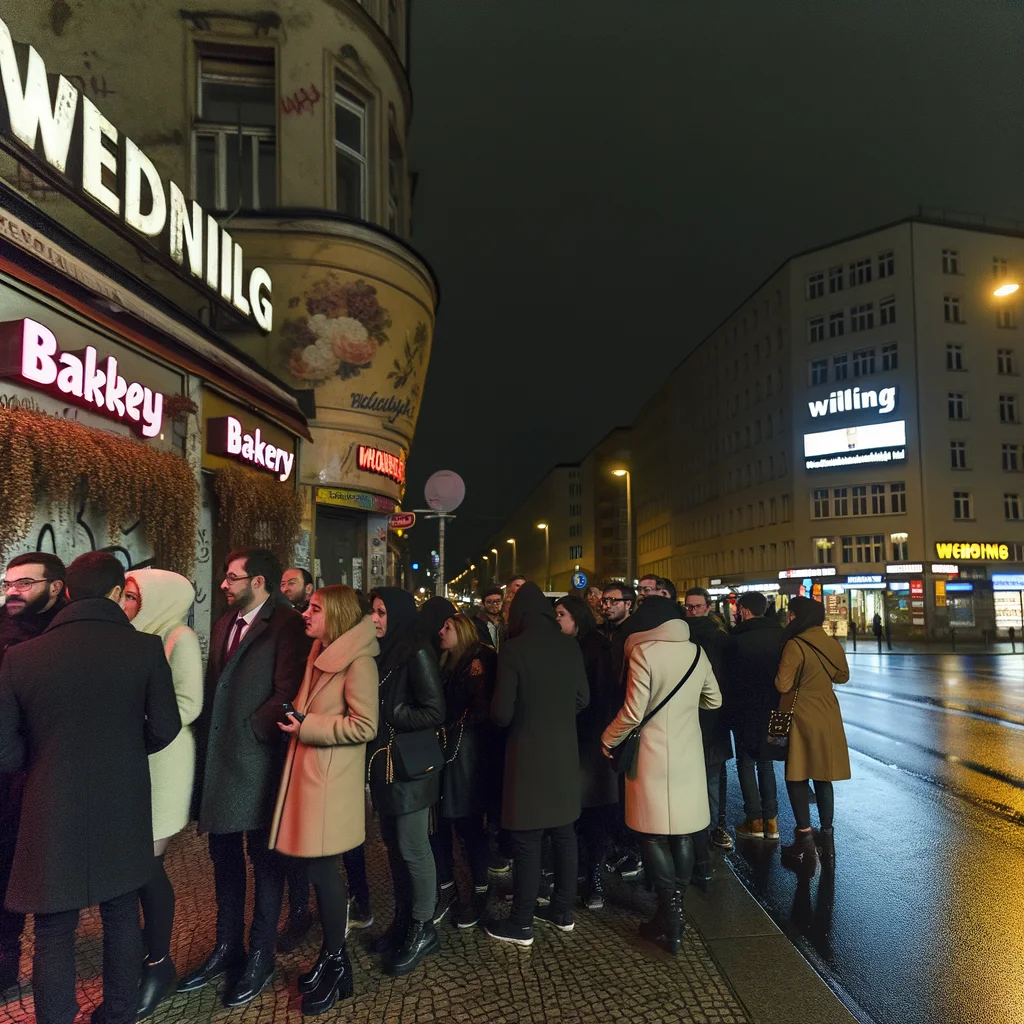
- A 4 a.m. pilgrimage to a street corner for “authentic food”—which, in the old Wedding, meant a Turkish bakery saving lives with warm bread; and in the new Wedding means someone paying €14 for something “fermented” that tastes like graduate school.
Everybody eats. Everybody lies. Everybody invoices.
Wedding’s Old Night vs New Night, Sharing One Small Sidewalk
Longtime Turkish shopkeepers have watched gentrification like a slow-motion mugging: first the rent hikes, then the English menus, then the performance of “community,” then the closure.
Now the hedonism tourists arrive like cultured vultures, buying the myth of raw Berlin while stepping around the actual raw parts—people working doubles, families doing the math, elders trying to keep a business alive in a city that wants everything to be an “experience.”
The newcomer script goes like this:
- They take a “deep dive” into Berlin nightlife.
- They purchase rebellion in convenient units.
- They leave with a tote bag and a story where no one else had to be a person.
Meanwhile, locals do the stiff resistance thing—complaining, adapting, quietly relocating in their heads before their bodies catch up.
Door Policies as Tourism Infrastructure
This entire operation depends on Berlin’s doors being opaque, arbitrary, and slightly horny with power.
Guides don’t promise entry; they promise proximity to entry. The queue becomes the main attraction: hours of suspense where tourists learn the city’s central ethic—waiting is belonging, rejection is authenticity, and validation is an accident you’ll pretend you didn’t want.
A guide explains rejection like an art critic explains a blank canvas:
“It’s not personal. It’s a concept. You just weren’t… correct.”
Duchamp put a urinal in a gallery. Berlin put a person in a line and called it culture.
The Medical Angle Nobody Wants to Mention
Nightlife tourism runs on the same romantic fraud every vice economy runs on: sell the fantasy, outsource the consequence.
The hedonism tours include plenty of “harm reduction” language, mainly used as moral hand sanitizer. The phrase “drink water” gets deployed like an incantation, as if hydration can cleanse a weekend of its choices.
And if anything goes wrong? The tourists don’t know which clinic to call, which friend to text, which stoic cashier will still sell electrolytes without asking a question.
Locals do.
So the locals become emergency services: unpaid, exhausted, and somehow still expected to smile in two languages.
Conclusion: Berlin’s Most Exportable Product Is You, Temporarily Misplaced
The dark tourist economy of Berlin hedonism doesn’t just sell nights—it sells borrowed credibility. It turns strangers into commodities and turns “freedom” into a receipt.
In Wedding, the hedonism industry is the most honest mirror the neighborhood never asked for: old residents squeezed, new arrivals narrating, and tourists paying to cosplay moral collapse with a guide who swears they’re “one of the good ones.”
History tourists used to buy postcards.
Now they buy Monday afternoon emptiness—sealed, curated, and ready for carry-on.