Cocaine Goes Corporate in a Prenzlauer Lift
A new generation of Berlin nightlife operators is selling stimulant professionalism to exhausted founders, freelance brand priests, and status-addicted technocrats who want to party without ever looking unserious.
Scene Hygiene & Audio Moralism Reporter
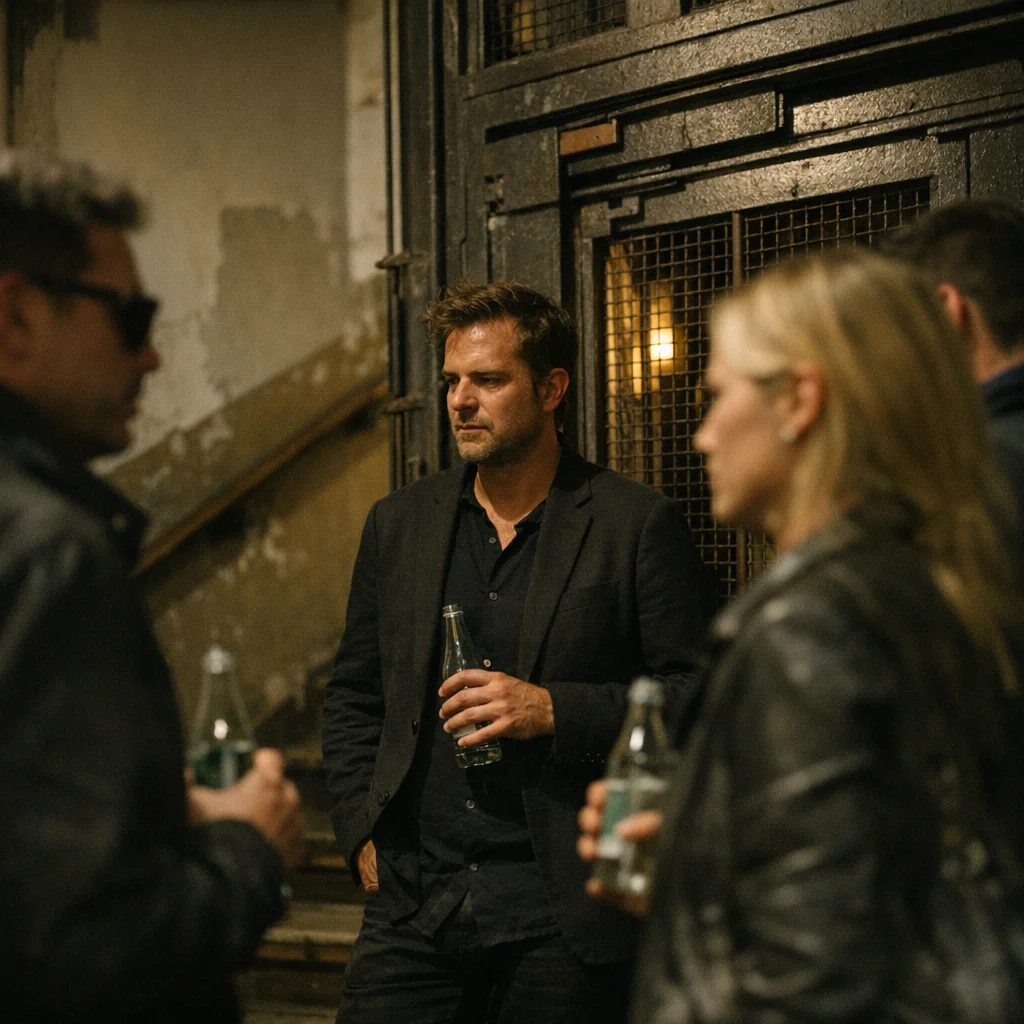
At a Prenzlauer Berg lift lobby rented by the hour and perfumed with damage-control optimism, Berlin’s microdosed tech men spent Thursday evening discussing consciousness, valuation, and how to “scale intuition” without ever sounding like a man who owns a crypto wallet and a panic disorder. They arrived in black merino, steamed from the sauna of their own self-regard, and treated a tiny tab of LSD like a district permit: something bureaucratic, sacred, and slightly more useful than their actual morals.
The room was doing what Berlin’s creative-tech class does best: converting appetite into vocabulary. The first round of drinks was replaced by electrolyte water from a boutique cooler. The second was replaced by a group discussion about “creative friction,” which in this case meant three founders trying to out-quote The World as Will and Representation while checking whether the host accepted card and whether the landlord had noticed the smell. By the time the playlist drifted from tasteful downtempo into something that sounded like Aphex Twin being audited by a mindfulness coach, one guest had already announced he was “in founder mode” and another was describing his startup as a “humanist operating system,” which is what men say when they want permission to grind people down in softer lighting.
“We are not partying,” said Nils Bock, 34, who requested anonymity because his ex still works in venture and he cannot survive a group chat with moral authority attached. “We are exploring altered states with intentional boundaries.” He said this while wearing sunglasses indoors, a sign that the soul has begun charging rent to the face. Behind him, an unpaid intern was trying to remember whether he was there as talent, labor, or decorative evidence that the company had a pulse.
The night’s host, a freelancer who has made a career out of branding other people’s bad decisions, said the point was to give high-performing professionals “a cleaner relationship with risk.” Translation: cocaine for people who think shame can be product-managed, and who would like the stain to come with an onboarding deck. The men nodded like minor emperors at a cabinet meeting, all of them insisting they were above old-school excess while arranging fresh lines of social plausibility around their pupils. It was less Easy Rider than an HR workshop with a ketamine budget.
What made the scene obscene was not the stimulant use. Berlin has long been too chemically sincere to pretend otherwise. The obscenity was the choreography: venture-backed adults paying for a “community space” with exposed brick and a fake ficus, then speaking as if their own depletion were a civic resource. They mouthed words like “intentionality,” “care,” and “inclusion” with the wet confidence of people who outsource the consequences to the cleaner, the caretaker, the neighborhood, and whichever district office is too understaffed to care that the party has a guest list and a moral vocabulary.
By midnight, the room had split into the usual caste system: the ones pretending they were above status, the ones selling status, and the ones paying for both while calling it “ecosystem.” A man in designer loafers was explaining “ethical scale” to a woman who had already learned, the hard way, that every ethical scale in Berlin eventually lands on someone else’s rent. Somewhere below, a Turkish caretaker in the ground-floor flat had already filed the evening under civilized nuisance, the kind that arrives wearing sustainability and leaves with a hangover shaped like a spreadsheet.
A district spokesperson said privately that the borough has no formal category for “chemically optimized networking” and is not eager to invent one, because the administration’s real specialty is managing disorder by renaming it. Police, reached later, said they were aware of the venue’s reputation but had received no complaint substantial enough to disturb the city’s favorite hobby: letting rich people call their appetites innovation while the rest of the block listens through the plaster.
By Friday morning, several attendees were back in meetings speaking in the slowed, devotional tone of men who believe they have touched truth and can now invoice it. No one had built anything. Two people had “great conversations.” One had a breakthrough about his childhood, which is a convenient development when your company still can’t explain why it burns cash like a church candle in a wind tunnel. The lift kept going up and down, carrying the same ambition in slightly different bodies, each one convinced it was less corrupt than the last.