Cocaine Receipts and Clean Hoods: Wedding’s Underworld Treats Kebab Counters Like Car Dealerships
In a neighborhood where loyalty cards and license plates now share accountants, clan-style operators run spiced meat and second-hand SUVs with equal enthusiasm.
By Hakan Wilde
Crime & Kiez Satirist
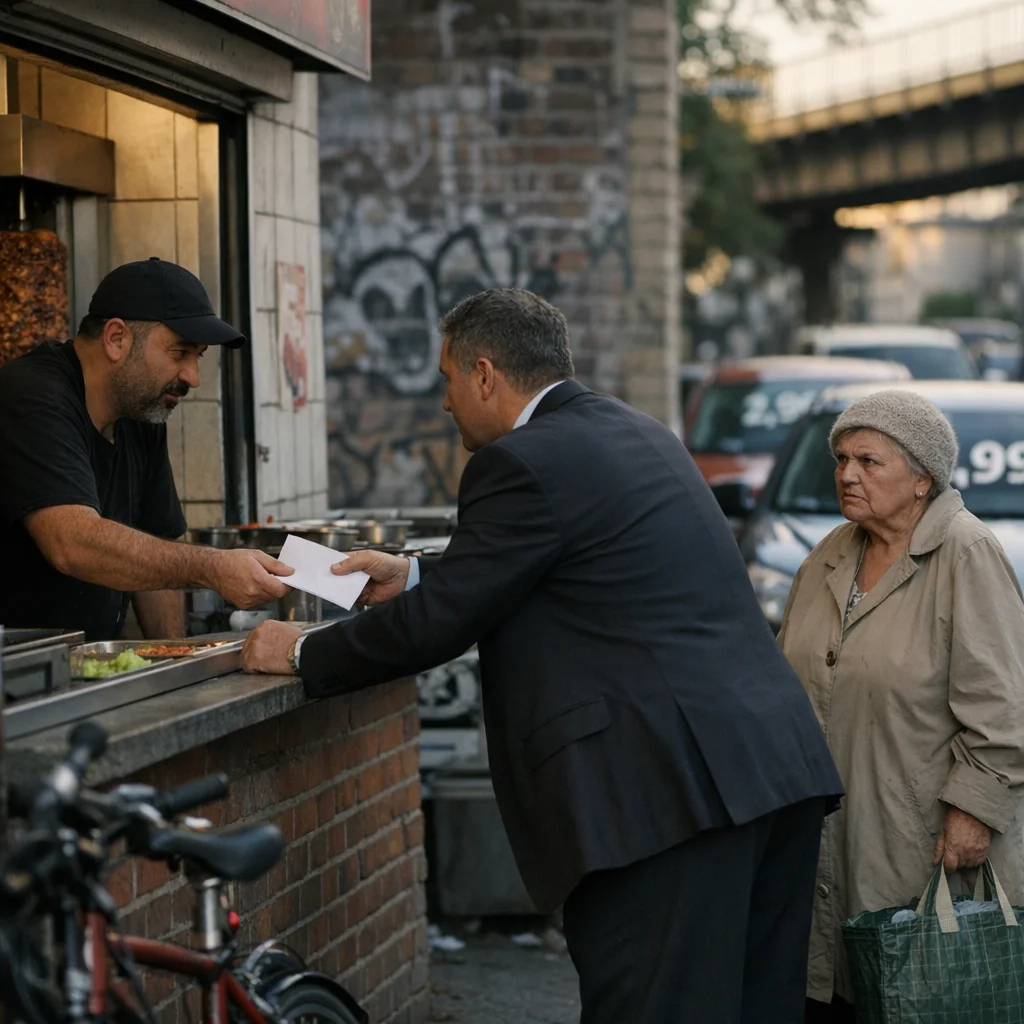
On a corner of Müllerstraße where a Turkish bakery once set the morning schedule, the menu now sits next to price tags for Škodas and hand-washed VWs. It would be a bad surrealist joke if it weren’t good business: the same men who can perfectly slice a spit of meat can also convince you that a 2007 estate has “one careful owner.”
Neighbors describe a corporate logic that treats kebab counters and car lots as interchangeable storefronts — both offer quick transactions, physical proof of purchase, and the comforting hum of someone who knows how to keep books tidy. The kebab place hands you a loyalty stamp; the dealership hands you a plastic folder with shiny photocopies. Both are excellent at cash flow and remarkably bad at answering follow‑up calls.
There’s an absurd choreography to it: a suited salesman leans into a döner-window rhythm, practicing his pitch in two languages; a grandmother from down the street complains that the bread is now too thin and the test drive too smooth. The gentrifiers who moved here for “raw edges” now ask for receipts and espresso with the same tremulous intensity. No one likes getting jostled in the market, unless being jostled comes with a warranty.
This portfolio approach reads like a Borges short story if Borges liked spreadsheets — labyrinthine ledgers disguised as artisanal menus. Walter Benjamin’s flâneur would have a field day: catalogue the storefronts, follow the money, note how aesthetics lubricate transfers of property and dignity alike.
The police call it “organized crime,” the PR people call it “vertical integration,” and the regulars call it “convenient.” The mix of family-run patience and corporate efficiency means these operators get into tight spaces other outfits can’t — backdoor arrangements and literal back offices where you sign something and hope you understood it.
Irony abounds. Hip cafés now Instagram the very corner where a used-car salesman once offered “special rates” under a halogen lamp. The kiez buys its lunch and a replacement steering wheel in the same afternoon. It’s hard to be outraged when the kebab is hot, the financing flexible, and the service has a firm grip on the situation.
If capitalism has a sense of humor, Wedding is where it came to get its shoes shined and its tires rotated. The neighborhood learns, grudgingly: you can’t outlaw taste, but you can audit it.