Cocaine Whispers and a Shisha Shot: Turmstraße Gunfire Turns a Hookah Night Into Wedding’s Latest Moral Performance
A late-night burst of violence at a popular shisha bar forces neighbors, influencers, and a philosophical bouncer to rehearse grief in public.
By Ari Gunther
Crime & Night-Geometry Correspondent
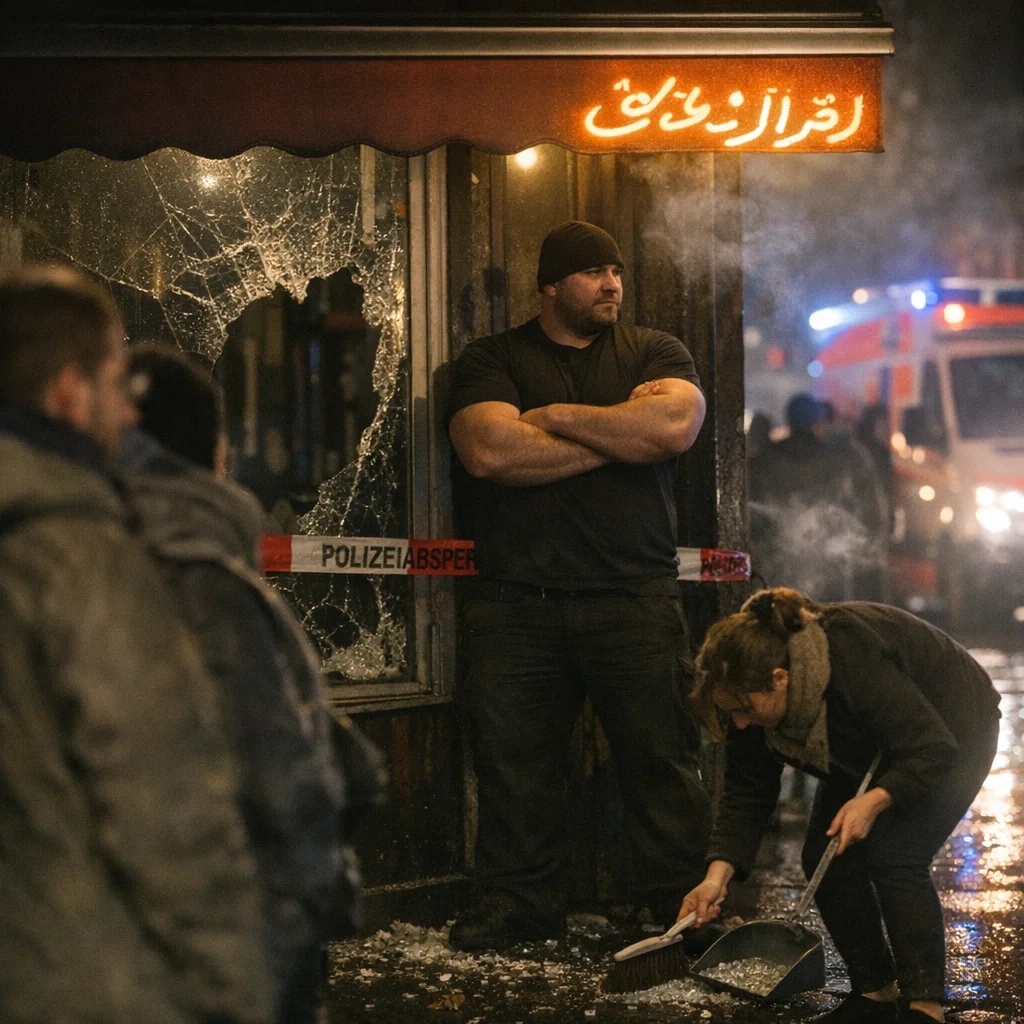
TURMSTRASSE — Sometime after midnight a cluster of bangs turned a routine Friday in a popular shisha bar into the kind of scene Berlin publishes without context: shattered glass, emergency lights, a bouncer who suddenly seemed like a tragic Brecht character, and a dozen smartphones committed to cinematic solidarity.
Police say the incident began as a row inside the bar and spilled onto the pavement — a classic local drama in which tempers, territoriality, and possibly a disputed line of cocaine are all competing narratives. Eyewitnesses offered three mutually exclusive versions: a business dispute, a jealous argument, and "nothing to see here, keep walking." A man with a smoke-stained scarf told our reporter, "We come here to breathe and talk. Tonight someone decided to shout louder than the coals."
The shisha bar is both living room and marketplace — a place where families, after-hours workers, and bargaining dealers intersect. That hybridity is what turns a shooting into a neighborhood literature festival: every observer becomes a critic, every victim a symbol. Influencers arrived by morning to hold a tasteful, well-lit vigil and post actionable items about "community safety" between sponsored posts for oat milk. One attendee live-streamed the memorial with the same calm used for selling artisanal hummus.
Meanwhile the bouncer, whose life usually consists of deciphering outfit sincerity, offered a surprisingly Nietzschean line about responsibility: "You think you know a fight until it asks for a witness." He also refused to let a journalist back through the taped-off area because, he said, "trauma is private, unless there's a tip jar."
Neighbors reacted the way modern Berliners do: performatively, then practically. There was indignation on WhatsApp, a petition to close the corner for "safety programming," a suggestion for free conflict-resolution workshops, and an older woman who simply swept glass into a dustpan and went home. Walter Benjamin’s angel of history might have paused to take a photo — then complained about the lighting.
If anything feels obvious now, it’s this: violence in Wedding resists tidy narratives. It is messy, small, embarrassing, and rarely solved by manifestos. There will be meetings, panels, and a long bureaucratic deep dive that nobody wants to finish. In the meantime the shisha bar will reopen, the bouncer will keep a firm grip on the door, and the neighborhood will keep negotiating how much public grief is performative and how much is real. A backdoor arrangement may be struck; an uncomfortable truce will be mounted — and someone will inevitably write an op-ed about how this proves something grand about the city we all keep pretending to understand.