Coke, Consent, and the Doorstaff Spreadsheet
A new wave of nightlife operators is selling “professional” drug culture through intake forms, liability language, and laminated house rules that let them profit from chaos while pretending to regulate it.
Nightlife Identity & Self-Deception Correspondent
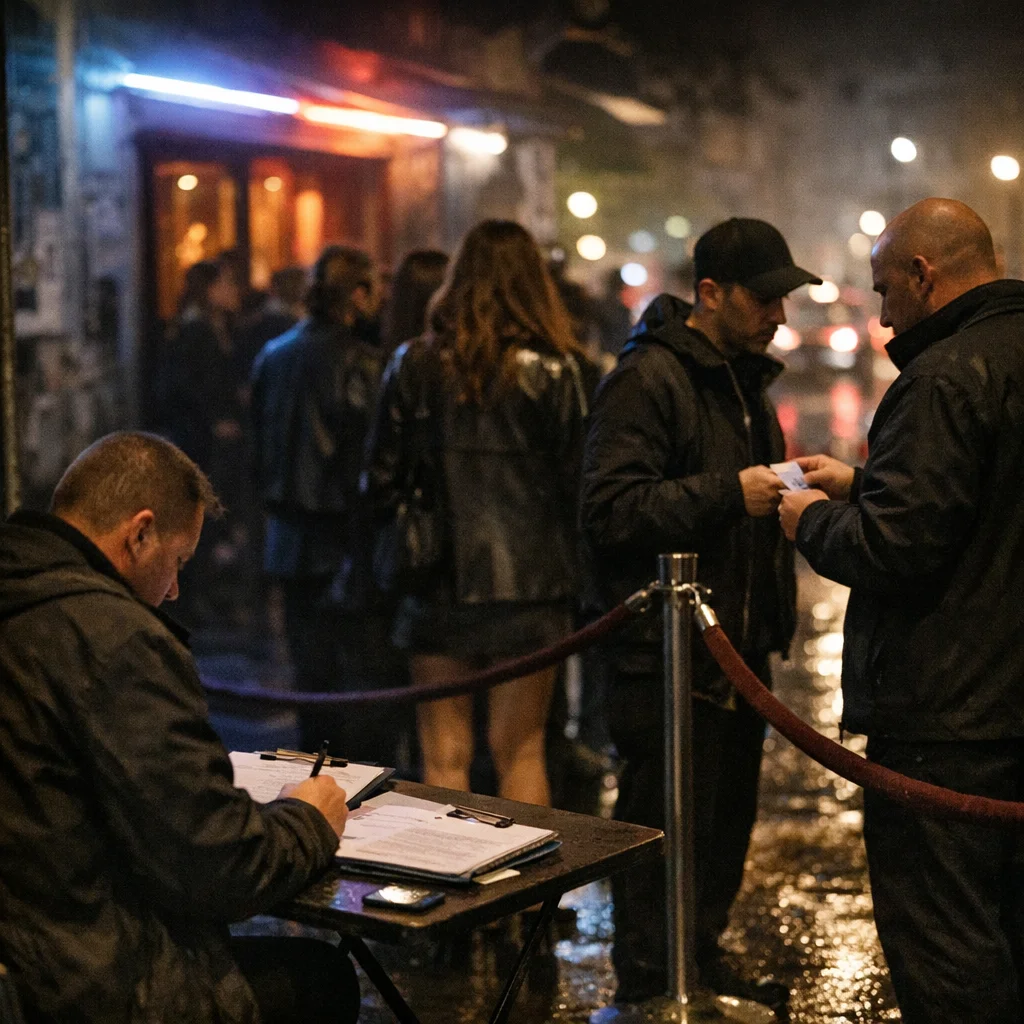
At a startup-branded nightclub in Neukölln, the velvet rope has been upgraded into a spreadsheet with better lighting. Before guests are let in to lubricate their self-importance, they are asked to sign intake forms listing prior substances, preferred pronouns, consent boundaries, and whether they have “sufficient emotional bandwidth for communal stimulation.” Nothing says nightlife like being processed by a laminated questionnaire designed by people who use the word care the way landlords use the word community.
The paperwork is not legally binding, which is convenient, because the whole operation depends on everybody pretending the ritual has moral weight while the bar tab does the actual work. Staff review the forms before midnight in a briefing that sounds like a wellness retreat run by debt collectors: keep the tone soft, redirect anyone “overstimulated,” and if a guest looks likely to embarrass the brand, move them to the “wellbeing lane,” which is a wristband-free corridor that miraculously passes the bar on the way to nowhere. Protection, in this building, is a revenue stream with a clipboard.
A manager named Karsten Vogel, who asked for anonymity while wearing a shirt that had already lost the argument with his body heat, said the sheet was “about protecting everyone.” The sentence had the exact smell of a guy who has outsourced his conscience to a consultant deck. He declined to explain why the club charges extra for the lane, extra for the “safer” room, and extra again for the privilege of being monitored by people who talk about accountability the way failed founders talk about disruption: loudly, expensively, and with a tremor of panic behind the eyes.
The form itself reads like a hostile job application for intoxication. There are boxes for drug history, emotional triggers, and whether the guest has a “support person” on site, which is a lovely euphemism for “someone to drag you outside when your mascara starts making political statements.” The club wants consent to be legible, searchable, and ideally monetized. It is the bureaucratic dream of people who think a boundary is something you can scan at the door and resell in a package deal.
Outside, a Turkish baker from the neighborhood watched the line of black-clad customers clutching oat-milk cocktails and said, “They need a form to lose control. My uncle just had a cigarette and survived the 1980s.” He was not impressed by the moral choreography. Neither was the delivery rider waiting beside him, whose entire relationship to nightlife consists of bringing it napkins and watching it vomit on the curb. Meanwhile, a pair of expats in expensive combat boots were discussing “consent architecture” with the devotional seriousness of people who have never once respected a queue. Ten minutes later they were elbowing each other for the best spot near the speakers, their ethics already sweating through their sleeves.
The hypocrisy is the point. These crowds fetishize consent the way other people fetishize rare sneakers: as a status object, a performance of refinement, a way to signal they are too sophisticated for the crude appetites they absolutely intend to indulge. They arrive hungry for transgression and ask to be handled gently, as if the bruise were part of the aesthetic. Their politics are usually a playlist of correct nouns and incorrect behavior.
And the operators know exactly what they are selling. The club’s Instagram language is full of radiant nonsense about inclusion, safer space, and “collective nights,” which in practice means a premium-priced room where the air smells faintly of citrus cleaner, warm skin, and fear of being seen needing help. This is gentrification with a pulse: the neighborhood’s old poverty scrubbed off the walls, replaced with artisanal panic and a ticketing model.
The district’s public health office said it was “monitoring innovative nightlife compliance models,” which is bureaucrat for “we admire the scam, but only from behind a desk.” The city loves these venues because they make moral management look modern. They turn structural care deficits into branding opportunities, privatize responsibility, and then congratulate themselves for being the adults in the room while the rent climbs, the staff gets underpaid, and the patrons pay extra to be humiliated in a socially progressive font.
By next weekend, another promoter will surely roll out a revised version with more fields, fewer honest words, and a tighter dress code for the conscience. The promise will remain the same: if you cannot control yourself, at least let us process the collapse beautifully, charge by tier, and call it community while we take your money at the door.