Colbert Slams Trump Admin After CBS Pulls Talarico Interview; the Kiez Roars Back with a Neighborhood Block-Broadcast
From Spätis to S-Bahn stops, a US cable flap becomes local theater, with coffee as the voting booth and gossip as the press corps.
By Clara Brook
Imported Outrage & Kiez Satirist
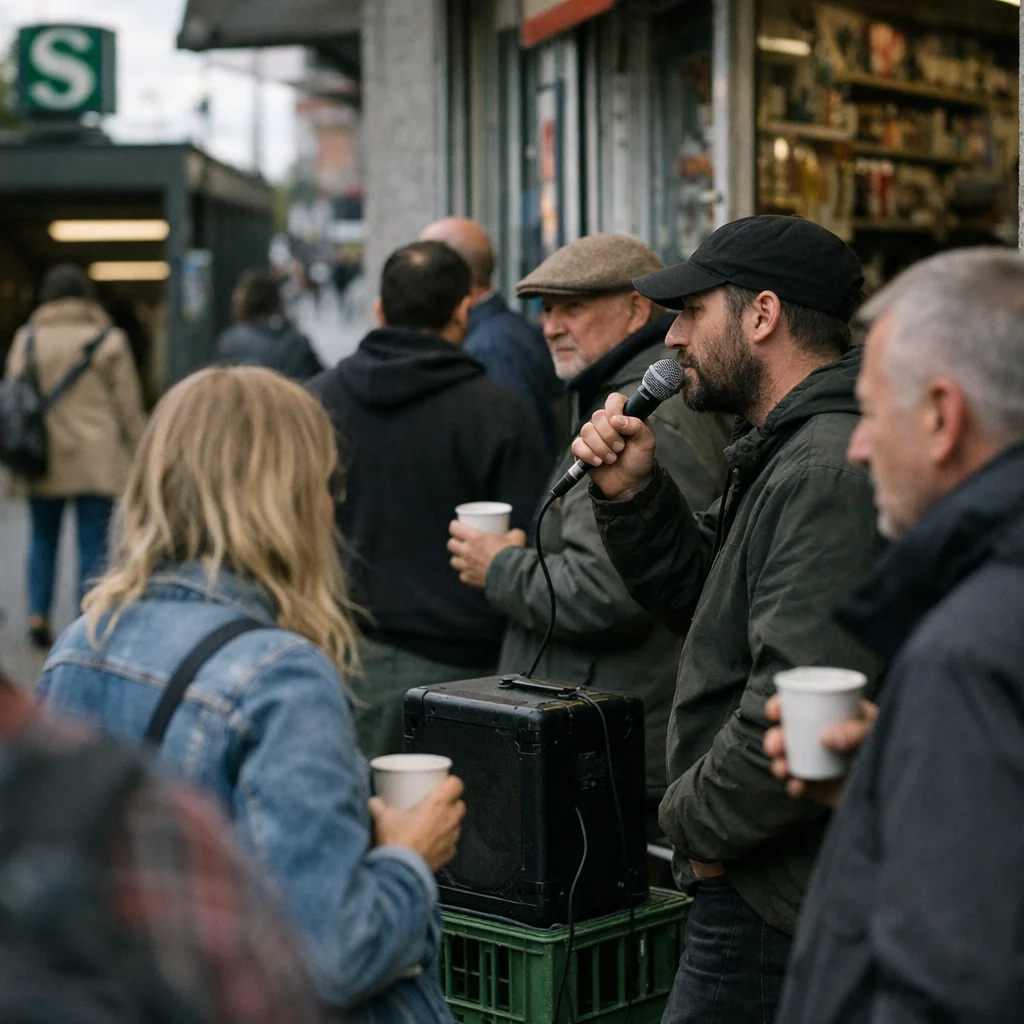
WEDDING—The international story line was simple enough to fit on a napkin left under a Späti coffee machine: a late-night host publicly unloads on the Trump administration after a network yanks an interview with a sitting member of Congress. In Wedding, where everyone is either “media literate” or just loud, the headline arrived like a flare—promptly repurposed into a neighborhood “block-broadcast” that combined righteous anger, mild dehydration, and the kind of amateur production values that make you miss propaganda.
It started in the late morning outside a Späti off Müllerstraße, where a battery-powered speaker was placed on a crate like an altar. A rotating cast of English-speaking newcomers and locals performed what they called “community accountability,” which looked a lot like doing stand-up with the comedic timing of a committee meeting.
“Silencing the interview is the point,” said Keegan Loftus, 31, who introduced himself as a “communications strategist” and then proceeded to communicate mostly through throat-clearing. “If they can pull a congressman, they can pull any of us.” Loftus paused, took a long sip of espresso, and added, “Also, the mic has insane reach. You can feel it in your chest.”
Across the street, a Turkish baker watched the crowd form and offered the only coherent editorial of the day: “They’ll fight censorship until you ask them to speak German,” said Nermin Kaya, flattening dough with the calm efficiency of someone who’s seen every moral panic come and go.
By early afternoon, the block-broadcast migrated toward a nearby S-Bahn stop, where participants attempted to “platform” various grievances, including American media pressure, European complacency, and the crime of charging extra for oat milk. One volunteer printed a “press badge” on a home office label-maker; it peeled off their shirt within minutes, performing a small Brechtian lesson about institutions: they only stick when someone pays for the adhesive.
BVG, asked about the commotion near its infrastructure, issued a statement saying it “supports free expression in public space” and reminded residents that “amplified sound requires adherence to local regulations,” a sentence delivered with the firm grip of a system that can’t fix a broken escalator but can absolutely find you for having a megaphone.
Police briefly arrived after a complaint about “aggressive interviewing,” which turned out to mean someone had asked a speaker to name the congressman being defended. Officers advised the group to keep walkways clear and suggested they “take concerns to the proper channels,” the civic equivalent of pulling out at the last second and calling it responsible.
As evening approached, organizers announced the next step: a recurring “neighborhood broadcast” calendar—subject to weather, Wi-Fi, and the oldest censorship mechanism of all: everyone getting bored and going home.