Compliment-Only Produce Stand Turns Cash-Strapped Shoppers Into Poets While Coming Down
At a Tuesday market shift near the U-Bahn in Wedding, a vendor rejected euros and cards in favor of carefully worded flattery, triggering awkward improv, bruised egos, and one academic-level debate over sincerity.
Neighborhood Commerce & Social Awkwardness Reporter
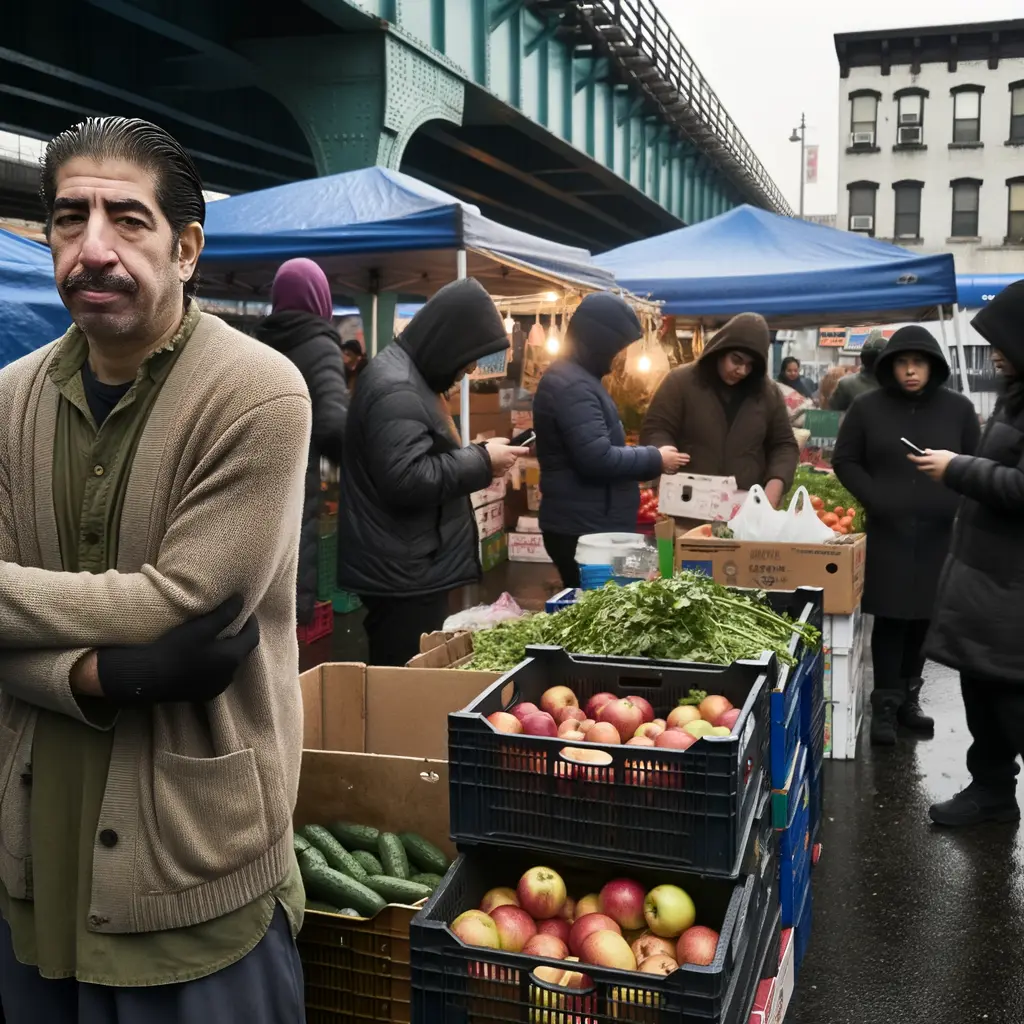
On Tuesday at 8:47 a.m., commuters cutting across the morning market beside the U-Bahn station at Schöneberger Straße 20 encountered an updated price system at a fruit-and-vegetable stall: no coins, no cards, no phone tap—just praise.
The vendor, 41-year-old Cemil Aydın, stood behind a pyramid of tangerines and a row of cucumbers lined with what witnesses described as “provocatively straight posture.” When a customer offered a five-euro note for a kilo of apples, Aydın pushed it back with two fingers as if it were warm.
“Cash makes people lazy,” Aydın said in an interview conducted between 9:05 and 9:18 a.m., interrupted by three separate requests for peaches and one intense discussion of whether an apricot can be “brooding.” “If you want the good tomatoes, you need to look me in the face and say something that isn’t automatic. Don’t just slap a ‘nice’ on it. Penetrate the moment.”
“Not Your Therapy Session, Just My Business”
The compliment policy—informally posted on a handwritten index card clipped to a crate—became visible last Friday, according to neighboring sellers. By Tuesday, it had formed a small crowd with the stagnant devotion of an art opening where nobody admits they’re hungry.
Aylin Koç, 34, who runs a nearby Turkish pastry stand on Gerichtstraße, said the system was already affecting traffic patterns. “People come to buy carrots and end up doing an emotional monologue,” Koç said, gesturing with a pair of tongs. “Yesterday a man described a zucchini as ‘the strong, silent type’ and my staff had to go in back because we couldn’t keep straight faces.”
Several customers confirmed that the bar for acceptance is not simply polite.
“He rejected my ‘you have great produce’ like it was an expired coupon,” said Nora Feldkamp, 29, a freelance editor from Sprengelstraße. Feldkamp said she had slept two hours and was clearly coming down from the weekend’s bright decisions. “He stared at me the way a bouncer stares at sneakers. Then he said, ‘Specificity.’ I panicked and told him his radishes reminded me of a Godard jump cut—sharp, unnecessary, and somehow flattering. He took it. I hated myself, but I got radishes.”
At 9:32 a.m., a customer later identified as Jonas Reimann, 46, attempted to pay for two leeks with a simple “handsome stall,” but was met with what witnesses described as stiff resistance. Reimann responded by phoning his sister, who arrived at 9:44 a.m. and delivered a longer compliment “with structure,” including a comparison between the vendor’s pricing strategy and Wittgenstein’s language games—an allusion Aydın reportedly nodded at once and never spoke of again.
Compliment Inflation and a Secondary Market
A thin economy is already forming around the concept. One group of students from an art school in Weißensee offered a service: €3 to draft a compliment “with Adorno-level negation” before customers approached the stall.
Outside a café on Müllerstraße (customers requested the address not be printed “for dignity reasons”), two self-identified regulars were overheard practicing lines like, “Your herbs have a Kierkegaardian dread, in a good way,” and, “These eggplants feel like early Proust—long, sensual, and hard to finish in public.”
When asked if this is just performance art, Aydın shook his head.
“People pay money all day without thinking,” he said at 10:11 a.m., handing a woman a bag of clementines after she told him, “Your mint smells like a fresh idea.” “Here, they pay attention. It’s healthier. Also, compliments are harder to fake than euros. Everyone has euros.”
Market coordination staff declined to say whether the stall is in violation of any operating requirements, but confirmed that the “situation is being monitored, mainly because we can’t stop listening.”
By 11:06 a.m., a line had formed—not long, but painfully earnest—filled with people staring at fruit, rehearsing adjectives, and searching their brains like an empty bag for one last coin that isn’t shame.