Concert Mode: The Noise‑Meter Firmware That Lets Big Promoters Borrow the Night
City brochures promise neutral decibel cops for sleepy streets; the inspectors' tablet has a dropdown called 'Event ID' that quietly turns the meter into a promoter's privilege.
Nightlife Contradictions Reporter
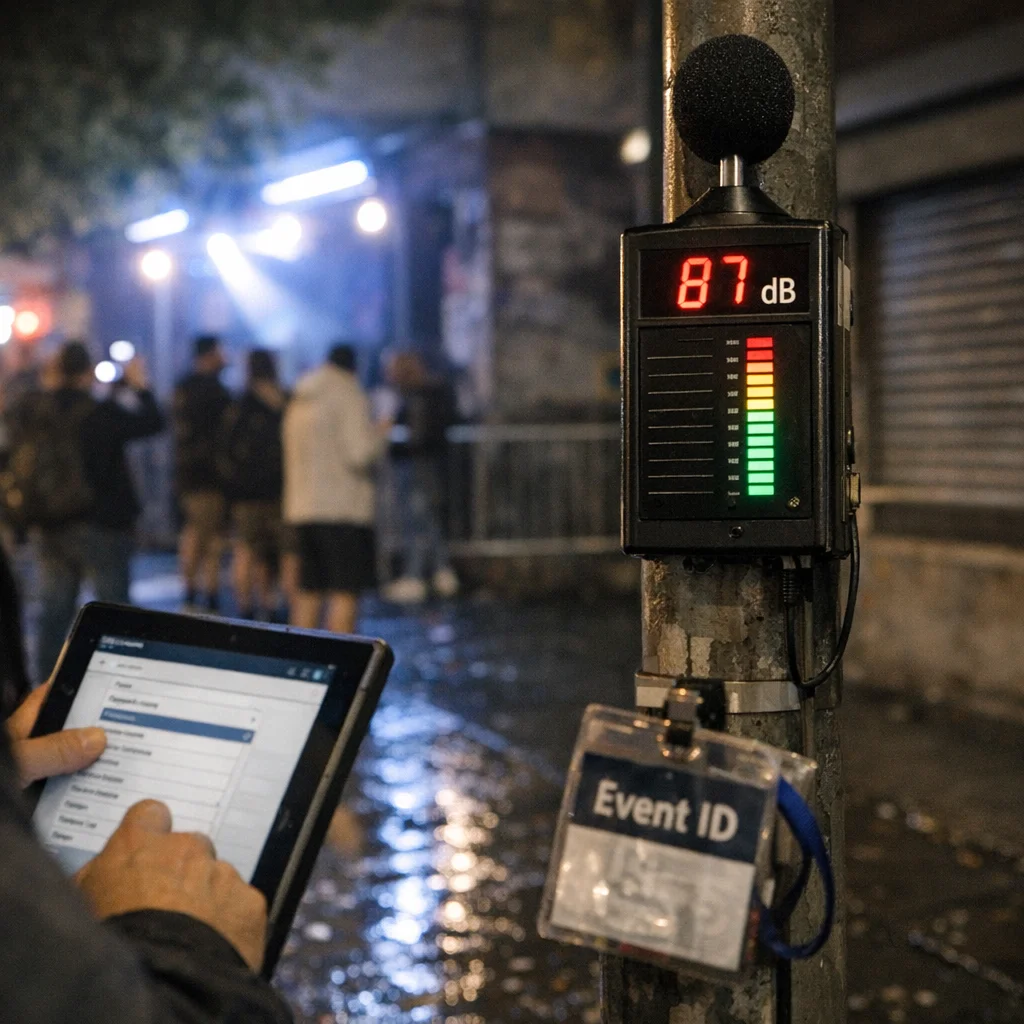
Kreuzberg — New municipal noise meters installed outside warehouses and along the Spree were sold to residents as blunt instruments to protect sleep from weekend bass. Look closer, though, and the enforcement tool is less a neutral cop than a keys-for-hire: inspectors logging into the tablet-based app can select a six‑digit “Event ID,” watch the device chirp like a tram ticket machine, and the permissible decibel threshold rises — often by enough to turn a neighbourhood rave into a promoted festival night.
The meters were rolled out last autumn after a flurry of complaints from pensioners and parents. “They told us it would be impartial,” said Fatma Yilmaz, who runs a bakery near Warschauer Straße. “Now it feels like someone swapped the meter’s uniform for a club flyer.” Weeks of shadowing night inspections revealed a routine: inspector enters credentials, promoter slides over an Event ID printed on a laminated pass, the tablet confirms, and 15 minutes later the meter tolerates what it previously would have flagged.
“I log the number, confirm the permit, and the app adjusts the curve,” said Jan Kowalczyk, a municipal noise inspector who discussed the workflow on condition of anonymity. “There’s a dropdown called ‘Event ID.’ It’s in every inspector’s checklist. It’s supposed to be for permitted cultural events. In practice, a promoter phones the desk and the ID appears in the system within ten minutes.”
Promoters treat the function like a backstage handshake. “You don’t want to be the night that stops at the wrong moment,” said Alexei Novak, a booking agent whose portfolio includes daytime DJ markets and sunrise sessions. “Book the ID, we keep dancing, the tourists get their photos. It’s like leasing the night — quick, legal, and extremely Instagrammable.” Novak grinned when asked whether the IDs were ever sold or traded: “Market dynamics are… flexible.”
The district’s noise-control office defended the design. A spokesperson said the Event ID is intended to mark officially permitted cultural programming and that “abuse is investigated.” When pressed about the speed with which IDs appear in the inspector app, the spokesperson promised an internal review and blamed a “miscommunication between permit desk and field staff.”
For long-term clubbers, the result is familiar and mortifying: the secret rituals that once protected door policies and ink stamps are being replaced by API calls and influencer routes. Guy Withers, a veteran DJ who remembers cloakrooms as civic spaces, said: “We sold our mystery for efficiency. Debord would have loved the spectacle — he’d just want a cut.”
The immediate consequence is twofold: a quieter calendar on paper — because numbers say the meters are being obeyed — and a louder, professionally curated nightlife where tourists pose, DJs play five‑minute climaxes, and the real scene dissolves into content production. City councillors have called for audits; residents are drawing up complaints. Meanwhile, promoters are already advertising “Event ID nights” in Stories. The review may sober the paperwork. It probably won’t stop the cameras.