Condolence or Cashier? Iran’s Crash Packets Came with a Tear‑Off Donation Slip
Officials promised solemn inquiry; the paperwork handed to families promised a bank transfer, a florist voucher and a checkbox for a 'state funeral' — grief with an IBAN.
Administrative Grief Correspondent
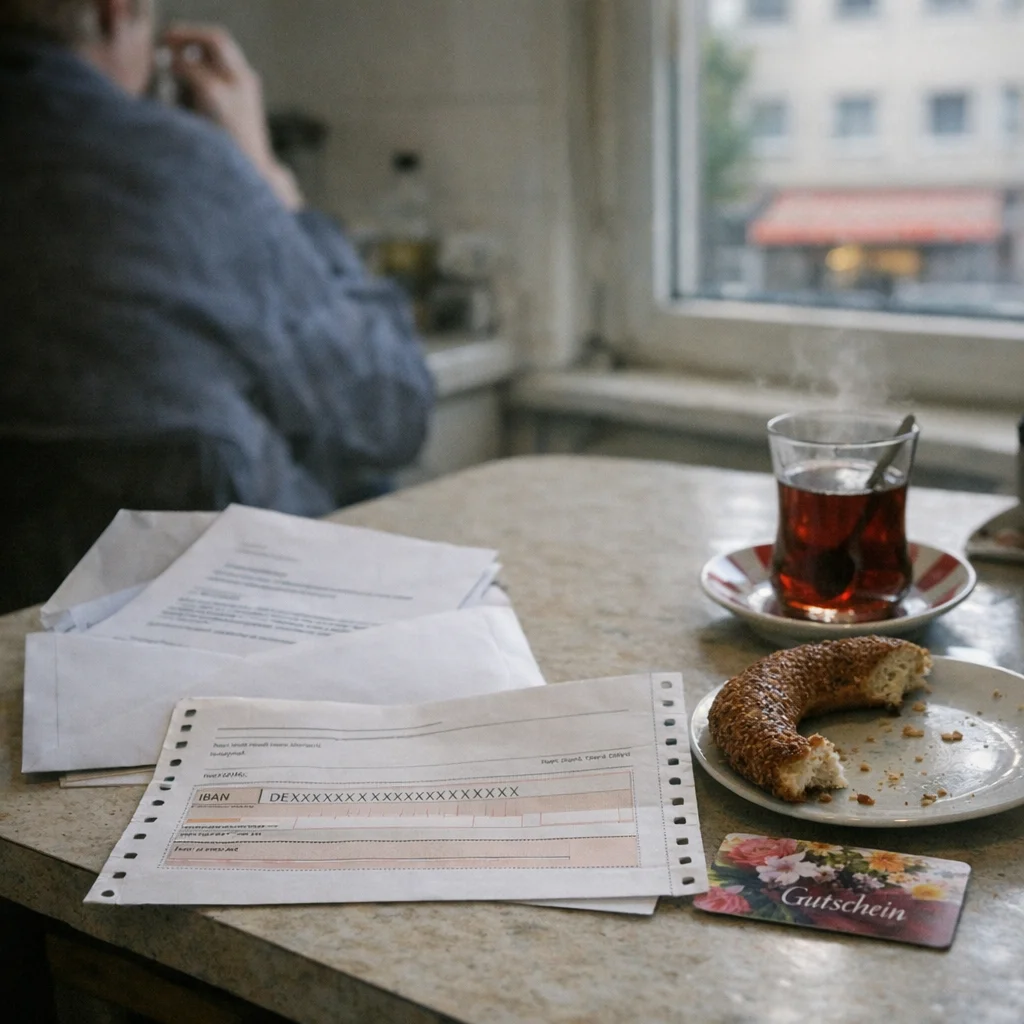
When news broke that an Iranian military helicopter had crashed with multiple fatalities, Berlin’s expected reaction — condolence statements, calls for inquiry, a moment of diplomatic gravity — arrived on schedule. What arrived in Wedding, too, was a different kind of paperwork: at local vigils, in the hands of relatives who had fled Tehran decades ago, and stapled to condolence envelopes left at the neighborhood mosque, each official-sounding letter came with a pre‑filled bank transfer, a perforated slip for a florist voucher and a tiny checkbox labelled “state funeral — consent”. Grief, it turns out, was being acceptably banked.
The sequence was straightforward. First came the crash headlines. Later that morning, families in Wedding received identical white envelopes stamped with an official crest. Inside: a typed condolence, a list of funerary options priced like catalogue upgrades, and a tear‑off transfer form with an IBAN already filled in. “They printed the account number as if it were a prayer,” said Fatemeh Rahimi, 42, who lives on Pankstraße and collected one envelope at her local mosque. “There was even a voucher for a bouquet. I felt like I was signing a subscription.”
A small logistical detail turned the official story on its head. The statements promised impartial investigations and solemn oversight — but the physical packet invited immediate payment, immediate closure and, crucially, an immediate waiver of any further ceremony. The implied inversion is simple: the state offers inquiry, the family is offered a choice — and a receipt.
Local actors noticed the contradiction fast. Kemal Aydin, owner of Aydin Print on a side street, said consular mailings arrived in overnight stacks with “do not fold” stickers and a supplier invoice attached. “They wanted them printed, perforated and delivered before lunch,” he said. “It was business hours for mourning.” He claims his shop was paid via a corporate transfer the next day.
A spokesperson for Wedding’s district office, Anke Schröder, told reporters the city had received complaints and would open an inquiry into “consular distribution practices.” The Iranian consulate in Berlin issued a brief statement offering condolences and calling for patience; it did not answer questions about the IBANs.
Neighbors reacted in predictable, performative ways. A pop‑up collection jar appeared outside a new organic café; a group of expats posted a solidarity message and a QR code to donate — €5 minimum. An imam in Wedding cautioned that consent extracted under pressure was not consent at all. “You can’t reduce burial rites to a checkbox,” he said, then handed the reporter a receipt for a coffin-buying seminar.
Kafka once wrote that bureaucracy smiles while it buries a man in forms; here the smile had a photocopy stamp. The immediate consequence: Wedding’s Bezirksamt says it will audit local printers and consular mailings, families are being advised to keep envelopes intact, and Aydin Print has destroyed the remaining tear‑off stokc. The investigation is just beginning — but in a neighborhood used to bargains and receipts, the first question on everyone’s lips was practical, not philosophical: who’s collecting the money?