Confession Booth at the Rent Office
Wedding landlords have found a way to turn every maintenance complaint into a private audition for mercy.
Administrative Grief Correspondent
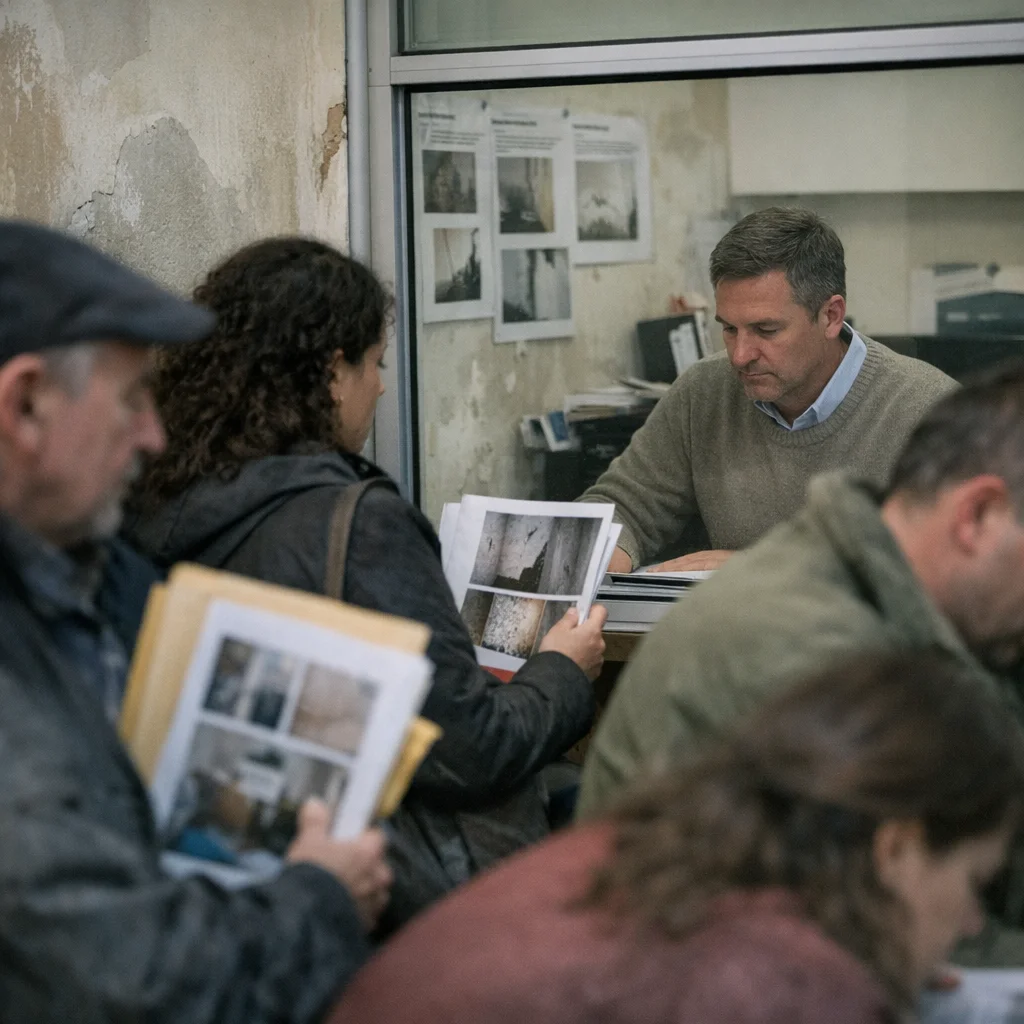
At a property office in Wedding, the maintenance queue was treated this week less like a repair line than a private audition for obedience. Residents came with photos of damp walls, dead radiators, and ceilings that had started to sag like a tired face after a long night. The landlord side called it a “trust-building consultation.” Tenants called it what it looked like: a room where the building demanded a little humiliation before it would consider opening its legs.
By midmorning, the waiting area on Müllerstraße had filled with people clutching printouts and repair logs while a receptionist in a spotless sweater kept calling the next name with the calm of someone reading out a guest list for a very expensive mistake. One woman described her ceiling stain as “a recurring insult.” A man from the next block said he had brought his mold pictures in a folder because this office, like a bad date with a good haircut, wanted proof of damage only if it could still pretend to be interested.
The ritual had a rhythm. First came the intake question: “Can you describe the issue in your living situation?” A phrase so soft it could pass for pillow talk, if pillow talk were written by a property lawyer and administered by someone who enjoyed watching people squirm. Then came the inspection of tone. Too angry, and the file went cold. Too polite, and the complaint was filed under “not urgent.” The tenant had to perform the exact amount of distress required to convince a man behind glass that a leaking pipe deserved mercy.
“We are building trust by giving everyone a chance to be heard,” said Uwe Pahl, a building manager for the complex, who wore a pressed navy cardigan and the expression of a man who thinks consent is best handled as a delay tactic. “Tenants appreciate transparency.” He said it the way landlords always say these things: with the confidence of someone who has never once had to beg a radiator to work in January.
The tenants described a different arrangement. Nadia Aydin, whose family has lived in Wedding for years and whose bakery downstairs now smells more of instant coffee than sesame, said the meeting felt designed to make residents grateful for basic bodily shelter. “They ask you to explain yourself,” she said. “Then they lean back and decide whether your kitchen gets to stay dry. That’s not service. That’s someone making you audition for the right to be left alone.”
Another resident, a nurse from the neighboring block, said the follow-up process was the worst part. “You leave with a slip for another appointment,” he said. “It feels like being told to come back after the first kiss, only the kiss is with the office and the office keeps your keys.” Several tenants nodded at that, because everyone in the room understood the same insult: the landlord wanted all the intimacy of access and none of the obligation that should follow it.
The district office said it was aware of “communication formats” between landlords and tenants and was reviewing whether the consultation model complies with basic repair obligations. A spokesperson declined to say whether a broken heating system should be handled like a courtship ritual, with residents made to sit still, speak softly, and wait to see whether the other side feels generous enough to touch the problem.
By early afternoon, the office had begun handing out appointment slips for follow-up reviews, which several tenants compared to being asked to return for a second round with someone who already knows your weak spots and plans to exploit them in better lighting. The latest complaints included a staircase ceiling, two boilers, and one courtyard wall that has reportedly been “breathing” since last autumn. The building, like the office, was doing that familiar landlord trick of sounding concerned while slowly undressing the truth.
The next consultation is scheduled for next week, when residents will again be invited to confess what is rotting, leaking, and failing behind the polished language of concern. In Wedding, the office keeps calling it trust. The tenants know the shape of it better: a hand on the paperwork, a knee in the door, and the promise that if they are patient enough, they may be allowed to stay dressed.