Congress Puts On Flannel but Voters Still Get the Shaft
US midterm candidates adopt everyman outfits from plaid shirts to glitter heels to signal working-class roots, yet corporate donors and lobbyists retain control over legislation long after the campaign photos are filed.
Civic Hypocrisy & Neighborhood Compliance Reporter
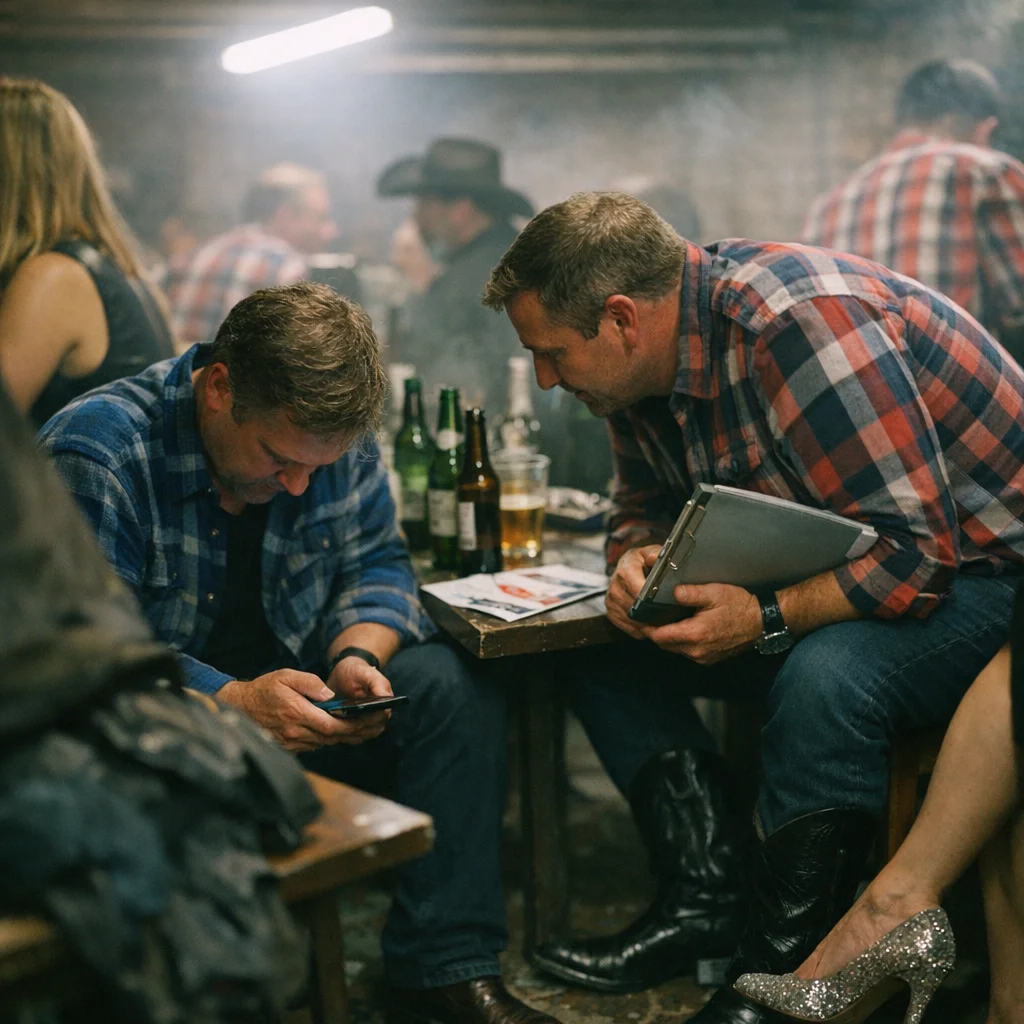
Blue Plaid, Soft Hands, Hard Money
US candidates keep arriving dressed like they’ve just been handed a lunch pail and a pardon. One minute it’s flannel, work boots, and a face tightened into fake weather. The next it’s glitter heels, camera-ready tan, and the same polished look politicians use when they want to be touched by ordinary people without ever being mistaken for one.
Berlin has seen this kind of costume politics up close: the district boss in rolled sleeves who has never carried a crate, the housing spokesman in scuffed sneakers who would faint at the word rent, the young aide performing hunger while eating off a lobbyist tab. The uniform changes; the hand that pays for it does not.
On Tuesday evening, campaign staffers and political hangers-on crowded into a basement bar near Nettelbeckplatz, where a candidate in a blue plaid shirt told the room he was “one of the people” while thumbing his phone under the table like a man waiting for instructions from a cleaner, richer mouth. Across from him, a consultant in boots so spotless they looked rented called the outfit “visual discipline,” which is campaign language for dressing the lie up before it gets taken out back and used.
The staging was as shameless as it was efficient. Rough shirt for the press hit, softened jaw for the union photo, glitter for the victory party, and the faintly sweaty look of a man pretending not to enjoy being handled by the crowd he plans to disappoint. The whole production had the charm of a backroom seduction and the ethics of a deposit slip.
A young organizer from Neukölln watched the scene and laughed into her beer. “They dress like they’ve been evicted from the internet and are trying to get back in through the service entrance,” she said.
She was not wrong. The trick works because everyone involved understands the arrangement. The candidate gets to look rough enough to pass for available, while the donors get the private assurance that nothing essential will be left to the public. It is all wink, no consequence: sleeves rolled, promises unbuttoned, legislation already spoken for before the photos are even uploaded.
Berlin’s own political class has perfected the same intimate fraud. The district official who performs proletarian gravity while refusing to touch the housing file. The activist in expensive thrift who talks about solidarity the way a landlord talks about “community values.” The startup founder in clean sneakers who sneers at the state in public and bends over for subsidies in private. Everybody wants the look of contact. Nobody wants the responsibility of it.
By the time the campaign footage hit social media, the message was already spent. The clothes had done what they were hired to do: signal struggle, sincerity, and a roughness that can be worn for an evening and removed before the bill arrives. The money behind the outfit stayed in place, fat, obedient, and fully in charge of the outcome.
As one parliamentary aide put it, speaking on condition of anonymity because she once mistook a lobbyist for an intern and has not recovered the taste of it, “The outfit is for the voters. The legislation is for the people who can afford silence.”
A spokesperson for Berlin’s Senate called the American styling “deeply educational” and added that local politicians were already taking notes on “how to look expensive while sounding broke.”
That, in the end, is the whole arrangement: the public gets the plaid, the donors get the policies, and the lawmakers leave with their collars loosened and their consciences still neatly pressed.