‘Consent at the Door’ Blocks the Whole Ego Parade
A Leipzig backstage rule about photos and autographs becomes the perfect alibi for grown men, handlers, and fans to stage obedience while pretending it is dignity.
Nightlife & Fiscal Insomnia Correspondent
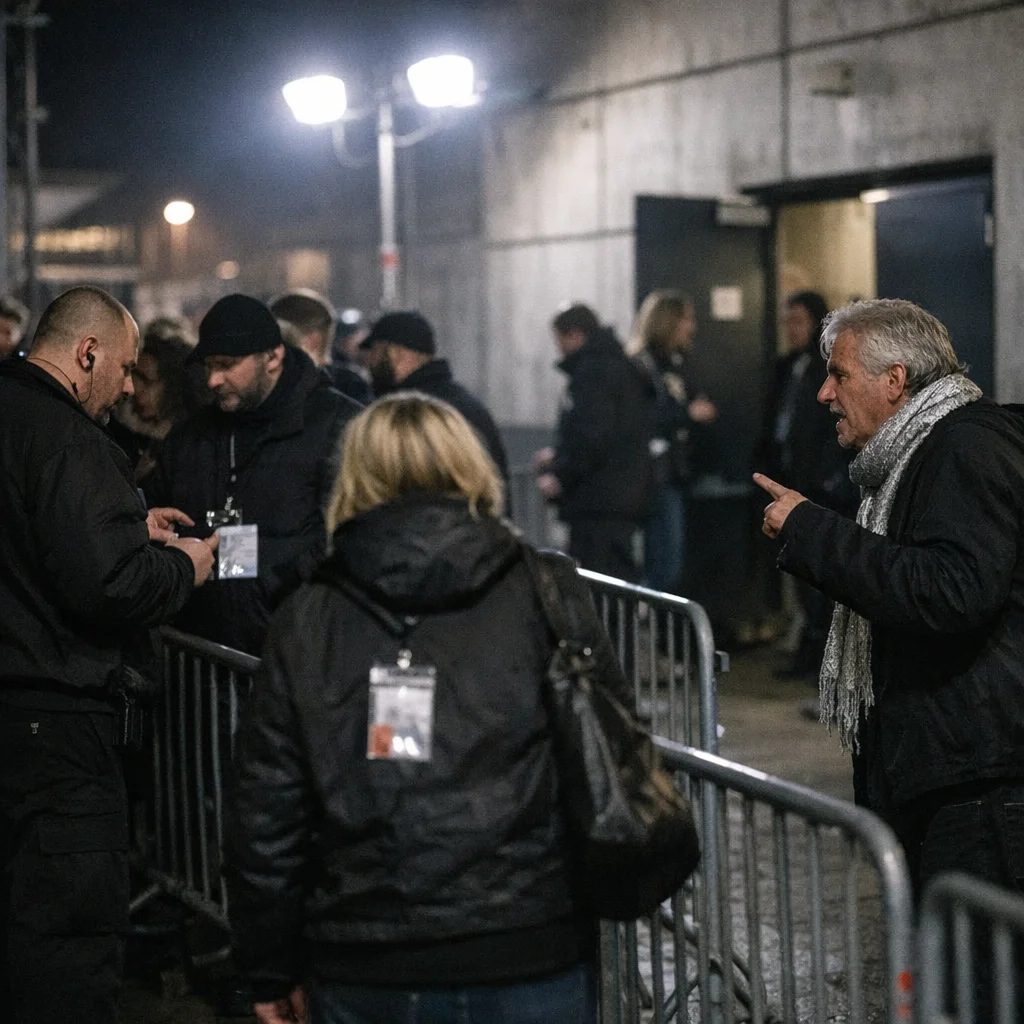
At a packed backstage entrance near Leipzig's arena district, security enforced a rule that sounded ethical and behaved like a velvet tax: no photos, no autographs, no scavenging scraps from the human spotlight. By midnight the line had sorted itself into the usual inventory of pathetic ambition — handlers in black jackets pretending to be staff and not couriers of somebody else's vanity, fans clutching laminated passes like church relics, and middle-aged men carrying their self-importance under the chin like a erection in a tailored coat.
The policy, sold as protection for the artists' consent, arrived with the spiritual depth of a laminated menu and the legal confidence of a bouncer who learned morality from a clipboard. One guard, speaking on condition of anonymity because he once waved through a man he despised, said the rule was "simple: if they say no, you stop." He said it the way a small official recites weather: not because he believes in the sentence, but because he is paid to stand inside it.
That did not stop the ritual. A producer in a silver scarf, the kind of man who moisturizes his own elbows and calls it discipline, tried to bargain for a quick signature "for the team." In show-business dialect that means: for my ego, which I have outsourced to a dozen other mouths so I can still call it modesty. A fan from Wedding, who declined to give her full name because she had already been appraised like meat by three men in cargo pants and a woman with a clipboard, said the whole thing felt like "deBord with better lighting and worse breath." She added that the refusal mattered less than the ceremony of refusal. "Everyone wants to look principled while grinding their teeth in public," she said.
By the second hour, the door had become a miniature state run by the needy. Security acted like customs officers for vanity, scanning faces for the scent of entitlement and waving through whichever people looked expensive enough to disappoint properly. Entourage members acted like bodyguards for art, though most were guarding access to a man whose self-regard could survive a knife fight and still ask for a mirror. The fans, meanwhile, nodded gravely when told no, as if denial itself were a premium fetish product — a confession booth with better bass, a leather lounge for people who think humiliation is culture.
The political trick is obvious if you have ever watched a room full of people confuse access with rights. Consent language, in these rooms, does not protect labor so much as discipline it. It gives organizers a moral costume, gives handlers a way to look professional while selling proximity like contraband, and gives the audience a chance to feel respectful while being worked over like a cheap trick. The rule is not a boundary; it is branding. It says: we are serious adults here, which in practice means we know how to refuse you with a straight face and then invoice the mystique.
There is always one person in a silver jacket, one assistant with a dead-eyed smile, one producer who talks about "protecting the space" while elbowing through it like he owns the carpet. Their idea of dignity is a line they can control. Their idea of ethics is a lock they can point at. Their idea of intimacy is a laminated pass pressed against a sweaty chest.
An event spokesperson said the rule would remain in place for future appearances. Fine. Let it. The queue will get longer, the smiles will get sharper, and a few more people will leave feeling weirdly satisfied by being denied, which is the whole rotten genius of the machine: it teaches the public to call exclusion a privilege, then charges them for the lesson.