Consent Forms and Condensation: Inside Wedding’s Newly Polite Basement Scene
A pop-up “intimacy infrastructure” night promises safety, anonymity, and a faint smell of damp concrete—until the clipboards arrive and everyone forgets why they came.
After-Hours Ethics & Basement Infrastructure Reporter
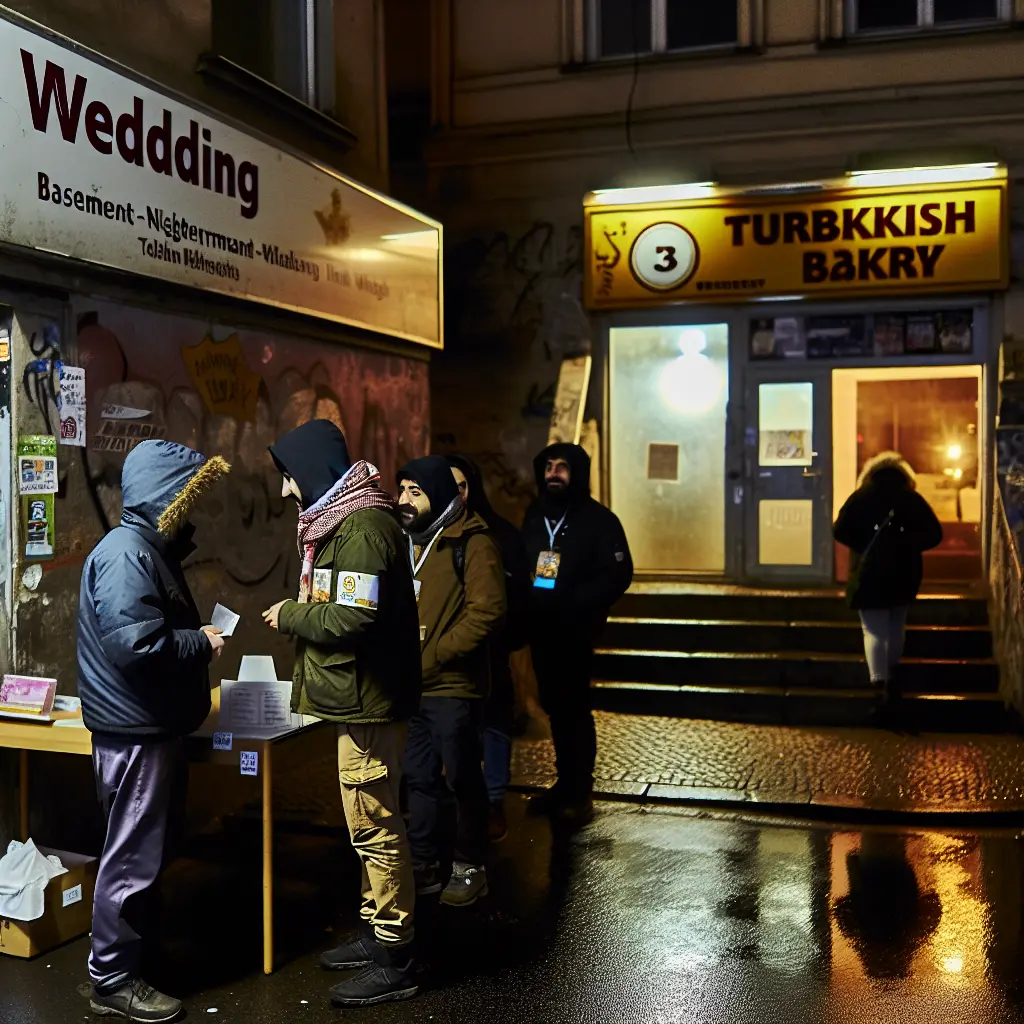
WEDDING — It started, as all local innovations do, with a flyer that looked like it was designed by someone who hates printers and possibly human touch.
The event’s branding pitched it as a “consent-forward basement social.” Which is Berlin-speak for: “You might see something; you will definitely hear a lot of apologies.” It popped up behind a perfectly normal late-night Turkish bakery where the simit are honest, the tea is strong, and the back room is suddenly hosting a temporary republic of rules.
The rules are the vibe now
At the door, a volunteer with the exhausted expression of a museum guard at a Marina Abramović retrospective handed me a wristband and a pamphlet titled “Boundaries: A User Manual.”
The pamphlet contained:
- A color-coded map of the basement like it was a UNESCO site
- A glossary defining “flirtation,” “hovering,” and “lingering with intention”
- A reminder that “staring is not a language”
It was all very Michel Foucault’s Panopticon, if the prison guards were wearing mesh tops and carrying sanitizer.
Someone whispered that the organizers had consulted an urban studies PhD to “optimize flow.” Which is an impressive way to say: they installed one-way foot traffic in a room where people allegedly came to do the opposite of commuting.
Wedding discovers a new kind of bureaucracy
The most ambitious innovation was the “interaction checkpoint”—a folding table where two participants could “confirm mutual interest” by nodding and then receiving a small token.
It was meant to reduce misunderstandings. In practice, it turned desire into a municipal service.
A man behind me sighed, “I’ve seen less paperwork when changing apartments.”
Another attendee complained the process was hard to swallow, which I assumed was metaphorical until I noticed the organizer offering complimentary throat lozenges “for voice care.”
Somehow, everyone in Wedding will clown the government for red tape, then happily queue for intimacy tokens like it’s a limited-edition vinyl drop.
The etiquette crisis: when the rules get sexy
Here’s the awkward truth: half the crowd didn’t come for the scene. They came for the moral clarity.
Nothing makes Berliners feel more alive than being correct in public.
So while one corner tried to achieve actual human connection, another corner debated policy language like it was the Constitutional Court but with more leather and worse lighting. I heard the word “framework” delivered with the same reverence Walter Benjamin reserved for aura—except this aura smelled like deodorant fighting for its life.
The proposal to “introduce a silent zone” met stiff resistance from the conversationalists, who insisted that whispered theory-talk is “part of the cultural fabric.”
Sure. So is mildew.
A brief, doomed attempt at spontaneity
Around 2 a.m., the DJ played something minimal and clinical—like a soundtrack to a Lars von Trier scene where nobody learns a lesson. Two people tried to flirt near the stairs.
A volunteer approached and gently asked them to relocate to the “designated mingling corridor.”
The couple complied with the dead-eyed obedience of extras in a Kubrick hallway.
I watched the romance walk away in single file.
If Guy Debord were alive, he’d call it “the Society of the Spectacle, now with liability coverage.” If he were in Wedding, he’d also ask for Wi‑Fi and then complain it “ruins the authenticity.”
What the neighborhood thinks
Outside, residents were split.
A man from the nearby döner shop shrugged like a philosopher who’s seen too much and said, “As long as they don’t block the door and they tip, it’s fine.”
A longtime neighbor complained that Wedding used to be dangerous in a straightforward way, and now it’s dangerous in a PowerPoint way.
A new arrival in expensive boots called it “healing.” Which, in Wedding, is a confident thing to say in a basement.
Closing argument from the damp underworld
The night ended with the organizers thanking everyone for “co-creating safety.” People applauded like they’d just completed an emotionally intelligent obstacle course.
I stumbled out into the street and immediately felt the old Wedding air: kebab smoke, late-night laughter, someone arguing with a bicycle, and the comforting realization that no committee can fully penetrate human chaos.
Love in Wedding isn’t dead. It’s just been laminated.