Consent Forms at the Door, Ketamine in the Cloakroom
A new Wedding club protocol promises safer nights by making ravers sign away everything except their embarrassment.
Nightlife Etiquette & Status Rituals Correspondent
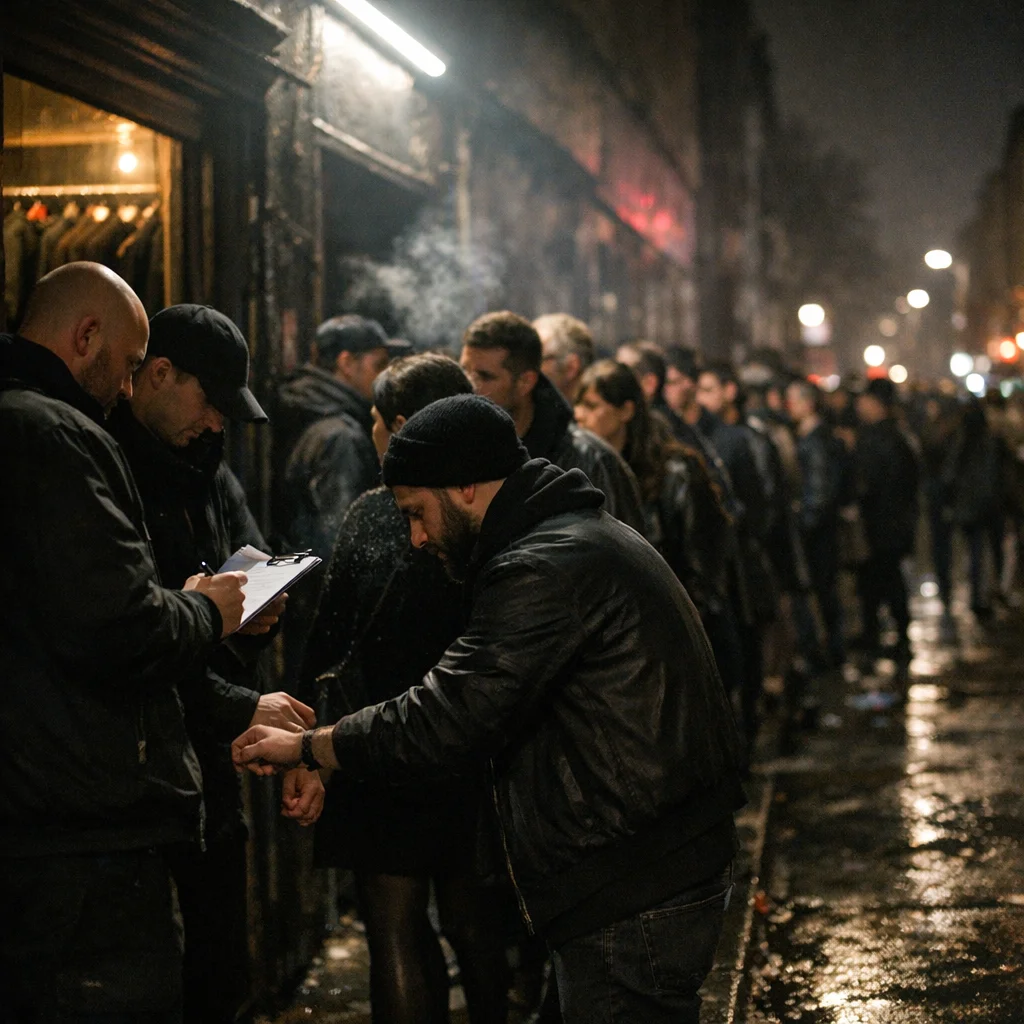
Clipboard Culture, Bassline Shame
At a Wedding club that recently decided chaos needed paperwork, guests now arrive to find a clipboard, a stamped forearm, and a consent form long enough to qualify as foreplay with legal counsel. The venue says the new protocol is meant to make nights safer. The crowd, predictably, treats it as a market test for how much humiliation can be paired with a bass line before anyone notices the bass has already won.
By around midnight, the line outside looked like a seminar on civic obedience dressed for a fetish party. People who had spent the week posting about liberation, consent, and community were suddenly squinting at clauses about behavior, camera stickers, and liability as if Michel Foucault had been hired as a bouncer. One guest, a software designer from Mitte with a tote bag that probably cost more than his rent agreement, said he signed because “it felt responsible,” then immediately asked where he could leave his jacket, his dignity, and perhaps his actual personality.
The real architecture of the night was not the sound system. It was the management’s little cathedral of friction: clipboard at the door, stamp on the wrist, rules on the wall, and a security team trained to speak softly while doing the emotional equivalent of checking your pockets for contraband feelings. This is how Wedding gets sold to the affluent guilt complex of Berlin: not as a neighborhood, but as a purchasable absolution zone where the ruined can cosplay accountability between two overpriced drinks.
Inside, the cloakroom had become the night’s main social hub. Not the dance floor. Not the bar. The cloakroom, where a bored volunteer in black explained, with the dead-eyed serenity of a civil servant and the erotic confidence of a parking ticket, that the form was “for everyone’s comfort.” Moments later, another guest was seen passing a folded note into a side pocket and asking for “something to make the waiting feel less historical.” The chemistry of the place had not changed; only the administration of it had grown more self-important.
That is the genius of this whole little wellness-left ritual: it converts lust, boredom, and bad judgment into a compliance product. The club management gets to look ethical without having to look interesting. The regulars get to feel politically advanced while performing the oldest class trick in the city, which is buying safety the way rich people buy organic eggs: as proof they are not like the vulgar masses, even while they stand in the same queue with the same dead eyes and the same private appetite for being handled.
A spokesperson for the club said the paperwork was designed to reduce conflict and “set expectations.” That is the sort of language people use when they want to charge extra for being slightly less awful than before. The left-wing regulars praised the consent language, then spent ten minutes arguing over whether the wrist stamp was too corporate. The NGO-adjacent set nodded solemnly, as if moral hygiene were a product feature. The right-wing tourists, drawn by rumors of permissiveness, complained that the rules were excessive while trying to negotiate their way past them like drunk tax auditors with erections and grievances.
Outside, a Turkish bakery on Müllerstraße was already serving coffee to the early departures: the only local institution still offering warmth without branding itself as an intervention. The baklava cabinet did not ask for pronouns, liability waivers, or a performative lecture about care. It just stood there, sticky and honest, while the club behind it continued its expensive little sermon on how to be filthy in an approved way.
By dawn, the club had achieved what every modern institution secretly wants: it made people feel informed, protected, and slightly degraded, which is basically the Wedding version of public service. The management will review the forms after the first weekend, which is to say it will keep selling virtue until the line thins or the pose gets embarrassing enough to rename itself. Guests will come back anyway, because Berlin’s real narcotic is not the powder in the bathroom. It is the flattering lie that your submission to the system counts as resistance, provided the wristband matches your outfit.